
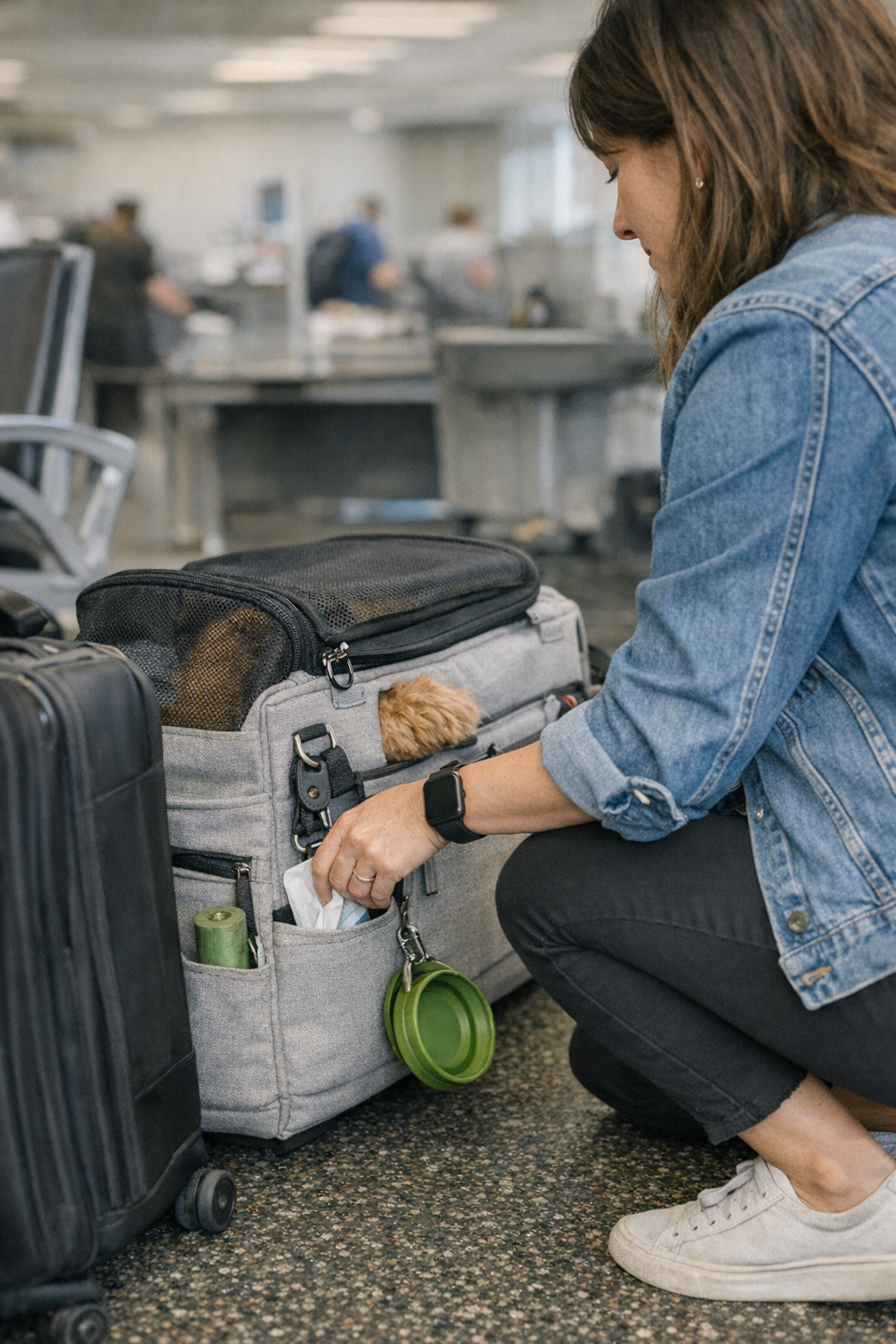
The gap between a “set” pet-travel bag and one you can actually use under pressure appears fast—usually when you’re four travelers deep in the security line, your pet shifting impatiently, and your hand lands on a zipper that opens the wrong pocket, again. What seemed organized in your living room starts feeling stubborn as you try to grab a leash, a wipe, or a waste bag without causing a standstill. That first awkward pause exposes it: a pet-travel setup that only looks ready at home can unravel into a repeated slowdown the moment you actually need speed, not order.
Why “Organized” Isn’t Always “Ready” at the Airport
Most pet-travel bags are photo-perfect before the trip—pockets labeled, every item visible, the logic clean. Problem is, travel never sticks to the plan. In real conditions—boarding queues, seat shuffles, gate checks—the test isn’t how neatly things pack, but whether you can pull what you need at arm’s reach. The visual order collapses as soon as movement starts, and it does so repeatedly with every stop.
Each airport halt demands action: can you snag a leash in one move, or does the “organized” layout force a clumsy, multi-step search? Instead of a smooth restart, the bag that felt sorted at home fills each pause with a new hassle—shuffling, digging, overlapping pouches that slow down even small tasks. The pattern: your sense of control ebbs away, replaced by friction you never tested for at home.
Quick-Access: Where Organization Succeeds or Fails
The difference between a practical pet setup and a frustrating one shows up in those quick-grab moments—security checks, snack breaks, unexpected cleanup situations. The problem is rarely missing supplies; it’s that wipes, leashes, or treats are blocked, mixed, or pushed too deep when you need them most. That small barrier multiplies, especially after several stops.
By the third or fourth airport pause, the snags are unmistakable:
- Digging for a wipe while your pet wriggles away, hands full elsewhere.
- Opening several compartments, only to see the right item buried under something you already moved twice.
- Finding a seatbelt or handle blocking your “key pocket,” forcing a reshuffle on the spot.
- Comfort and cleanup gear migrating out of reach, slipping deeper with each stop.
Each added second spent rearranging drains focus and ratchets up stress—not just for you, but for your pet and anyone waiting on your movement.
How Pocket Placement Shapes Every Stop
Pet-travel setups designed only for aesthetics fall apart under real-life movement. Stacking wipes and waste bags below bulkier comforts, sealing gear in nested pockets, or placing essentials behind awkward zippers all seem neat—until you’re forced to grab mid-rush. These placement mistakes don’t show up until repeated movement exposes them.
Some bags appear thoughtfully organized, but get sabotaged by their own structure: an access pocket obscured by a carrier handle or belt, must-grab gear pressed into corners by toted gear. The stress adds up quickly under airport pacing and a restless pet—what worked “in theory” becomes a block in practice, the cost measured not in mess, but in constant return to friction.
The weak links in pocket placement and exterior access become obvious only through repetition—when grabbing essentials on the move starts to make your own bag feel like an obstacle.
When Organization Doesn’t Keep Pace with Real Movement
If your bag setup asks for more managing than your pet, you’re fighting your own gear. Repacking the same pocket at every stop, relocating treats after they slide, balancing dirty cleanup items on your knee, or abandoning “logical” pockets because they’re always blocked—these are all signals the layout isn’t built for return-to-movement handling.
- Repeatedly repacking essentials you just used
- Juggling pet and owner items for every single grab
- Stacking cleanup and comfort items in a way that makes both slower to reach each time
- Regularly switching storage spots mid-trip because the original logic fails under duress
Every forced reshuffle or missed grab sharpens the realization: a bag that works only when untouched is a source of hidden drag. And the longer the trip, the more that repeated-access weakness stacks up—one mishandled item at a time.
Real Adjustments: Small Changes, Noticeable Relief
The fix isn’t perfection; it’s adjustment. After enough aggravating stops, real travelers rework their setups for reach, not just appearance. Moving waste bags and wipes to an always-open exterior pocket, for instance, lets you grab with one hand while steadying your pet with the other—no digging, no pause. Hanging a leash where you can snap it free without opening the main bag reduces the scramble-in-line anxiety.
Does it end all interruptions? Never. Airport travel always has friction. But these small reassignments cut each hassle down. Shaving even seconds and freeing one hand during checkpoints lets you move at the rhythm of actual travel—not the neatness of your pre-trip “perfect pack.” This is not a magic solution. It’s a material difference that repeats with every stop, and it’s enough to convert a recurring hassle into a flicker of relief: a small, steady advantage for both you and your pet.
Example: The Fumble-Free Security Stop
Fast-forward to the actual checkpoint. The bag’s over your shoulder, your pet tugs, the line inches forward. Instead of fishing through three layers of snacks and latches, you pinch the wipe and leash from an exterior clip in seconds—no blocked zippers, no delayed handling, no extra apologies to the next traveler. Is it flawless? No. But it’s consistently less stressful, less embarrassing, and less likely to break your flow.
The Overlap Trap: Where Owner and Pet Items Compete
Many so-called organized bags fail because they treat owner and pet items as interchangeable. Your phone means treats get wedged in corners. Human sanitizer squeezes wipes off track. Pet paperwork, boarding passes, and snacks create a tangle that returns every time you open the “main” pocket. The overlap doesn’t just look messy: it forces extra movement, slows every stop, and piles confusion on urgency.
The practical fix: design your pet setup with clear tiers. Pet-first front access for wipes, leashes, and treats. Owner gear pocketed off to the side so you’re not yanking one just to reach the other. Each item gets a repeatable “lane”—so movement, not just neatness, dictates your packing order.
Resetting Your Travel Flow: From Pause to Progress
Every airport stop is a progress test, not a still-life challenge. A bag is only as good as its repeated restart: can you actually grab what matters and move again without slowdowns? Frequent digging, double-grabbing, or reshuffling the same item again and again exposes a setup built for appearance, not for the break-and-go nature of actual travel. If your “organized” bag makes you stop just as often as any messier setup would, it is part of the problem—not the solution.
Building a Travel Bag that Keeps Up with Real Use
The strongest pet-travel setups aren’t the ones with the most features—they’re the ones arranged for repeated, one-handed reach. Look for:
- Truly exterior, unblocked pockets for wipes, waste bags, and leashes
- Single-action grab spots placed where pauses normally happen (side pockets, edge clips)
- Attachment points you use every stop, not just once at the start
- Pocket flow that physically separates comfort and cleanup—so the next move is always smooth, not another shuffle
This approach isn’t about visual organization for its own sake. It’s about making sure that when travel throws interruptions at you, your setup resets fast and doesn’t trap you on repeat. That is what turns a pet-travel bag from “looks ready” into built-for-movement—and let you manage travel, pet, and your own sanity at the pace real life demands.
Explore practical, seat-side ready pet travel setups designed for real repeated movement at PawGoTravel.