
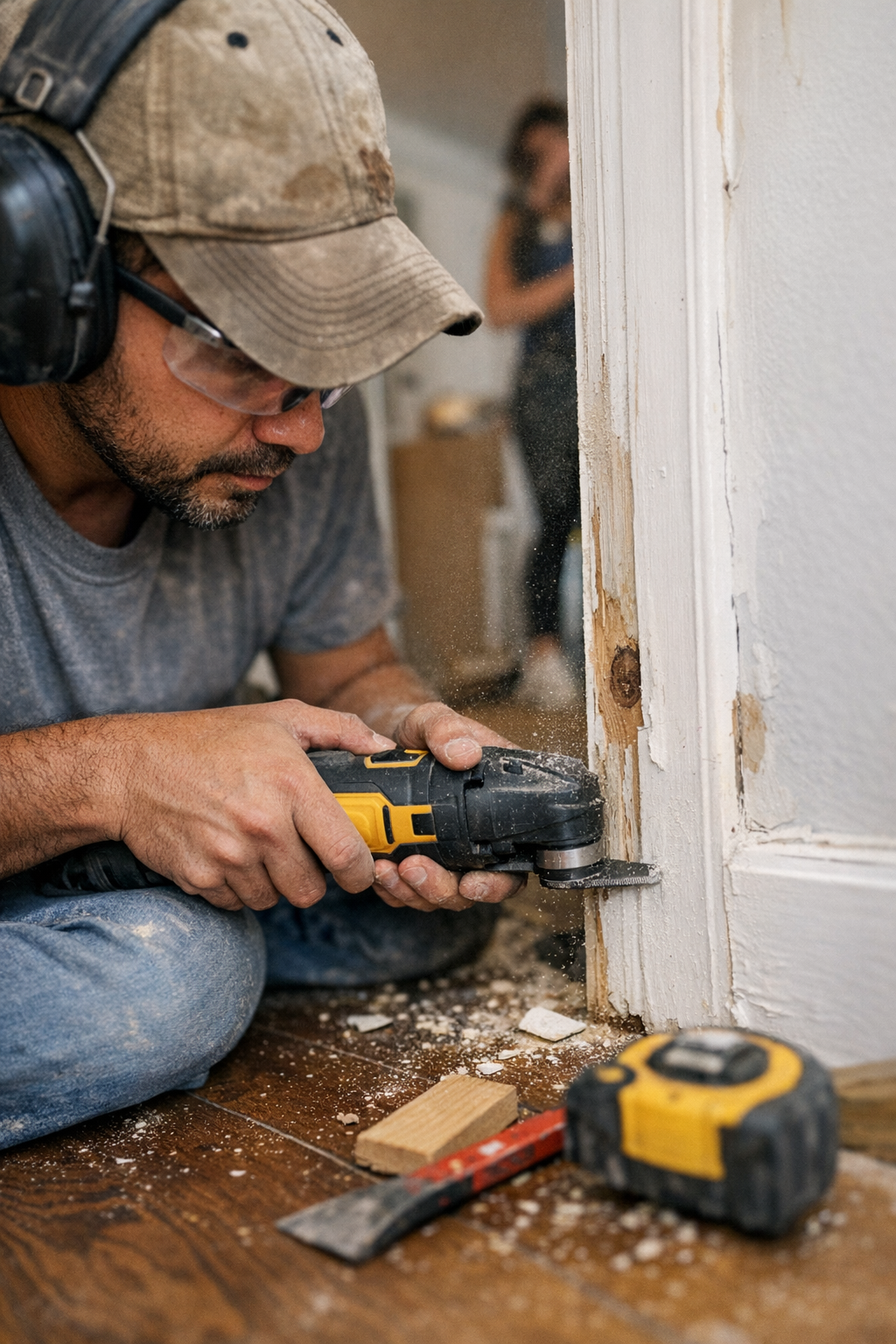
A multitool only feels “universal” until you’re halfway through a job and the wrong blade or sanding pad starts slowing everything down. On the site or in a tight garage, you don’t need to wait long for the difference to show up—by the second hour, a so-so attachment is muting every cut, eating through your grip, and leaving behind a swath of corrections for later. The right multitool accessory looks like a minor decision at the start. On a real job, it’s the hidden fork that splits the day into steady progress or slow frustration.
When Your Multitool Meets Real Resistance
Not all materials fight fair. The challenges don’t show up with soft pine. It’s when you butt up against ancient window trim or layered door jambs—glass-hard paint, splintery knots, gritty drywall dust—that a blade’s limits come out. Early on, every blade says it’s the “right one.” But as grit cakes up, cuts start drifting, and every edge loses sharpness, the issues get obvious: errant lines, messy reveals, and a tool that wants to jump out of your hands by the second or third board. That’s when an attachment decision you barely thought about starts punching holes in your workflow.
Anyone who’s pushed a multitool across trim or through a patch of floor feels this: The first cut feels controlled. By board four, you fight blade wander, waste time re-sanding the edge, and start worrying about damage to finished surfaces. Hand fatigue sneaks in, grip gets tense, and the cut line you set hours ago is a memory.
Look-Alikes in the Aisle, Night-and-Day on the Job
Beneath the fluorescent lights, all multitool blades and sanding pads pitch the same confidence—universal fit, multi-material use, “all-day” durability. But the real judgment comes during the grind: when the paint is thick, the board is dense, and you have no room to stray off the scribe. Two blades boasting the same claim—diamond grit versus carbide tooth—might look interchangeable. Start running them through heat-soaked old oak, and the diamond grit keeps its line and stays cool; the carbide tooth bogs down, blurring the edge and littering the air with uneven dust.
How Friction Compounds Into Cleanup
Get a couple of attachments wrong and cleanup snowballs. One dulling blade makes an awkward cut, and suddenly five minutes of repainting or corrective sanding is tacked on. Fit and finish slip. When you break out the shop vac for the third time to chase paint chips and tooth debris, you realize the problem didn’t start with this mess—it started hours ago at the tool rack.
Door Jambs: Where Efficiency Hits a Wall
Take on a door retro in a house that’s had forty years’ worth of repaints. A fresh blade feels great on the first jamb. By the second or third, that carbide tooth blade is vibrating hard, unable to stay on the line, splintering the edge and spitting chips onto finished floors. You spend more time wrangling the tool than actually cutting, then double it on patching, sanding, and cleaning up gouges that weren’t supposed to be there. The fallout isn’t just sore hands—it’s a project stuck in a loop of rework, frustration, and wasted energy you can’t afford in the middle of a busy job.
This isn’t “just” frustration—it’s costly backtracking: ragged edges, bigger gaps to fill, a pile-up at prep and finish. Better blades or pads would have streamlined everything. Instead, a small miss in selection jams up the entire surface-to-paint workflow.
What Really Changes When You Use the Right Attachment?
In practical terms, here’s what you’ll notice instantly:
- Reliable line control. A diamond grit flush-cut blade keeps tracking true even as you work through dense paint, knots, or layered materials—no drifting to correct with sandpaper later.
- Reduced vibration and fatigue. Less shake transfers to your grip, making accurate cuts easier and cutting marathon sessions down to size. By the late afternoon, your grip and forearm still have something left.
- No more runaway heat. Good attachments shed heat without warping or dulling, so you won’t deal with burned marks or that harsh overheated-metal odor fouling the workspace.
- Minimal rework. Instead of hovering over the sander or caulk trying to patch ragged cuts, you hit them once and move on—spending a fraction of the usual time on slap-dash touch-ups.
In one remodel, switching from generic blades to a job-matched diamond grit cut cleanup between jambs from several minutes down to under ninety seconds—often the line between keeping pace or getting left behind for the next crew.
Quick Tactics to Save Time (and Hands)
Keep spares ready. When resistance changes or you see that first haze of dust on the blade or sanding pad, swap it out. A fresh attachment is cheaper than messy rework—and makes a noticeable difference in pace.
Don’t trust the packaging hype. The real test is always in action: how a blade handles old screws, how a sanding pad does after the fifth corner. The display isn’t your jobsite—the grind is.
Sanding: Where Accessories Make All the Difference
It’s the same problem with detail sanding: the wrong pad turns a late-day task into hours lost. Standard multitool pads choke on paint flakes and dusty filler, forcing switch after switch and keeping you miles from a finished surface. Orbital discs fare better on flats, but lack the angle for corners and edge work. Miss the right match and you wind up with burned edges, gummed-up pads, and surfaces begging for a redo—double the frustration, half the finish.
Small shifts in pad quality, fit, or abrasive grade affect your momentum more than any “multi-use” claim on the rack. The right sanding pad keeps dust and drag away from your best effort.
Workload, Not Hype: The Only Real Test
What matters most is performance under pressure—not marketing promises, not how slick the packaging looks. The only metric that counts: how well does the blade hang in when old screws crop up, corners need shaping, or wrists start to stiffen four hours in? Field-tested choices—diamond grit for heavy-duty flush cuts, job-matched sanding pads for awkward detail—free you from the grind of constant correction and unnecessary fatigue.
Next time you’re staring down dense trim, stacked jambs, or a stubborn sanding run, remember: a small swap at the start isn’t just faster. It means cleaner cuts, more precise results, less fatigue, and a jobsite that hums along—even when you’re pushing into overtime.