
Why “Calm” Pet Routines Fail When Daily Details Slip
At first glance, a “calm handshake” sounds simple: pause at the door, towel ready, leash off, paws wiped, bowl refilled—then on to the next thing. But the promise of calm cracks the moment a basic item isn’t where you expect. One missing towel after a rainy walk, a bowl in the dishwasher when dinner’s due, or a leash shoved behind a coat pile: these aren’t rare disasters, just regular weak points that turn an easy routine into chaos by increments. The effect is felt in seconds—a muddy doorway, a restless dog pacing while you dig for the right supply, your own patience running out before the mess is even handled. This is where CalmPetSupply’s world of simple, anchored setups shows its difference: not in how things look for a photo, but in making the basics actually ready every time.
The Hidden Cost of a Weak Routine
Most pet-care breakdowns aren’t dramatic—just one step out of place when you need it. The towel you count on is missing the moment muddy paws reach the entry. The food bowl is still unwashed when your pet is already waiting to eat. As these slips add up, every meal or walk stretches out, each reset becoming a stumbling block instead of a pause. A routine that should be over and done in seconds becomes a new friction point you dread repeating.
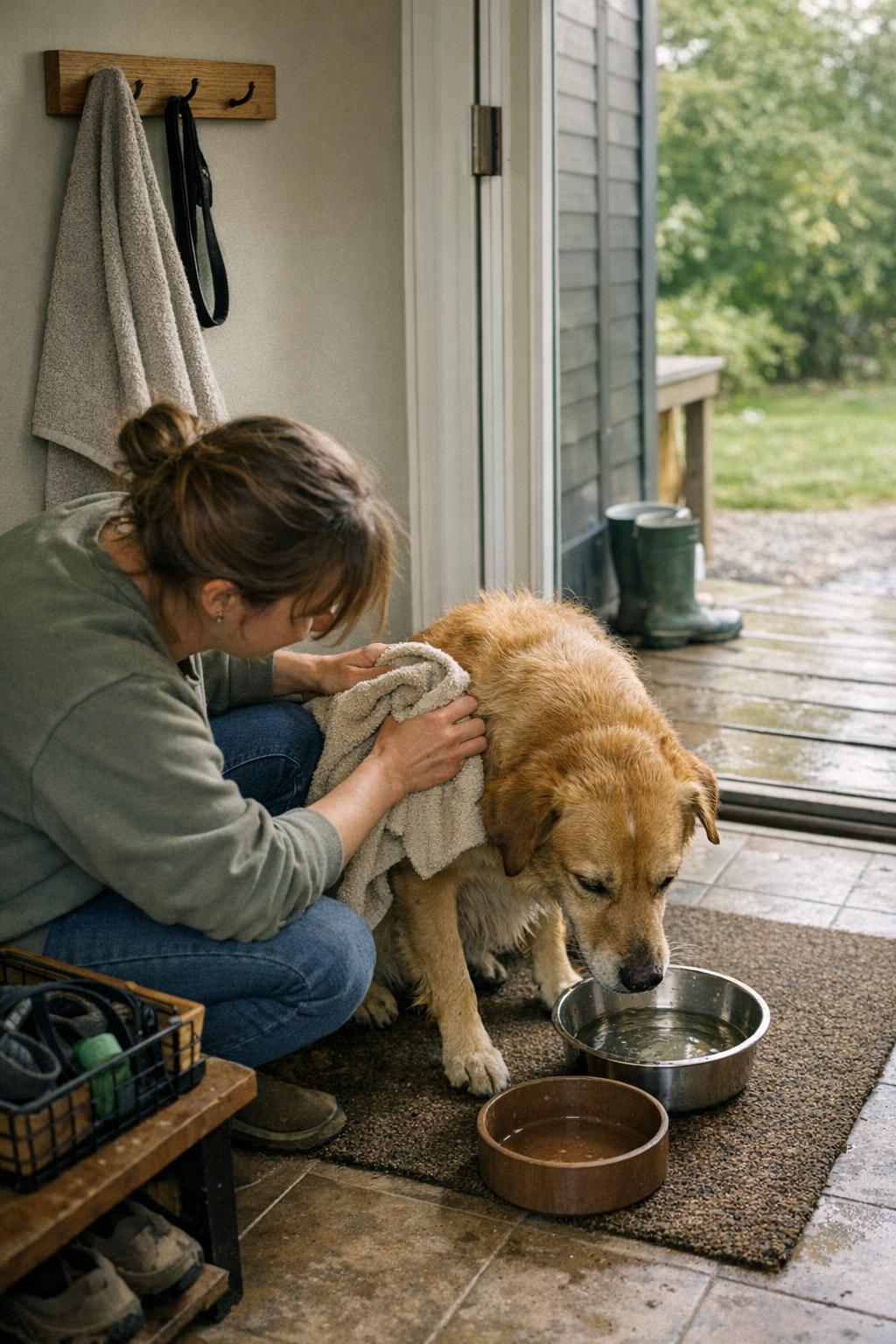
Picture the return from a wet walk: you stretch for the towel, but it’s moved—maybe tossed in the laundry or hiding across the room. The leash is nowhere near the door; instead, it’s trapped under a line of boots. The water bowl you cleaned last night is now plugged behind other kitchen clutter. Instead of a seamless transition, you’re juggling supplies, tracking mud, and letting stress run straight into your home with every pawprint. What looked organized for company collapses exactly when the routine repeats under pressure.
Routine Disruption: How Small Delays Build Up
You don’t notice the slow breakdown at first. But over time, small absences—lost leashes, detoured bins, brushes never where you left them—pile up. You end up doubling back for clean-up bags or stumbling around furniture for a grooming tool that should always be in arm’s reach. One forgotten item means another pause, another minor reroute—multiplied by every meal, walk, or late check-in. The effect? Routines drag on, feel unreliable, and eventually get skipped because handling them is just too much trouble.
This isn’t just about space “looking” tidy. Supplies might be stocked—somewhere—but if the towel is perched out of reach, the detergent locked under the sink, or the brush buried at the bottom of a shared bin, the disruption is just as real. Each small detour erodes the reason for a calm setup in the first place, making every task more awkward, not less.
When Pet Items Invade Shared Space
Calm routines don’t just fail in the pet zone. Bowls slide from the kitchen to the hall, leashes migrate from their hook to the couch, and cleaning brushes never quite return to their home. Storage bins shift, inching further from the door every few days. At first, these moves don’t even register. But soon every return means stepping around displaced supplies—raising the odds you’ll miss an item or build up a fresh pile for next time.
For families, one “solved” spot can still leak friction. You organize leashes only to realize the towel is drifting to another corner; the brush always ends up wherever it was last abandoned. A room can look organized for five minutes, then glitch at the very moment you actually need to move fast.
Mess Management Versus True Ease
A corner that looks neat isn’t the same as a setup that saves work when it counts. “Calm” only sticks when the necessary items don’t move, wander, or get buried. When you always know where the towel hangs or where to grab a leash after a walk, resets stop being tasks you want to avoid. This isn’t about hiding clutter—it’s about making sure what you need actually stays within reach, ready every single time.
The real difference is in the flow: after a walk or before a meal, your hands go directly to the supplies, no rerouting, no digging. The towel sits on its hook; leashes don’t snarl with boots; bowls return to their spot with zero thought. Cleanup, refills, and end-of-night checks happen automatically—before mess builds up—without any reshuffling or hunting under tables.
Real-Use Patterns: How Small Choices Add Up
The everyday “drag” isn’t always obvious until you hit it a few times. Leave the bowl out once, and next time you’re blocked at dinner. Stash wipes in the pantry, and they’re never there when you need to swipe up muddy prints by the door. Every “temporary” move adds up until supplies keep slowing down routines and clogging family traffic—especially where space gets tight or entries are busy.
Even the best intentions—like moving items to look tidier—can set you back when you reach for them mid-routine and find nothing within arm’s length. Over a week, the extra steps start to add up, and that hidden effort becomes heavier than the visible mess ever was.
What Actually Works: Anchored Basics, Fewer Steps
The setups that really deliver calm aren’t the ones that just look neat—they’re the ones where key parts never move unless you mean to move them. A towel that lives on its hook, a bin that stays by the door, a bowl that’s never blocked by other “tidy” objects—these are the anchors that keep routines running without friction, regardless of weather, family schedule, or unexpected chaos. When the foundation holds firm, resets take seconds and routines don’t deteriorate after a good week.
The trade-off is real: steadier transitions, less frustration, and routines that don’t steal time from everyone involved. True calm isn’t about controlling appearances but about lowering the burden and hassle at every care touchpoint. When each detail matches up with the pace of real life, calm isn’t just a look—it’s the absence of friction, mess, and repeated work built up over time.
For real-world pet care supplies and practical setups that hold up to repeated use, visit CalmPetSupply.