
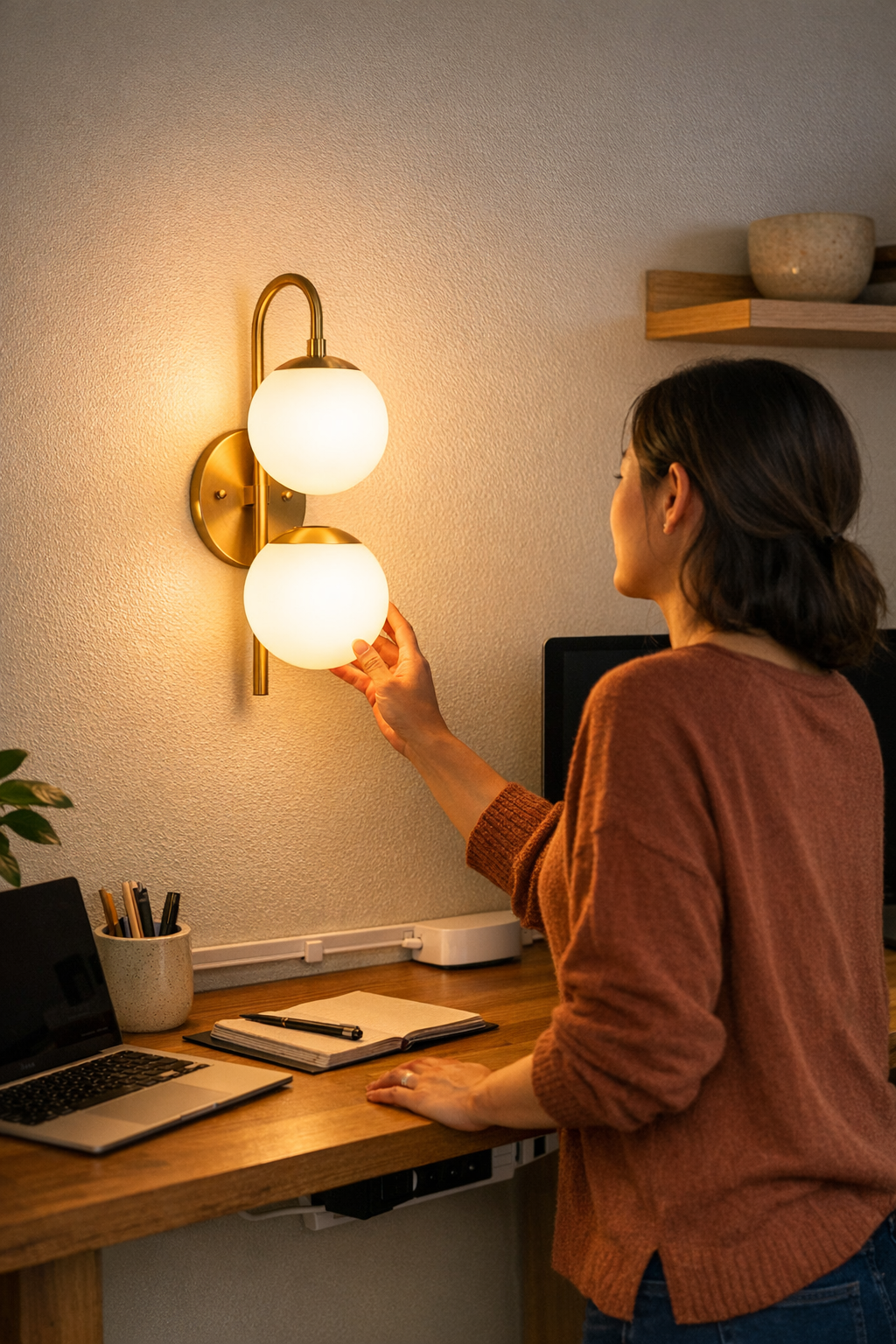
If you’ve ever juggled tangled cables under your desk, nudged a lamp that won’t hold its angle, or shifted in your chair only to get a sudden glare straight in your eyes, you know the setup is losing ground. A lighting system that starts off looking sharp often breaks down in quiet, practical ways: brackets that slip after a few routine bumps, cords that work themselves into your line of sight, supports that promise stability but deliver a maintenance routine instead. What stands out isn’t failure in the dramatic sense, but a slow buildup of inconvenience—spaces that look fine once, but force tweaks and workarounds with every use. This is where the real test of lighting support shows up: not in first impressions, but in how every lamp, cable, and bracket survives the repetition of daily life.
Where Lighting Support Reveals Its Weak Points
Most indoor lighting doesn’t fail with a snap; it slides into nuisance. Brackets loosen in ways you don’t notice until the lamp drifts for the third time in a week. Glare returns, creeping back as a fixture slips just a few degrees out of position, dictating where you have to sit. One power cord, safely ignored on install day, becomes an unswept obstacle—gathering dust, snagging feet, blocking a storage drawer. These are not small details if you’re forced to notice them again and again: a lamp that realigns itself overnight, a cord that never stays put, or a bracket that asks for daily attention. These minor failures accumulate, turning a would-be effortless room into a checklist of small corrections.
Genuine lighting comfort depends on eliminating these recurring frictions, not just masking them. The moment a setup demands frequent nudges or awkward workarounds, it’s exposing the support pieces that aren’t measuring up. When the fixes become habit, the support is failing in its most basic job: making the lighting invisible in use, not just attractive in photos.
The Real Role of Brackets, Channels, and Connectors
It’s easy to treat cable guides and brackets as afterthoughts, but anyone forced to reposition a lamp over and over knows otherwise. These are not just finishing touches—they decide whether your lighting setup can withstand reality. A channel that actually fits your cable path keeps cords anchored, invisible, and out of the sweep zone. Brackets sized for the real weight and motion of your fixture prevent drift and tilt, holding the line when life gets messy.
Accessories that only fit in theory quickly add new problems. Cords start to cut through work zones, plug areas become jammed and awkward, supports sag against repeated use, and outlets turn into points of conflict. The right question isn’t just whether a piece fits the hardware—it’s whether, three months and ten rearrangements later, it’s making less work instead of more.
Simple Mistakes Compound Over Time
Leave a single cord untethered and it becomes the line you’re always nudging aside, the one person in the room eventually trips over. A screw that seems snug enough lets the lamp sag two millimeters at a time. These flaws aren’t visible at the start, and they’re rarely shown in product images, but once exposed, they dominate daily use. Fixing them after the setup is lived-in often means strip-and-redo—not a job anyone wants after the third week.
Scenes From Real-World Use
The Desk Lamp Dilemma: Cord Control in Shared Spaces
Picture a shared desk with two lamps, both installed the same afternoon. One cord barely routes behind anything, drooping under the surface, gathering dust, and forced to detour around other equipment. The other lamp’s cord is channeled tightly along desk edges and clipped behind the leg. By the second week, the loose cord is getting knocked around by keyboards, sleeves, and stray chargers; every bump makes it more visible and more in the way. Cleaning means lifting, repositioning, undoing the tangle—turning five minutes into a maintenance session. The cord that’s anchored stays silent, invisible, and largely forgotten, even as devices get swapped in and out. Cleanup is a non-event, the lamp never tips, and the working area actually stays clear—so you notice the surface itself, not the next obstacle.
Under-Cabinet Lighting: Cleanup or Cable Tangle?
LED strips under cabinets do wonders for workspace clarity—until the power cable starts falling into view, nudged by a passing hand or the next time you slide a toaster back into position. That cable, which seemed “fine” on install day, quickly becomes a magnet for crumbs, water, and extra clutter. It pulls the whole strip sideways during quick wipes or lurches up with the wrong drawer pull. Compare this to a setup with a bracketed strip and a cord fed through a raceway anchored along the wall: daily cleanup never means tiptoeing around exposed wires, and no bump or cleaning rag pulls the light out of place. The difference isn’t aesthetic—it’s that the system disappears into function. The only thing that moves is what you want to move, not your lighting or its hardware.
Small Adjustments Make Daily Life Smoother
Clearing the Path: Floor Lamps and Cable Raceway
Ignore a dangling cord behind a floor lamp and you force yourself into a daily routine of sidesteps, snags, or “quick” realignments. After anchoring that same cord along the baseboard with a low-profile raceway, you stop noticing it entirely: the lamp stays rooted, nothing tugs underfoot, and your movement pattern shifts back to natural, not reactive. It’s a quiet fix—one that only calls attention to itself because life without it meant constant, invisible interruption.
When a Clean Look Isn’t Enough
A setup can look magazine-ready right after you finish the install, but if the bracket sags after one accidental knock, if glare creeps back along the edge, or if the “tidy” cable path falls across where you actually need to reach, the surface feels less usable by the week. Support that works only for appearances solves nothing: the real win is when you forget the lighting hardware exists at all because it never fights your routine.
Quick Tips for Real-World Lighting Support
- Right after install, stress-test for drift and tug: Deliberately nudge cords, tap fixtures, and check if brackets hold. Small failures now will become daily annoyances later.
- Map cleanup and access paths before finishing up: Will wiping, sweeping, or shifting gear knock cords loose or rattle supports? Adjust anchor points before letting the system settle in.
- Anticipate changes: If you know your routine, layout, or device count will shift, use mounting hardware and cable guides that adjust easily. Overcommitting to a fixed path now almost guarantees a future headache.
What Lasts Beyond Day One
Lighting that works isn’t just working now—it holds up after the tenth cleaning, the fifth layout change, and the hundredth small bump. That means cords stay anchored, brackets stay locked, and surfaces stay free for the actual work, not side chores. The setups worth keeping solve friction others don’t notice until they become the next problem to fix. The ultimate reward is this: not a showpiece room, but a background that’s finally out of your way—all day, every day.
Find lighting support solutions built for real, repeated use, not just first impressions: LightSupport