
Outdoor gear drift doesn’t shout—it creeps. One muddy boot slumped at the garage threshold. Gloves left to dry, forgotten on the fence. A half-deflated soccer ball wedged under the side gate. At first, these are just minor misses, easy to ignore on a busy weekday. But one item left out becomes three, then five. Soon, your so-called “quick-access corner” is swallowing walkways, tripping you every time you haul out the trash or run for the car. Each week, a chunk of routine vanishes under a pile that never actually goes away—just shuffles from one spot to another.
The Real Cost of a Weak Setup: When Convenience Catches Up
You don’t notice the unraveling until the everyday reset turns into damage control. The side yard starts clean—one bin tucked by the steps—but by midweek it’s already collecting the wrong things: boots beside the bin, caps on the fence post, garden shears balancing dangerously on top. A rainy day means hesitation: do you really want to fish around for soaked gloves at the bottom of a grimy pile? Sometimes you toss them on a chair instead. Bit by bit, every “not now” moment builds a new obstacle. By Friday, the bin is just landscape—overflowing, blocking the gate, ignored because it defeats its own purpose. You’re back to stepping around someone else’s wet gear, eyeing the usual bottlenecks and wishing for a fresh start.
Mess doesn’t announce itself. It spreads, quietly and relentlessly, with every shortcut and every I’ll-fix-it-later. Soon, each pass through the yard means dodging heaps or stepping awkwardly over gear that should have a home but never does. The biggest drag isn’t even the physical clutter—it’s the endless micro-decisions. Should you squeeze one more thing in that bin? Drag wet boots through the house, or just leave them lined up in the rain? Where did the soccer ball disappear this time—the basket or somewhere out of sight?
Storage That Shifts With Your Real Routine
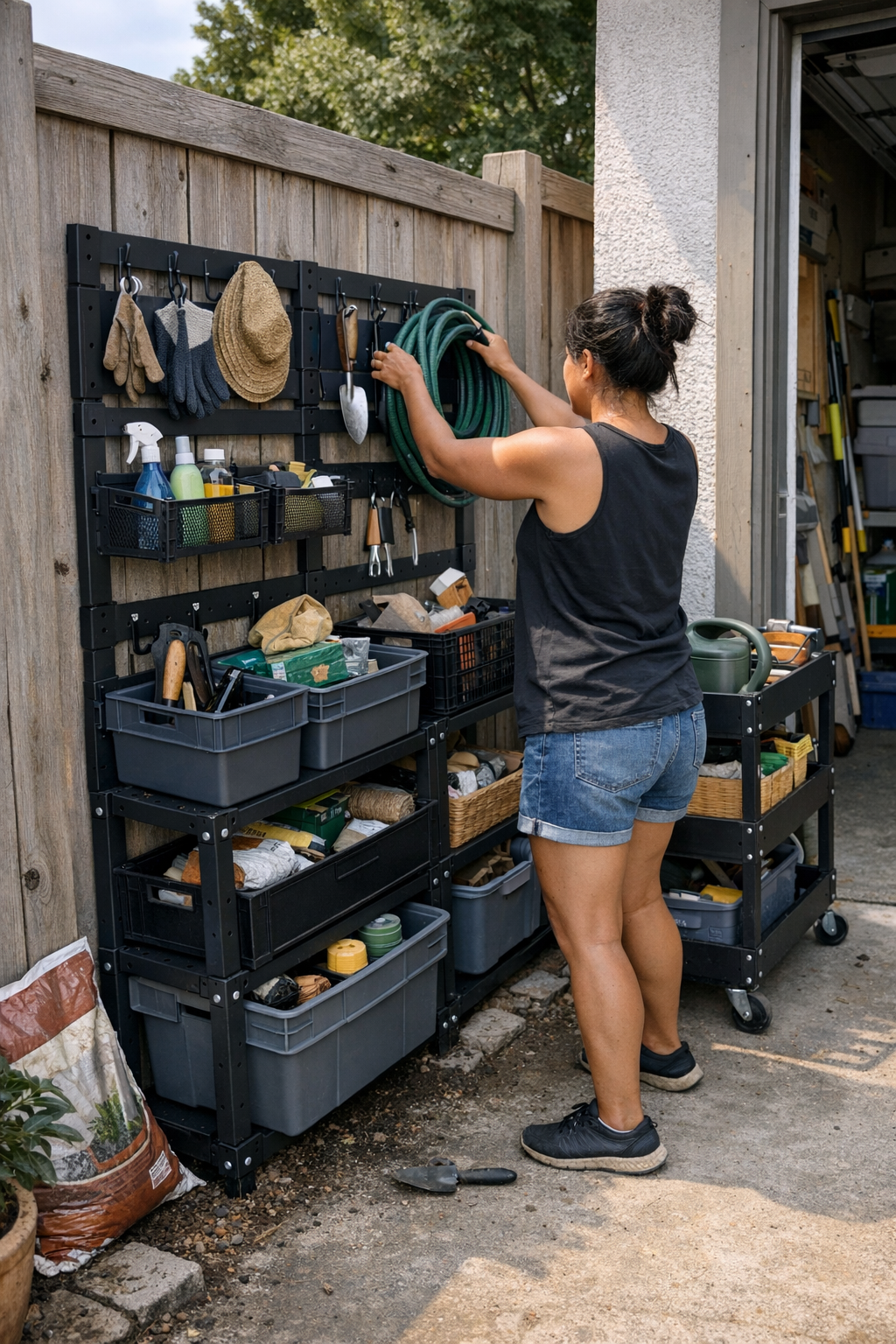
The difference isn’t just storage—it’s whether the setup matches how you actually move. Wall systems don’t solve everything, but they kill off floor sprawl instantly. Hanging hooks and racks along that fence-line or the narrow garage strip pulls gear up, marks out what goes where, and instantly spotlights when something’s missing. Instead of tripping over a bin blocking the gate, you see open pavement. Instead of wading through piles to fetch the dog leash, you spot it hanging, dry, ready to grab.
Floor bins seem fast—throw it in and go. But reality hits when the corner fills: boots topple over, a basketball rolls under the deck, trowels stick out dangerously, mixing with pool toys. That “grab-and-go” area is now a minefield of stuff that needs constant sorting. Every extra piece stretches the zone outward until you’re sidestepping—sometimes literally—to even reach what you need. Floor storage always invites overflow, especially during weekends when everyone’s rhythm breaks: muddy shoes pile up, garden gloves drift, and last season’s gear never really leaves the stage.
What Actually Holds Up: Return Flow in Action
True organization passes the only test that matters: a busy weekend with real people using, dropping, and returning outdoor gear—rarely with care, usually in a hurry. Picture three kids storming in from the backyard, each peeling off boots, raincoats, and backpacks at once. On a wall rack, the flow is visible: boots drop on the lowest rung, jackets on hooks, hats above. No thinking, no searching. Ten minutes later, the path is still clear, and if something’s missing, you see it immediately. Even after two or three rushed resets, the structure holds—because each item has a slot and there’s no floor pile to grow sideways or out of sight.
The contrast is sharp when you try the same with bins. Gear just layers up. In the hurry, gloves are flung onto the nearest edge, wet boots get propped against the wall, and before the day is done, someone’s already pushing the bin aside just to open the side door. Floor bins hide the mess for a day or two—then spill it everywhere. Every “shortcut” here draws out the next cleanup. Instead of faster resets, you get more scatter and more reasons for things not to land back where they belong.
Modular Setups, Movement, and Real Space Friction
Adaptability sounds like magic—until it turns into more reset steps. Mobile carts or rolling racks seem smart if your kids’ gear keeps changing, or if you try to swap tools for sports gear every month. But put a rolling basket on a narrow patio, and soon enough it’s blocking the route from garden to gate. Every trip now means shifting the cart just to pass through. Worse, a filled modular unit without a set “parked” spot floats into the most used zone and sits there—another thing to get around, not a solution. Instead of streamlining cleanup, adaptable storage schemes can quietly double your hassles if they don’t fit the actual flow.
The real upgrade isn’t about buying more pieces—it’s about whether tweaks make daily resets lighter. Adjusting a wall rack up by 30 centimeters might finally give you room to tuck a mower in the awkward garage edge. Shifting a hanging basket to a dead corner might turn a pileup spot into a quick toss-and-move zone. Change is only an improvement if the area gets easier to clear after heavy use—not just more visually filled.
Everyday Breakdown: Recognizing Weak Points
It doesn’t take long for the cracks to expose themselves. After just a handful of real resets—a rainstorm, a Saturday yard day, a couple of rush exits and muddy returns—the floor bin is ignored because nobody wants to reach underneath wet gear. A mobile rack, once the darling of your setup, ends up jammed beside the AC unit, left in the way until someone hauls it back. The wall rack, on the other hand, might take a few tries to “teach” everyone, but the habit grows. Hooks get used. Specific slots make it clear what’s missing and what’s out of place. Even the worst week doesn’t swallow the walkway or demand a total re-sort every Sunday.
The friction isn’t about running out of room—it’s about return flow. Is it obvious where things go? Does putting something back mean lifting piles, or is it one action, done? Gear is only as organized as the lowest-effort reset your people will stick to.
Filling Space vs. Freeing Space
The best outdoor setups almost hide themselves. You notice their value not in perfect rows, but in what’s missing: all the little roadblocks you don’t have to dodge to get to the garden hose, the side gate, or the garage door. When you swap a crowded bin for a wall-mounted system, you feel it instantly—less shifting, less guessing, no more Pez-dispenser effect of dumping out everything just to find one ball. The space feels open, instantly ready, not just less chaotic.
Dead spots and cramped corners aren’t a lost cause. Mounting a small rail or a minimalist hook in a fence-line gap flips a nagging pileup area into a stop-and-drop that isn’t in the way tomorrow. At the patio edge, a low shoe rail at the entrance plus vertical baskets above kill two birds: shoes dry out of puddles, hats and toys don’t vanish into dusty corners. The goal isn’t max storage—it’s clearing the path so you don’t have to keep clearing it again tomorrow.
Cut Down Cleanup and Clutter with Small Adjustments
Often, the real test is how little space you can reclaim and still get a big win—a 15cm shift off the floor can give back a full step of walkway or let you swing the gate easily after rain. Raising one rack for kid gear, separating out the eternally soaked gloves, or simply stacking at a reachable height makes all the difference after ten resets. Small changes even out the chaos, killing the “floating” gear problem before it spreads.
Try a dedicated hook for each family member, or a marked bin-per-category if wall space is tight. This isn’t about tracking every item—it’s about making it obvious when something is out of place, so gear doesn’t vanish into a bottomless pile. You save time, skip the backtracking, and get out or back in without stumbling around looking for socks or pruning shears twice.
Real Setup, Real Results: How You Notice Change
The best improvements show up not in perfect calm, but in relief—less stepping around bins, less moving stuff just to get through the door, less overflow bleeding into the corners every time the routine breaks. You reclaim real space not by making things pretty, but by making sure you no longer have to fight the same small battles every week. When you feel the area helping you move, not blocking you, you know the setup is working.
Curious what that looks like in your own backyard, garage-side, or fence-line? See practical outdoor storage that steps up in daily use at TidyYard.