
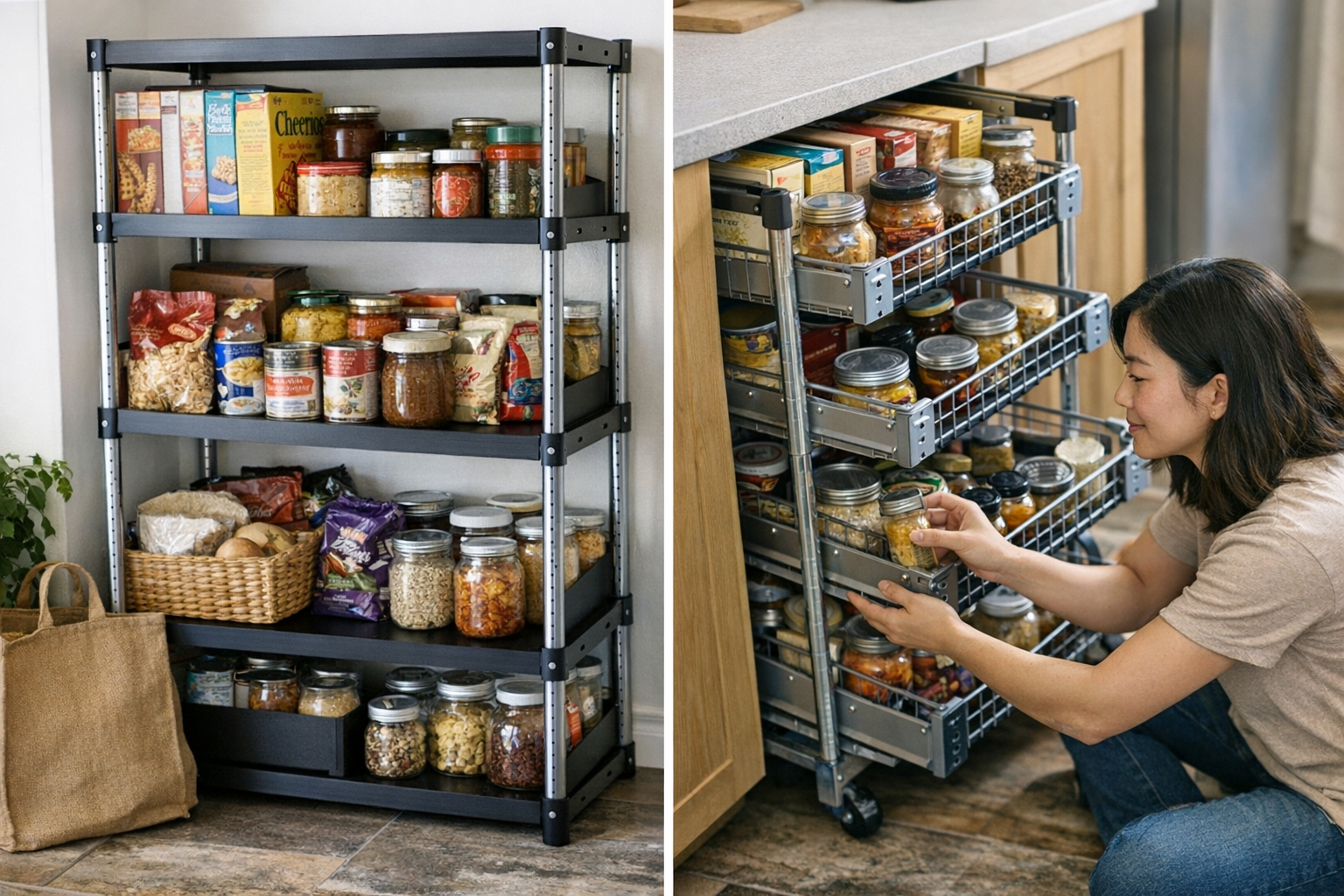
Pantry organization isn’t just about tidy lines and matching containers—it’s about whether you can actually grab what you need without setting off a chain reaction of chaos. If your weeknight cooking routine means digging past precariously stacked crackers or balancing a bag of rice on top of a box of granola, you know firsthand: storage setups matter most when the kitchen is busy, not when it’s freshly reset. The tug-of-war between fixed and pull-out pantry shelves shows up in these exact moments—the daily reach, the fast reshuffle, the silent sighs when last week’s tidiness has already unraveled.
When “Organized” Shelves Hide Everyday Friction
On day one, every pantry looks promising—labels forward, items lined up by size or cuisine, each category in its own neat section. Then real life happens. As you grab snacks, restock dry goods, and cram in new finds from the store, gaps close up, rows blur, and the back row becomes a black hole of forgotten or duplicate items. It’s a slow drift from order to quiet hassle: reaching past front stacks, sliding out half the shelf to find a sauce, or discovering a lost can months later during a hurried clean-out.
Fixed Shelf Aggravations: Why Does Everything Slide Forward?
Imagine a pantry shelf that runs deep. You’re reaching for a bottle of vinegar you know is somewhere in the back. To get to it, you unload a line of boxes—one tips, another falls, and then you’re left restacking everything. Even with good intentions, items creep forward over time, bins become mixed, and “categories” become fuzzy. The more crowded the shelf, the more impossible it feels to find what you’re after without building and dismantling piles. Cleaning? You won’t find that sticky spill until it has seeped beneath three layers of perfectly lined-up snacks.
These aren’t just small annoyances; they’re where systems quietly fail. The fix looks simple—shuffle things back, tidy up. The reality is lost time, repeated resets, and eventually, dreading pantry “maintenance day” because you know what’s waiting behind that front row.
Pull-Out Pantry Shelves: Reducing the Blind Spots
Pull-out shelves break the cycle. With a single motion, the entire shelf comes forward and the contents—all the way to the far edge—are in plain view. There’s no hidden zone, no lost jars behind the pasta, no strange vertical stacks teetering because you can’t see what’s in back. You pull, you scan, you grab—no collapsing towers, no hunting for a hand mirror to peer into the depths.
Quick Inventory, Quicker Reset
The difference is most obvious after a grocery haul or when it’s time to check expiration dates. Pull out the shelf, and you can instantly assess what’s running low or what needs rearranging. There’s no cascading mess if you grab something from the far end. Categories stay clearer because you’re not constantly mashing things together to reach what you want. Over the weeks, you’ll notice fewer duplicates, less hidden clutter, and a reset routine that actually feels quick—slide out, move a few things, done.
This isn’t magic; it’s a simple mechanical advantage that holds up as the pantry sees real use. When there’s no mystery area in the back, “getting organized” doesn’t require redoing your whole system every few weeks. You simply see what you have and put things back without creating a new stack of problems.
The Fixed Shelf Upside: Strength and Simplicity
Fixed shelves still win out in a few key scenarios. They’re usually stronger—a solid choice for stowing heavy kitchen gear, bulk flour, or cases of cans that would eventually strain a gliding track. In shallow cupboards and tight spaces, fixed shelves use every inch without worrying about room for slides or moving parts. Sometimes you want the absolute maximum volume for oversized items or awkward angles, and fixed shelves keep things straightforward.
But the Cost: More Hidden Mess, Slower Recovery
Those advantages come at a slow price. What starts as a fully stocked, perfectly aligned shelf gradually slides toward hidden clutter. Each time you stretch in for something small, you nudge other items out of place. Bins without dividers turn into catchalls. Before long, pantry traffic jams mean you’re repeating the same juggling act—move a stack, find the item, rebuild the stack. Even in other spaces—laundry, entryways, under-sink cabinets—fixed shelves invite clutter to gather in the shadows, just out of easy reach.
Maintaining Order: Small Habits That Actually Stick
Any shelf can work if you commit to a little routine care. Pull-out shelves perform best when tracks are kept clear—crumbs and stray bits build up, but a quick swipe every so often keeps them gliding smoothly. Fixed shelves invite hidden stickiness, so periodic wipe-downs—before the rings and spills turn into a weekend project—keep things manageable. Weekly check-ins, a simple adjustment here and there, and even the most well-used pantry stays functional, if not showroom perfect.
Use-Tested Tips that Make a Difference
1. Don’t overload pull-outs: Know the weight rating, especially if you’re drawn toward the convenience of loading in case goods. Distribute heavy items evenly—avoiding that dreaded “crunch” when you slide out an overloaded shelf.
2. Use bins and dividers, but stick to clear labels: Divided bins corral categories and keep similar items together, regardless of shelf style. Clear labeling isn’t just for looks; it helps everyone in the house (kids, guests, partners) put things back where they belong.
3. Set an auto-reset for deep shelves: A recurring monthly check stops minor messes from becoming full-scale pantry overhauls. Even five minutes spent scanning and shuffling can spare you the hunt for that rogue can of beans—or a mystery spill spreading under the cereal boxes.
The Long-Term Test: Does Your Storage Still Work After a Month?
Give your pantry four solid weeks of active use—cooking, stocking, late-night snacking, and rushed mornings. By then, the difference is undeniable. If you’re spending less time searching, less effort resetting zones, and finding fewer surprises at the back, your storage is actually supporting you. If not, and you’re stuck in a loop of sorting and reshuffling, even clever “systems” are secretly making your work harder.
Ultimately, the best storage works with your daily rhythms, not against them. For real kitchens with real routines, pull-out pantry shelves often deliver cleaner categories, less lost space, and easier resets—especially in those deep, high-traffic cabinets. Fixed shelves do their job where strength, simplicity, or room shape demand it, but they ask you to stay vigilant to keep clutter at bay. The winning setups aren’t always pretty in photos—they’re the ones that gently pull you back to organized every single day, no matter who’s used the kitchen last.