
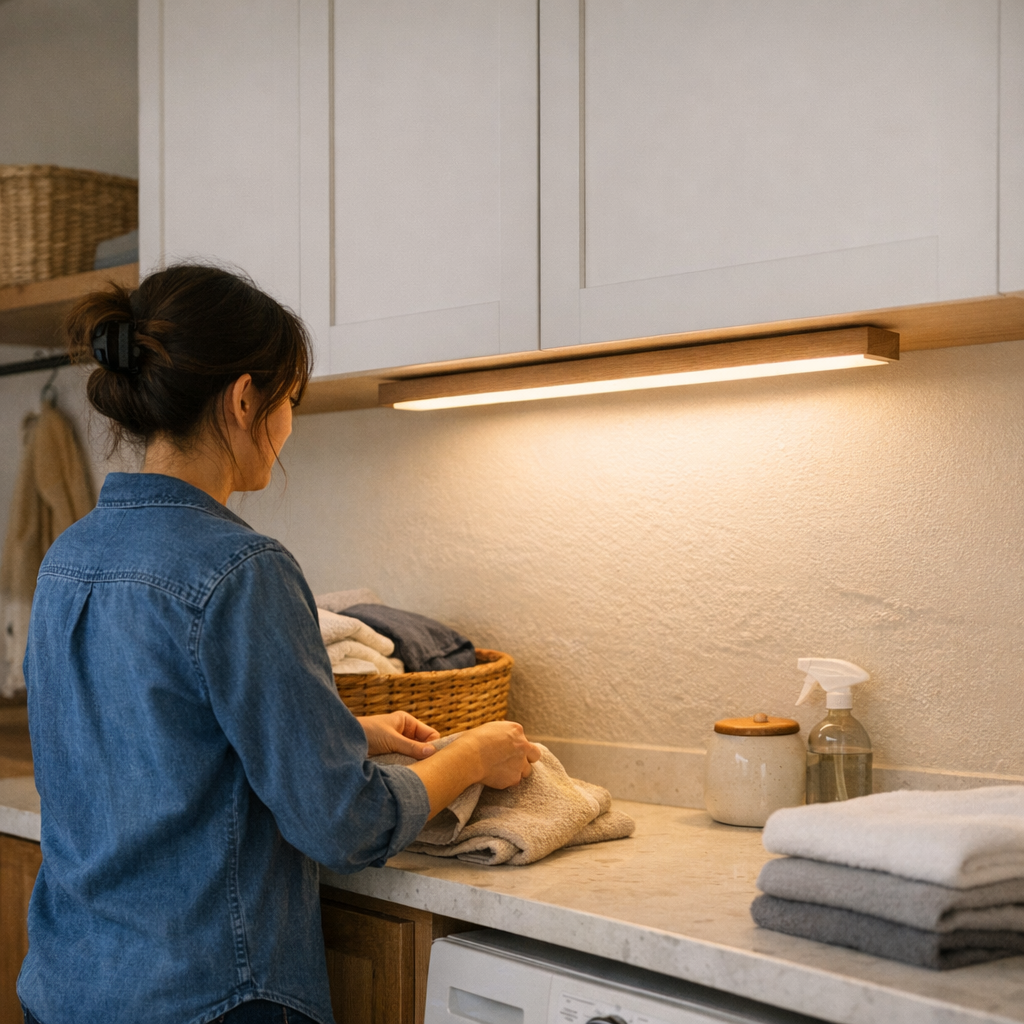
You can spot the problem after just a week: a room that looked “finished” under new ceiling fixtures but keeps interrupting your routines. You pause at the bottom stair, feeling for the next step. You shift between shadows and glare in front of the bathroom mirror, or reach blindly for socks in a laundry corner that’s always dim. Most lighting passes the install-day test—but when daily movement brings weak visibility, missed keys, and slowed routines, it’s clear the fixture choices or placement aren’t matching what the space actually demands.
The Hidden Gaps in “Complete” Lighting
Flush mount ceiling lights, semi-flush styles, and linear fixtures check boxes for general fill and a presentable look. But lived-in use quickly reveals what’s missing. Behind a bathroom sink, shadows appear each time you lean closer. The mirror throws a lopsided glow, forcing you to shift left and right just to shave or apply makeup with both sides of your face visible. Hallways promise openness but instead break into segments—one area bright, the next lost below a shadow from a doorframe. In the laundry, the countertop vanishes into a shadow every time you drop a sock or hunt for change. The “bright enough” fixtures fix the look, not the movement—or the frustration.
Daily Friction That Builds Up Fast
Lighting doesn’t have to fail dramatically to slow you down. Miss a stair edge late at night. Bump your knee on a hallway turn hidden from the main fixture. Fumble for keys on a shadowed entry mat—these little stumbles cue you that brightness isn’t the same as easy use. Kids, guests, or anyone carrying an armful of groceries feel these flaws even more, and that early “ready” feeling from new lighting evaporates. The problem isn’t how bright the room is; it’s how well you can actually use it in motion, at speed, and on autopilot.
Why Ceiling Lights Alone Rarely Get the Job Done
Most homes were wired with one big overhead—easy for an electrician, simple for a builder, detached from how you’ll actually move and see every day. But rooms are full of edges and obstacles: corners you rarely step into, work surfaces tucked under cabinets, and step-downs or doors that make light fade before you need it. The result: any ceiling light leaves dead angles. There’s always a vanished patch behind the washing machine, a vanity shadow, a bottom stair you feel around for in the dark, or the back third of a countertop lost in gloom. The more you repeat a routine, the more these dead zones get in your way.
Routine Use Reveals What Brightness Can’t Fix
- Stairways: Overhead lighting pools at the landing, barely reaching the full depth of each step. As you climb at night, you slow down—eyes adjusting, one hand ready for the rail.
- Bathrooms: With only an overhead, grooming becomes guesswork. You bob side to side for clear light; shadow patches force you into odd angles; mirror glare returns every time the sun shifts.
- Laundry rooms: The fixture says the room is bright, but the working edge—where lost coins, tags, and dust collect—remains a blind spot. Tasks turn into a hunt by feel, or you prop a flashlight in a laundry basket just to see clearly.
- Entryways: Entry mats and shoes disappear at the threshold. Wet weather adds glare, making it easier to miss a step or track water past the carpet while juggling bags.
- Hallways: Light fades just when you cross a door, hesitate at a threshold, or swing a laundry basket around—a stubbed toe or a bumped knuckle is the reminder that even “bright” spaces can create micro-risks.
Layering Light: The Real-World Upgrade
Ceiling fixtures do their job, but won’t erase the daily friction. Layering—combining ceiling lights with wall sconces, mirror lights, under-cabinet strips, or fixed task spots—is how you actually clear these snags. Even one well-placed fixture can erase years of stop-and-go movement, shadowed surfaces, and repeated hassle.
A Small Shift That Makes the Routine Smoother
In one stubborn laundry room, simply adding a damp-rated wall sconce over the counter made sorting and folding faster. Not because the bulbs were brighter, but because the old drop-shadow finally disappeared. No more feeling blindly along the back edge; no more digging for a flashlight in the junk drawer. This kind of “invisible fix” means less pausing, smoother movement, and a room that finally works as promised—without needing a full overhaul.
Why Placement Rules (and General Advice Fails)
It’s not just the number of fixtures—it’s where the light lands. Wall sconces defeat those sink and mirror shadows overhead fixtures ignore. Vanity lights even out both sides of your face and stop the shadow play. Under-cabinet strips pull the working edge of your kitchen and laundry into full visibility. In any room facing moisture or drifted-in humidity—bathrooms, laundry, certain entry zones—damp-rated fixtures last longer and prevent sudden outages from corrosion or short circuits. General lighting advice ignores the real pain: poor placement makes a room look right and feel awkward for years.
Spotting Trouble Spots Before They Drag Down the Room
“Looks good, works bad” lighting signals itself with these repeated aches:
- Do hallway shadows stretch from every doorframe or corner, breaking up your walk?
- Does the mirror force you to lean or shift just to get a clear, shadow-free reflection?
- Is the laundry counter’s back edge always lost in the dark unless you move a lamp or lean at a strange angle?
- Are the stairs clear at noon but vague at night, causing that tiny hesitation with every step?
- Do you find yourself squinting or fumbling for keys at an entry or in corners, even with the lights on?
If you recognize these, you rarely need to rewire the whole room. Targeted lighting—just one or two purpose-placed fixtures—often dissolves the most stubborn friction better than a new all-room fixture ever could.
Quick Tips for Targeted, Reliable Lighting
- Ignore the old junction box habits—light what you actually use. Place sconces, under-cabinet, or task lighting directly where you work, move, or pause, not just where there’s a pre-cut hole in the ceiling.
- Never skip damp-rated fixtures in moisture-prone spots. This is non-negotiable in bathrooms, laundry, and corners that stay steamy or are cleaned hard—risking flicker or corrosion costs you visibility and safety.
- Test with your real routine, not just a glance. Walk the space after install. Any step, counter, or face that stays in awkward shadow gets its own lighting fix—don’t settle for “good enough” brightness at the center.
- Balanced, shadow-free movement beats brute brightness. The best setups let you move, wash, sort, or check the mirror without pause—not with floodlights, but with placement that clears every hurdle your routine finds.
At the End of the Day, It’s About Quiet Reliability
A space that quietly supports you, day after day, almost always adds a focused fix: one stair sconce, a mirror-side task light, or a slim under-cabinet strip where the general overhead fails. These aren’t splashy upgrades. They’re what makes a room move from “finished on paper” to a space where motion, vision, and daily tasks happen without interruption, second-guessing, or shadowed edges.
See which purpose-ready lighting options can smooth out your space at LightHelper.