
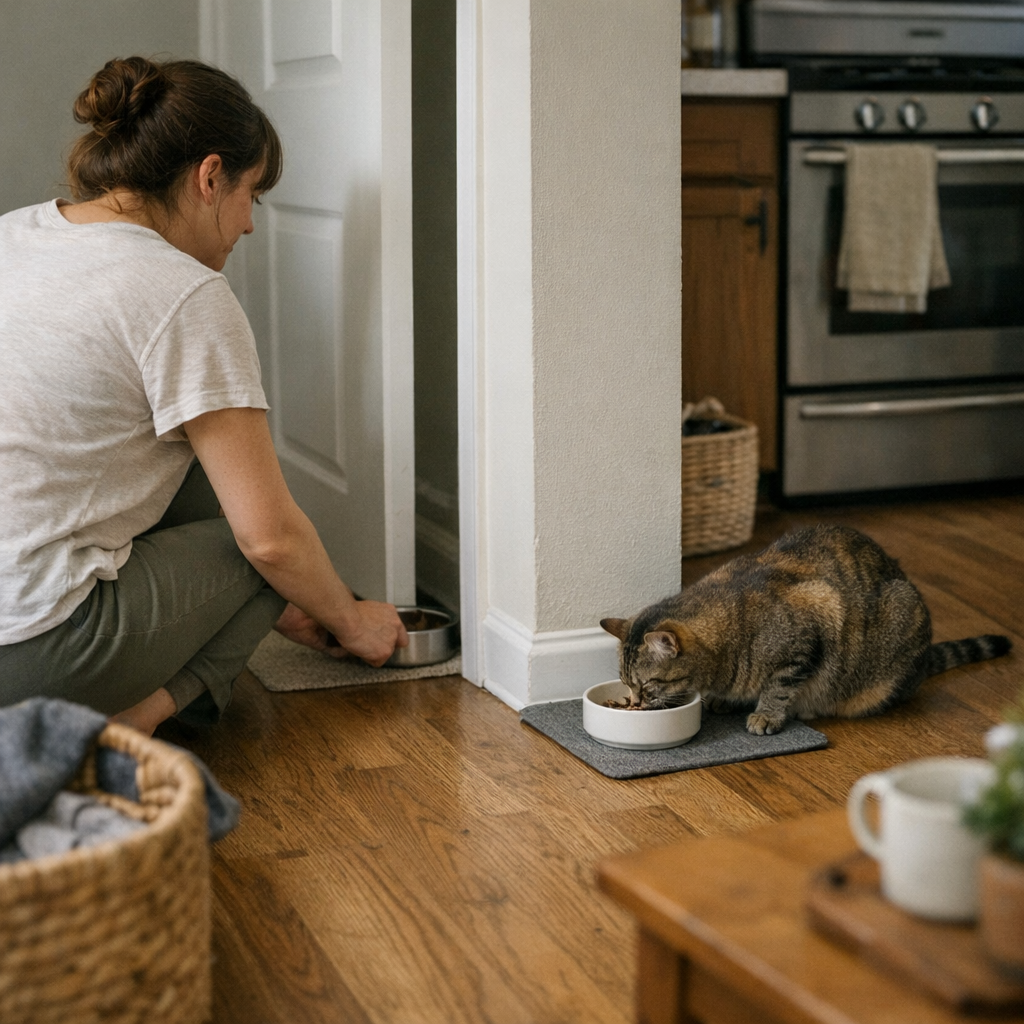
The promise of a “neat feeding station” for multiple indoor cats collapses quickly under real, repeated use. By meal three, the mat that once looked organized is already betraying you: bowls drift until one wedges under the cabinet, kibbles scatter into unreachable cracks, and at least one cat is left hovering, waiting for a clear spot that never lasts. Crouching for escaped food or blotting up a fresh water spill becomes part of your actual routine—no matter how perfectly you set it up the night before. Tidy at a glance, messy in lived reality: the friction doesn’t just return, it spreads. You notice, every day, that a single “feeding area” is quietly working against you—and against your cats—in a way the packaging never admits. StillWhisker owners see this gap again and again: setups that clean up okay, but never keep the room or the routine on your side for long.
When One Feeding Area Is Too Many Problems
It seems rational: all bowls together, one compact mat, mess contained. But the close-corner solution breaks down as soon as routines collide—particularly when your cats have different eating speeds or want space. Real-world problems surface fast:
- Bowl drift: The bold cat shoves, bowls slide and overlap, and both become unstable. Bowls might hitch halfway under the furniture or block each other like it’s a contest, not a meal.
- Kibble leak: Crunchy food bounces or gets batted past mat edges, hiding along baseboards or vanishing under appliances, just out of reach until it starts attracting ants or dust.
- Crowded restlessness: One cat stalls while the other looks on, unwilling to share close space, or abandons the meal entirely, returning to pick at leftovers after the bottleneck clears.
- Mound of mess: By mid-morning, the mat shows a perimeter of ground-in crumbs, water rings, and sticky paw prints that seem to wander farther each day.
Every “quick reset” is wishful thinking: you wipe a surface, only to spot a pellet under the cupboard two hours later; you nudge bowls back, but every serving shifts things out of place again. The gap between what looks fine and what actually works deepens with each reset that takes longer than it should.
How Close Feeding Zones Start to Disrupt the Whole Room
The mess is not just local. Cramming all feeding gear into one spot quietly turns an organized feeding corner into a room-wide interruption:
- You find yourself side-stepping bowls while heading to the fridge or stepping in crusted-over puddles you didn’t see at first.
- Litter dust and stray toys creep into the feeding zone, then get tracked further, compounding mess in places you never meant to manage.
- The right cleanup tool (wipes, hand vac, broom) is close, but not within grab range—so you “do it later,” and little messes accumulate until later is much too late.
- Resetting after mealtime isn’t a two-second fix anymore—it becomes a separate task, often rushed or skipped, leaving you behind on the next round before you’ve cleared the last.
These aren’t isolated flaws—they’re the reliable signals that surface-only setups ignore. A system that hides daily interruptions under a veneer of visual order turns ordinary upkeep into ongoing hassle. If you find yourself bending for the same fix twice a day, the “organized” look is holding you back.
Reading the Real Signs: When a Feeding Setup Needs a Change
If your cats are blocking, waiting, or circling off before meals are over, the setup is delivering its own form of feedback. Patterned disruptions tell you exactly where the structure fails:
- One cat edges along the mat or stands behind another, unwilling to eat without space—leaving half the bowl untouched.
- The quieter cat finds an exit route instead of finishing, giving priority to distance rather than food.
- Unfinished meals are left as an open invitation for pests, not a convenience.
- You’re repositioning (not just refilling) bowls at almost every meal—no matter how well you thought you arranged things last time.
Repeated scuffles, leftovers, and cleaning delays aren’t quirks—they’re warnings that friction is baked into your routine. As every “reset” gets later and takes more out of you, the setup keeps adding invisible work to what should be a simple process.
Why Splitting Feeding Zones Lightens the Load for Cats and Humans
Actually separating feeding spots—not just sliding bowls a foot apart, but creating distance—changes the story overnight. Instantly:
- Bowls stay anchored. No more midnight migration to the baseboard or disappearing under the kitchen cart.
- Cats each claim a space without the constant side-eyes and strategic blockades. They eat directly, not defensively.
- Kibble fallout drops. Mess stops recurring on the same tiles or baseboard cracks.
- Cleanup turns into a single, knowable step—no crawling for lost food, no surprise puddles that sour the mood.
Set up a secondary feeding spot—even just a few rooms away—and you lose the tedious patchwork of fixing the same mess. The strain shifts from endless repair to quick, shallow upkeep. A bowl behind a hallway door stays clean till bedtime. That trouble-mat in the kitchen finally looks (and feels) low-maintenance, needing less kneel-and-sweep attention.
Less Stress for Cats Means Smoother Flow for You
With real separation, low-level tension drops away. No one guards. There’s no drama before every meal, and no lingering worry about late or uneven eating. Cats drift in and out of their own zones, leaving the rest of the room calm and unmarked. The one who eats slow and the one who eats fast both get what they need—without the human side having to play traffic cop or run interference.
Choosing the Right Spots: Quiet, Clear, and Out of Conflict
Location shapes outcome, not just appearance. The best feeding splits are not accidental but calculated:
- Out of sight: A corner behind a door or in a nook—places cats won’t meet eyes while eating—quickly reduces pushy attempts and boundary testing.
- Side access: Space on both sides of each bowl lets cats come and go without being trapped or blocked, ending the passive standoff.
- Avoid the litter zone: Convenience isn’t worth crossover mess or extra stress. Keep food far from where the litter box lives.
- Steer clear of major walkways: If your usual route crosses a feeding spot, you’ll collide with bowls or step in the mess, making the routine more stressful for everyone.
Look for trouble signs: If you’re always cleaning the same patch or redirecting traffic around a certain spot, don’t accept it. Rearrangement fixes outcomes, not just appearances.
New Setup, New Habits: What to Expect in Day-to-Day Use
The real benefit isn’t superficial tidiness—it’s friction finally dropping from repeated use. When feeding points fit natural movement and cat behavior, everyday pressures visibly lessen:
- Rarely do you see abandoned kibble or water pooled beneath the stove, waiting for a late rescue mission.
- Cleanup shrinks to a glance and a swipe. Deep cleans become rare instead of routine.
- Cats move freely, habits realign. No more pausing, pacing, or sneaking food after hours.
- The border between cat space and human walking space stops blurring; no more adjusting your route to avoid bowl drift or puddles in main pathways.
Instant resets fade away. The feeding area no longer demands reactive fixes every few hours. Instead, the setup stands up to real rhythms—matching the morning’s calm even after a long, busy day of repeated use.
Practical Tips: Keeping the Routine Easy to Maintain
- Spot-check after main meals: Fast scans catch stray crumbs and let you avoid bigger, later mess. Most days this becomes a matter of seconds.
- Keep supplies in reach: Wipes or a hand vac need to be within arm’s reach, not just nearby. If grabbing cleanup tools is its own step, old messes will get skipped—then circle back as work later.
- Flag any new friction fast: If a setup starts tugging at your time or feels tense again, shift locations a few feet or around a corner. Small changes can eliminate repeated stress entirely.
Above all