
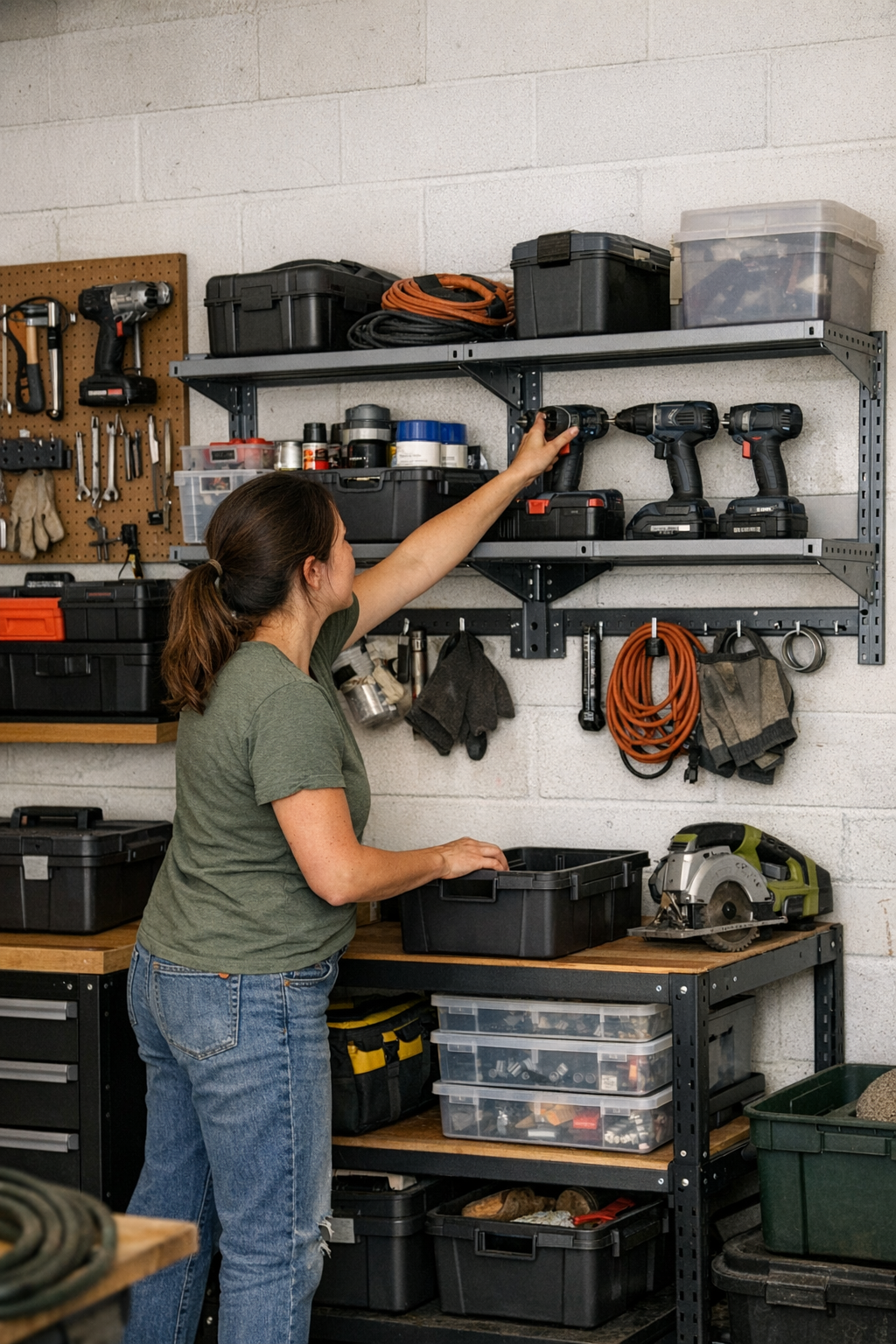
The first day always feels like a win. Shelves stand proud, bins line up, and the floor finally shows daylight. But by Wednesday, you start seeing the cracks: that sturdy shelf you trusted has a subtle lean, the rolling cart has migrated—again—into your walking path, and the wall rack’s perfectly ordered screwdrivers are wedged oddly as overflow gathers. Look closer and the clean install already feels less like an upgrade and more like a daily negotiation.
First Impressions Fade—Routine Always Wins
Any new setup can look organized on day one. It’s what happens on day eight, and day twenty, that matters. Think about the real flow: grabbing a sander mid-project, returning a heavy toolbox after a full afternoon, coiling hoses or cords back onto hooks. If your system resists sagging, wobbling, or collecting piles, you glide through each step. But when a shelf flexes as you return a drill, or you must nudge a cart sideways for the third time that week, you’re feeling the very first signs your setup is falling behind your actual use—and slowing you down without you even realizing it.
These aren’t just minor annoyances. Over time, every awkward reach, every stutter step around a misplaced bin, is friction against your routine. A setup that looked flawless quickly becomes something you have to manage and work around, rather than one that quietly supports your workflow behind the scenes.
The Real Test: Looks Organized vs. Works Organized
Walk into almost any newly arranged workspace and the differences are invisible. Rows are even, levels match. But what you don’t see at a glance is how each system will hold up after dozens of cycles of use. Will those wall shelves stay rigid when loaded—and reloaded—with power tools? Does the utility cart return to a neutral spot, or does it creep until you’re boxed in every night? Does “a place for everything” mean quick access three weeks later, or do you start stacking things wherever they fit just to keep the surface clear?
A shelf that’s anchored and supported not only looks right—it feels stable no matter what you return to it, no matter how often. You set down a heavy bin and nothing budges. But if the shelf gives even a little, you’ll unconsciously shift items to safer ground, doubling up on a more stable section and leaving the flexing edge to sag further. Over time, those little adjustments break the logic of your original zones—things migrate, corners become dumping grounds, and resets take twice as long because nothing fits back where it began.
Catching the Real Trouble Spots Early
The slow creep toward clutter isn’t a dramatic event—it’s small, repeated moments that build up. You notice a single spot collected with tangled extension cords, or a corner bin filling with odds and ends that don’t fit anywhere else. Maybe you wedge the rolling cart in front of a cabinet “just for now,” until it becomes a fixture you work around all week.
Each of these is a blinking signal. When you stretch to reach a tool blocked by something that never finds a true home, or you find yourself shuffling items on a soft shelf so they don’t tip over again, your setup is fighting your routine instead of shaping it. The system isn’t failing with a bang—it’s leaking time and movement with every cycle.
How Repeated Use Wears Down Weaknesses
Fast forward to a busy weekend: you’re cycling between workbench tasks, swapping tools, and restocking parts on the fly. The first hour with a new system feels seamless—everything is where you want it. But as the workload builds, weak spots show themselves. A shelf sags on the end and suddenly drills and tool cases are left in a teetering pile; you hesitate to return them as intended. Instead of resetting by habit, you’re stuck improvising—a little more with each round, until you’re spending as much time managing storage as working on projects.
That’s the gap between “looks tidy” and “stays functional.” Sometimes, the fix is simple: reinforce a shelf midpoint, re-anchor a wall bracket, or split a zone that overflows too easily. Even a minor adjustment—when aimed at the exact spot that’s tripping you up—can restore the flow enough that resets go fast and the system supports you, not the other way around. The trick is to act before today’s small workaround becomes next month’s constant friction.
Warning Signs Your Setup Isn’t Really Working
Is your storage system lagging behind your routine? Watch for these telltale symptoms:
- One cart or bin always seems in the way, and you’re shifting it every time just to get through.
- A shelf edge flexes or feels spongey as soon as you put a heavy tool back, making you avoid it for the rest of the day (or week).
- “Temporary” piles or overflow corners are quietly becoming permanent setup features.
- Returning items at the end of the day turns into a puzzle—pieces no longer fit, zones blur, and you’re left restacking or settling for wherever there’s room.
- The wall is covered, but you’re still left searching for real, reliable access—because surface order hides underlying chaos.
The Reality Check: Pressure-Test Your Setup
Don’t wait for routine to grind your layout into frustration. Pressure-test it now: load the heaviest things where they belong, shuffle items in and out just as you’d do on your busiest day, park carts where you naturally leave them. Does the whole system keep its shape—no sagging, no accidental bottlenecks, no “junk corners” starting to form? If not, make adjustments: add support, re-space shelves, clearly define each zone, so you reset by instinct, not struggle.
This is the difference between a setup you live with—and one that actually works as hard as you do. The goal isn’t perfection; small fixes make a world of difference if they let you move, return, and retrieve without friction piling up. The less time you spend managing the setup, the more you get out of every work session.
Turn Daily Annoyances Into Smoother Flow
No layout is immune to a little friction, but the right adjustments can reclaim wasted steps. Well-anchored shelves stay reliable under stress. Carts that park out of flow keep pathways clear and returns easy. Distinct wall zones block overflow from bleeding into other areas. Setups that score high on easy reset—where quick, single-motion returns are the norm—don’t just look better. They feel better, every single cycle you go through.
The real payoff isn’t measured in how neat things look after a big clean, but in how little you think about the storage on your busiest day. Fewer stalls. Smoother movement. Zones that hold. That’s a system performing for real life—a setup that finally matches how you actually use the space, not just how you pictured it the day you installed the shelves.