
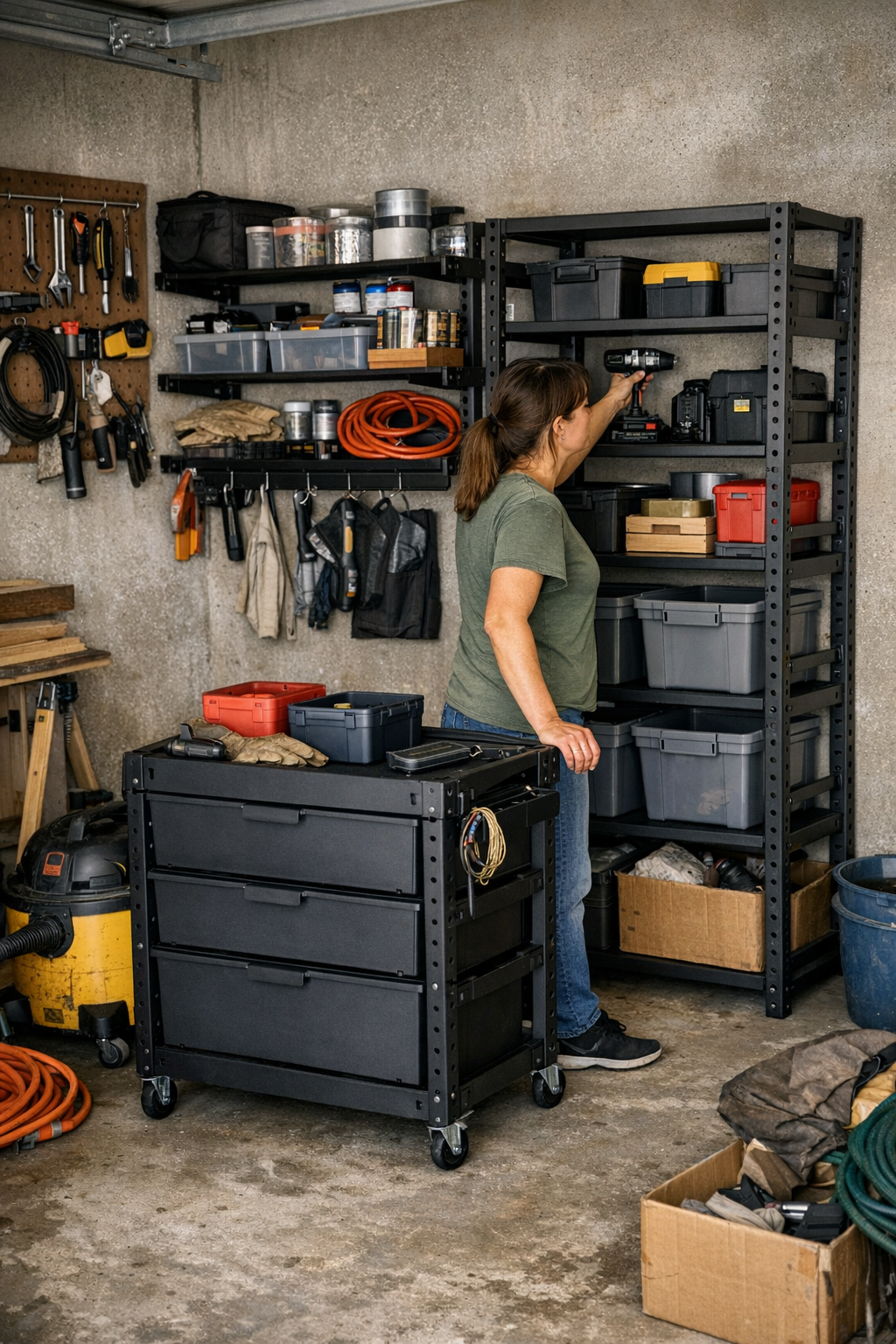
The Neat Setup That Doesn’t Last
Anyone who’s ever lined up a set of cabinets or snapped together a modular shelf knows the momentary satisfaction of a picture-perfect setup. For a day or two, every bin and tray sits in the right spot. But as routines kick in, friction pops up fast—cart wheels catch, tools float from assigned spots, narrow pathways become obstacle courses, and corners meant for “overflow just for now” turn into permanent dumping grounds. The truth is, setups that look finished on Saturday crumble by Wednesday under the pressure of real use.
When “Storage” Only Looks Organized
The real test isn’t more space—it’s smoother movement. There’s a quiet difference between stashing things away and building a setup that keeps pace with you. Cabinets and racks promise order on install day, but repeatedly shifting carts just to clear an aisle, sliding a door around a bin you didn’t plan for, or lifting three trays to reach one screw—that’s where cracks appear. Day by day, these micro-obstacles slow you down and pull energy out of every routine. Organized storage that interrupts your flow is just another form of clutter.
Seven Days In: The Real Scene
Picture your garage or utility shed after a week of everyday projects. The shelf that started spotless now hosts “temporary” piles—garden gloves over toolboxes, a bag of fertilizer wedged behind painting supplies. The rolling cart looks parked and perfect, but every time you bring in the mower you’re forced to shuffle it back and forth just to pass. Need a box of screws? You’ll be restacking bins again, because the “logical order” from day one never survives five hurried returns.
Tools start living on the workbench because the wall-mounted rack forces you to thread past protruding hooks or other bins just to hang them up. The one awkward corner—too small for real storage—collects everything with no home until it becomes a mini-landfill. No single moment is dramatic, yet each missed return, each detour or workaround, chips away at the tidy illusion.
Where Setup Friction Sneaks In
If you recognize these signs, the system is underperforming:
- Paths that shrink as carts, bins, or doors jut into the aisle
- Stacks or piles left “for the weekend” that quietly settle in
- Flat surfaces buried under tools in limbo between use and put-away
- Drawers and cabinets swinging open more often than closed, because it’s a hassle to use them
- Feeling boxed in—moving sideways instead of striding through the space
- Return routines getting longer, not sharper, week by week
These triggers reveal a system that stores, but doesn’t serve. Setup pressure exposes where theory falls short of lived reality.
Looks Organized…but Blocks You All Week
Walk through any setup that’s supposed to be “done.” Row after row of cabinets may look sharp but force you to inch along a narrow chute, especially when both sides eat up the aisle. Stacking trays sound smart until “retrieving one” becomes solving a small puzzle. Wall racks—great in the blueprint—often end up as logjams, demanding an awkward reach every time. With each day of real use, pathways close in, piles emerge, and minor hassles quietly turn into the new routine. Visual order can mask a setup that’s actively slowing you down.
Small Layout Tweaks, Big Everyday Payoff
Most real fixes are about inches, not overhauls. One simple shift—moving adjustable, open-access shelves to a single wall—freed enough aisle width that carts could park without trapping you in. Suddenly, bins went back in place without shifting neighboring trays. Redesigning for open movement (not maximum storage) pried those lost inches back and made everyday resets snappier. Who needs another cabinet if you unclog the path you already use?
Take stock after a week of normal churn: Is your main route still open? Can you reset tools fast? Or does every return risk triggering a pile-up “just for now”? Minor changes—grouping high-use items in arm’s reach, repositioning carts closer to the door, leaving one wall spare—create setups that bend to your real routine, not just your layout plan.
Return Flow Is the Real Barometer
The best setups almost disappear during use—you move, grab, and return without breaking stride. If you catch yourself detouring, ducking around corners, or mentally putting off the reset (“I’ll put this away later”), the system is leaking. Test yourself: Late in the week, walk your most common paths. Where do you detour, reach, or get jammed up? Adjust one element—a shelf height, a cart position, a bin location—and watch the space open up. Sustainable order comes from how easy it is to maintain, not from a quick install-day snapshot.
Build Storage Around Routine, Not Just Floor Plan
The right solution depends as much on habits as on square footage. Wall-mounted organizers are gold in tight corners—if nothing nearby blocks the approach. Open shelves beat deep cabinets if you’re always rotating large gear. There’s no single answer, but setups that follow your rhythms—not just the room’s geometry—hold up week after week. Pay attention to where you pause, pile up, or hesitate: that’s where friction quietly builds.
What Actually Works, Week After Week
The true mark of a solid system is not how much it stores or how “finished” it looks, but whether it holds together under routine pressure. Most of the time, improvement means making common zones easier to reach and resets simpler—not adding more places for overflow to hide. Smooth-functioning setups reveal themselves in how little you think about them—and how rarely things start piling up for “later.” Clarity and movement outlast neatness every time.
Find modular storage systems, cabinets, mobile units, and workshop organization that actually work under real-world conditions at StackNest.