
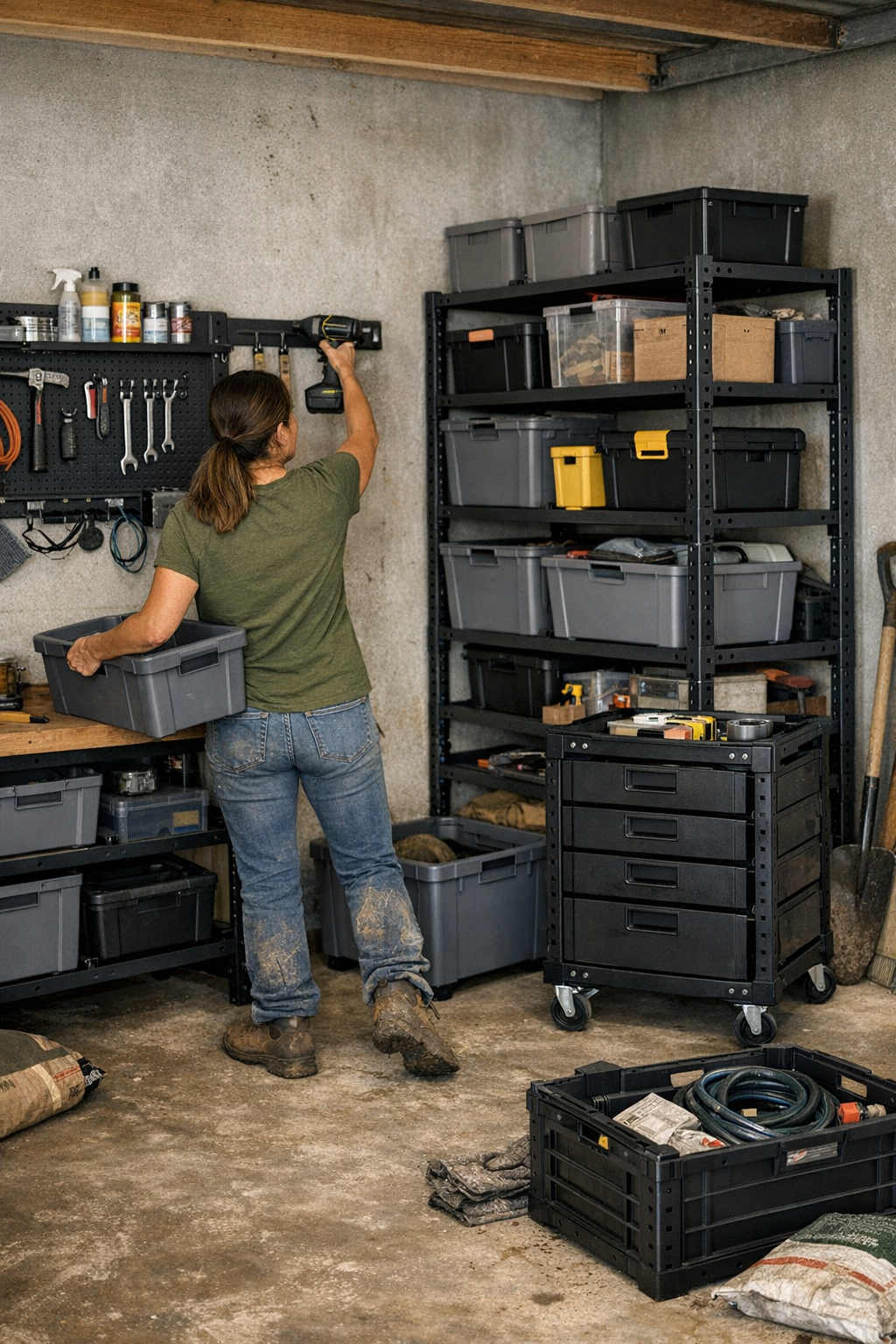
The difference between a space that “looks organized” and one that truly works for you is exposed at the exact moment you’re in a hurry—reaching for a tool, trying to reset the bench between jobs, or hunting for that one item you know you put “somewhere obvious.” In the world of garages, workshops, and utility rooms, the setup isn’t tested by photos on day one—it’s tested by the repeat friction that creeps in day after day.
Where Friction Lurks: The Subtle Enemies of Flow
Most setups start out promising. You spend a weekend lining up shelving, add a fresh cart, maybe even label every bin. At first, there’s relief: everything feels in control. But fast-forward a few weekends of real projects, and the cracks show.
Do you find yourself nudging a cart aside—again—just to swing open a cabinet door? Unstacking two lighter bins to get that heavier one you always use? If grabbing a screwdriver means weaving through an awkward footprint or shuffling an overflow pile for the third time this week, your storage is silently slowing you down. What looked efficient becomes a daily source of tiny interruptions.
When “Organized” Turns Into Obstacles
An area that appears uncluttered on day one can quickly sabotage itself under stress. Return a tool after a long project and discover there’s no clear place—so it gets tossed in the nearest open bin. Then you block a shelf with leftover gear. Soon, small delays become predictable: sidestepping, pushing aside, rummaging. Every extra step and blocked route reinforces the same truth: the system fits the stuff, but not the way you actually use the space.
Reality Check: The Shuffle Trap in Action
You finish yard work with tools caked in dirt. You bring a shovel back to the garage, but can’t return it to its intended spot—maybe a camping cooler is blocking the shelf, or a folding chair wedged in from the last “reset.” Out of time, you lean the shovel against a wall or wedge it into a bin. By next weekend, it’s buried, and the quick return becomes another drawn-out hunt. Over time, what should be “grab-and-go” turns into constant reshuffling. The system doesn’t fall apart all at once—it wears you down through accumulated friction.
Overflow Zones and Corners Gone Stale
Every setup develops trouble spots: one shelf that absorbs anything that doesn’t fit elsewhere, the back corner that becomes a graveyard for half-finished projects, a stretch of wall that’s labeled but never truly used. When those overflow areas swell with stray items—when you keep parking a cart in the only clear floor path, or junk spreads into the same awkward corner—the layout has stopped supporting you and started resisting your flow.
Overflow signals lost ground. It eats up valuable floor space, clogs walkways, and bogs down even the quickest reset. The mobile cart meant to increase flexibility becomes immobile—parked in front of standing space, collecting whatever you can’t put away quickly. Instead of relieving chaos, your “solution” reshuffles it into places that interrupt real work.
Pretending to Be Organized—Until Use Proves Otherwise
Beneath the surface order—stacked bins, neat labels, fresh lines on the floor—old problems often persist. If putting anything away regularly means shifting something else or inventing new categories on the fly, your routines suffer. What starts as organization slips into a free-for-all: categories blur, clear paths vanish, and the time spent “maintaining” only increases.
Unlocking Flow: One Upgrade Can Change Everything
True improvement rarely means a full overhaul. Often, one smart tweak unlocks your whole routine. Swap a deep, double-stacked shelf for a shallow wall rail above the bench: suddenly, you’re not reaching over three bins for pliers—they’re just there, in sight, at hand. No more stacking and restacking. The setup isn’t perfect, but every grab-and-return is smoother, faster, less likely to snowball into chaos.
These changes don’t erase mess forever—but they create a system that stays functional even as tools shift in and out. Over time, that’s the real difference: a workspace that adapts to use instead of collapsing under it.
Try These Two Real-World Tests
- Map your return moves: The next time you’re done with a chore, notice exactly how you put back the five things you touched most. Are there extra steps? Do you have to detour or move something else first? Small annoyances repeat and multiply fast.
- Spot your quiet spill zones: Pay attention to which areas gather items “just for now.” Are those shelves or floor areas attracting overflow because there’s no real home for those objects? This is the setup’s pressure test—where it breaks, revise with clarity or fresh storage before clutter becomes the default.
Making the Setup Last: Build for Use, Not Photos
The best setups aren’t the most visually impressive; they’re the ones that let you move without second-guessing, reset without dragging bins around, and adapt quickly as needs change. In practice, that often looks like:
- Mounting your high-turnover tools right where you actually use them—even if it “breaks” the symmetry.
- Creating designated cart paths free from blockage, not just empty floor on setup day.
- Picking storage shallow enough that nothing gets buried, so you see it, grab it, and put it back—no buried layers waiting for next season.
- Tweaking the system regularly when new overflow or dead zones appear; don’t wait until frustration sets in.
Setup is a living pattern—never finished, always adapting. A system that fits your real routine makes daily movement simpler, not more complicated. If you constantly find yourself blocked, overloaded, or reshuffling despite best efforts, it’s not disorganization—it’s your current setup holding you back. The right, practical adjustment can shift your workspace from a struggle back to a tool that actually helps.