
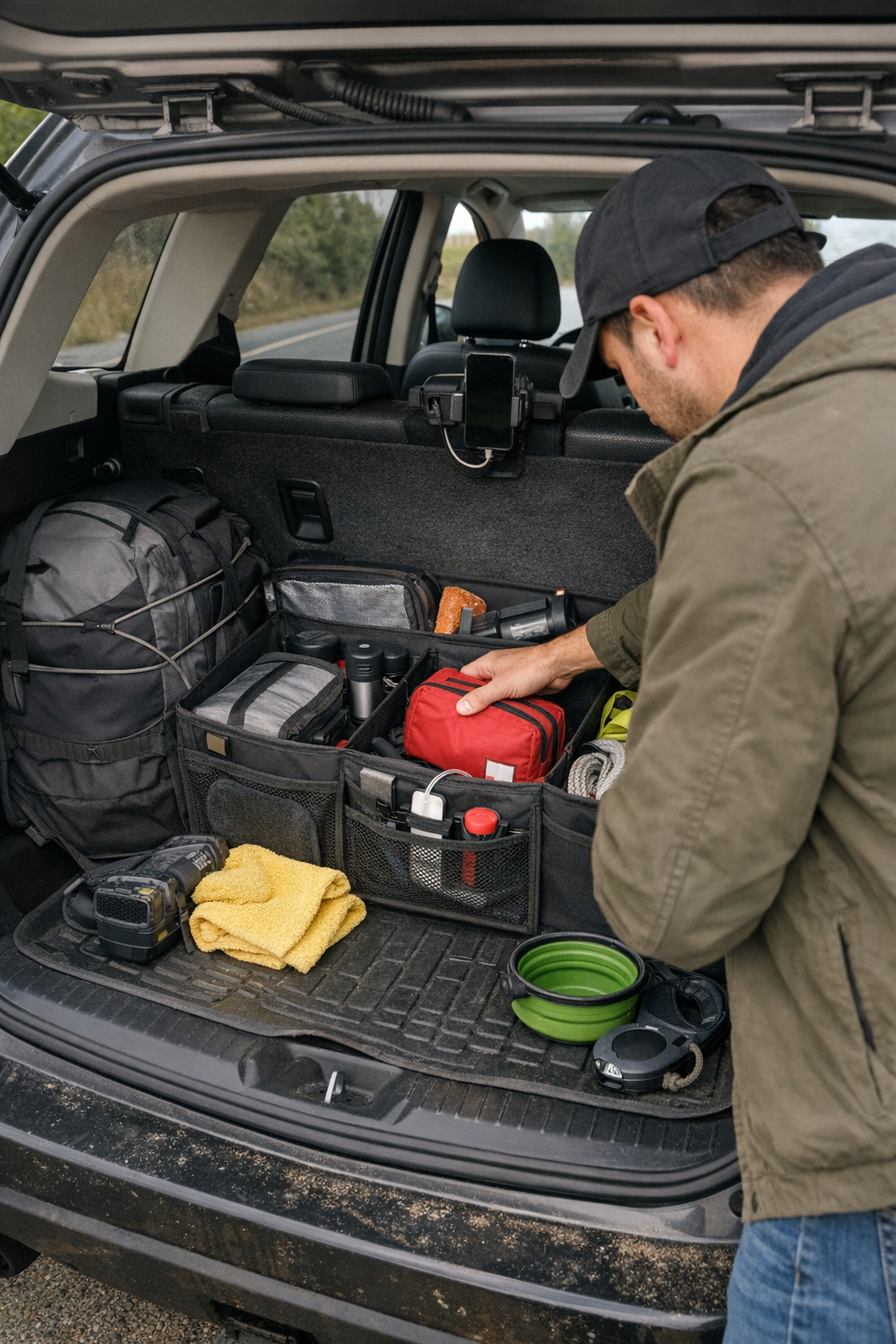
An organized-looking car is often just a paused problem. You get back in, see everything in its “place,” and only realize the setup still fails as soon as you reach: the charger cable is tangled around the gearshift, your phone mount pivots out of sight, or the emergency kit you need is trapped under a gym bag avalanche. The routine may look under control, but as soon as a real need hits—like a stalled battery on a freezing morning—the gap between “tidy” and truly usable becomes obvious. That’s when all the quick-stash habits, smooth trunk bins, or covered seat pockets turn from solutions into slowdowns. DriveWellSupply focuses on setups built for these return-to-car and just-in-time moments, not appearances alone.
When “Tidy” Fails: The Real Cost of Hidden Essentials
An interior that photographs well unravels as soon as conditions shift. Picture yourself in a parking lot at night, hands full of groceries, when you realize you need the flashlight—but it’s crushed beneath bags and the organizer lid jams. Or a roadside stop where the toolkit is “put away” but buried so deep that you unload half the trunk just to find a wrench. Visual order is meaningless if real-world access demands cold-fingered digging or reshuffling bags onto wet pavement. Every second lost isn’t just wasted; it stacks frustration and can turn a simple fix into a stressful episode.
Hidden inconvenience always returns. An organizer that buries jump cables or a charger cord routed under floor mats might keep things “clean,” but every delay—dead phones, untimely stalls, urgent detours—becomes harder to recover from. The real test is speed under pressure, not stillness on a good day.
Everyday Order vs. Real-World Access
Most setups run on something close to autopilot—until the shortcut breaks. Stashing the emergency kit beneath the backseat “for later” works until the kit’s blocked by a week’s worth of jackets and mail. Everyday clutter creeps: a cargo organizer traps wipes behind extra bags, or the cable writhes back into a nest each time you plug in during a rush. In the moment you actually need to move, grab, or fix, these “solutions” turn ordinary routines into repeated reach-and-retrieve struggles: blocking a quick cleaning, trapping a jump starter, hiding a charger under sliding junk.
The learning curve is harsh. You’re running late, one hand searching for the right cord while the other clears out receipts. The cupholder organizer “helps” until you realize you have to empty half of it just to fit your coffee. Small design choices—where a charger port runs, which organizer pocket stays open, how a seat cover sits—decide whether you can react smoothly or battle minor snags, again and again.
Spotting the Weak Spots: Where Friction Repeats
It’s the small, repeated interruptions that quietly build resentment—and mess. In shared cars, objects never stay put: the jump light in the glovebox moves to a random door, the air pump slides behind bags, stray cables reappear in weird places. Each swap or short trip increases the odds something crucial is just out of reach right when you need it.
Winter sharpens every flaw: after scraping frost, the battery pack is jammed far under grocery bags, so now lifting them out means setting food on frozen pavement. Or, in normal commutes, the seat-back organizer sags until it blocks seat levers—now you kneel and fumble for the ice scraper. Each new layer—bag, liner, cover, or organizer—can become one more barrier when speed or warmth matters most.
Surface Solutions, Deeper Problems
Over-organizing seems like the fix but often multiplies the pain. A trunk full of bins slows unloading. Deep seat pockets store tools well—until you need to fish for one beneath wrappers and a loose leash. Cargo liners bunch at the edge, so loading means wrestling a corner back into place every time. Even something as simple as a seat cover that slips with every entry quietly drains patience, making the car feel more like a puzzle than a tool.
Protection and order are useful only when they don’t make every re-entry or cleanup a double routine—one to protect, the other to restore access. The best system fades into the background; the worst one inserts new little obstacles every single day.
Small Shifts That Make the Difference
No one needs a start-over. The most useful upgrades are surprisingly basic: putting the emergency kit in a side pocket or mounted pouch so it’s never under a pile; running charger cords high along the console or clipped beside the seat—not hidden under mats; moving the dog leash and wipes to upper door bins you reach before carrying bags. After two or three cycles of real use, these tweaks separate the “just for looks” setups from the ones that perform. Instead of looking for a cable, you reach and find it on the first try. Instead of digging out a cleaning cloth, you swipe and move on. The difference is less daily drift, faster fixes, and less stress when a routine falls apart.
Balancing Looks and Usability: The Ongoing Tradeoff
Appearances fool most of us until a day goes wrong. An organizer that hides cables, or a sunshade that traps gear behind the seat, might keep things neat—for now—but the true test is in awkward, repeated moments: when you have to unclip, unstack, or move something just to drive. What matters is not if the car looks organized but if what you need actually stays within fast, easy reach—especially when you’re cold, running late, or sharing the car with someone else.
The payoff for getting setup structure right is practical: less wasted time, fewer minor frustrations, and an interior that feels less like a moving junk drawer and more like a tool you can rely on—even when routines break. A few pattern shifts—one better mount, a cleanup tool that’s grab-and-go, a charger that isn’t knotted under seats—quietly make every drive smoother. When a routine fails, those are the small differences that prove impossible to ignore.