
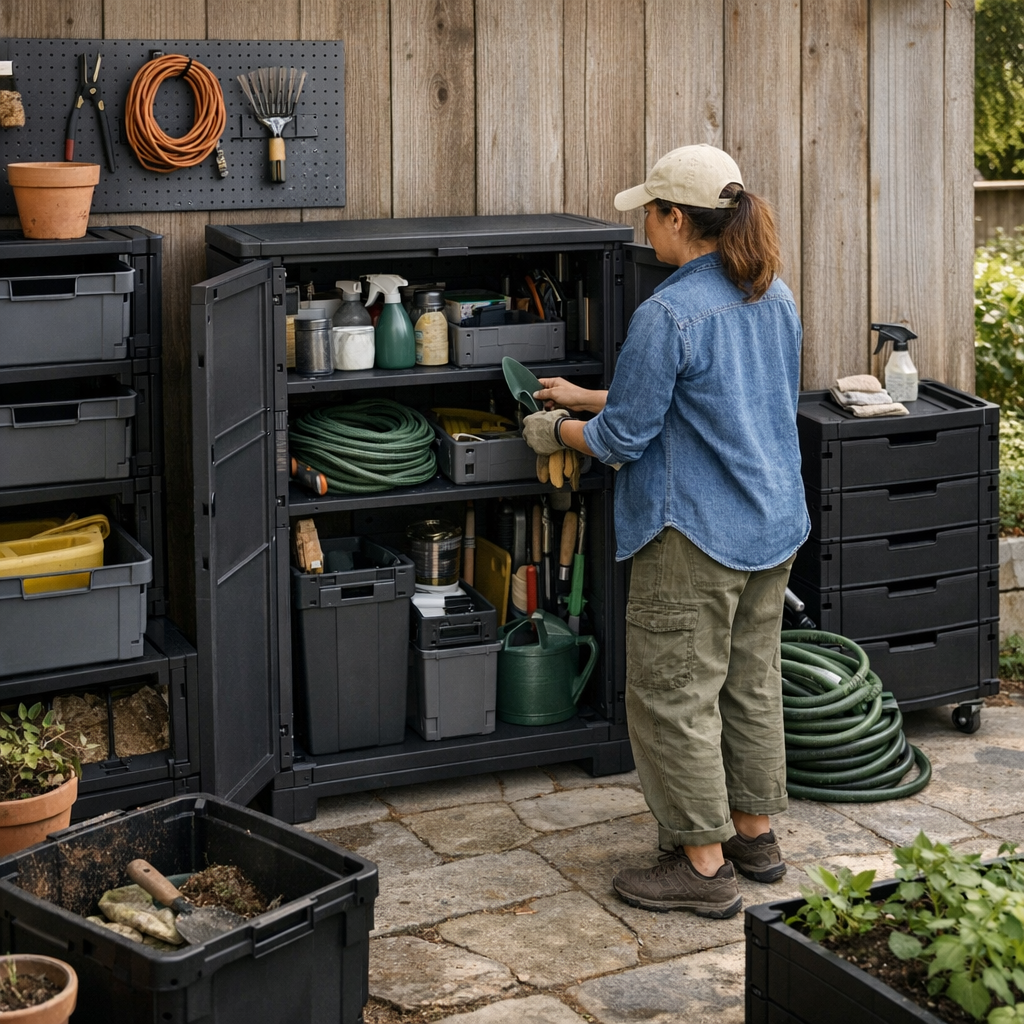
Most yard storage setups look right on day one—stacked bins along the fence, a chest tucked by the gate, a cabinet wedged by a dead corner. Everything’s off the ground and visually tidy. But “order” unravels fast when routine sets in: you grab muddy hoses, drop gloves in a rush, and reach for pruners with soil still clinging to your hands. The ideal layout starts to show its cracks after your first few cycles of use. Instead of a smooth return and easy access, you meet small blockades, cluttered edges, and the creeping sense that the setup is working against you.
First Glance vs. First Week: The Real Test
Out of the gate, any closed bin or chest feels like a solution, especially when grouped neatly by the wall or in a zone you want to keep clear. But organization that just looks neat quickly reveals its limits. Loose lids let in rain and leaves. Corners that were clear at setup become jumble zones by Wednesday. Each round trip—stowing a shovel, grabbing garden stakes—adds a new layer of inconvenience. Once you’re forced to slide a bin sideways or reach awkwardly behind a chest that crept out of place, you know the setup isn’t keeping pace with routine reality.
Where Clutter Actually Begins
The friction isn’t immediately visible. You notice it when grabbing clippers means reaching around a bin half-blocking the cabinet door, or when you have to rescue a trowel that slipped into standing water at the bottom of a supposedly “sealed” chest. Open bins that made sense fill with debris; tools you rinsed yesterday now rest against a slick of mud accumulation. Each retrieval or return is a little slower, a bit less direct—micro-hassles stacking up with every use.
Clutter creeps in through repetition, not rescue: it’s found in the daily detours, the extra hand shuffles, and slowdowns that chip away at the promise of a tidy, ready zone.
Sealed Cabinets vs. Reality—Where Protection Counts
The real difference surfaces on the third or fourth cycle of use. True weather-sealed outdoor cabinets, with their fit-tight doors and elevated shelves, protect against outdoor chaos. No corners turned into puddles, no tools blending in a debris-filled heap. When you finish watering or pruning, the action is quick: cabinet opens smoothly, everything lands in a defined slot or on a shelf, and you’re done. You don’t need a towel to reclaim your hand spade, and you skip the “sort, shake, and hope nothing’s ruined” ritual every time it rains.
Scenes That Spell Out the Gap
Think of this: late afternoon clean-up, a little tired, ready to wind down. The open bin? A single glove slides into a pool at the bottom, the pruner sticks on gritty residue, and you lose time trying to wedge tools around standing clutter. With a proper outdoor cabinet, you swing open the door, slot each item onto a clean, dry shelf, and close up—no improvising, no retracing your steps. The next morning, you start fresh instead of re-sorting. The cabinet isn’t just holding the gear—it’s holding the line for your whole routine.
Reset Friction: Why “Almost-Right” Setups Stall Out
It’s easy to cheat space with exposed bins or mobile chests, nudging them for a better fit. But these movable clusters almost always drift—blocking walkways, stacking in corners, and collecting a mess right by the entry. A bin rolls an inch too far and suddenly you’re sidestepping every pass-through. Overflow jams up a corner that’s supposed to be functional. The space that once looked so efficient on paper devolves into a slow-motion shuffle, especially as the weeks go by.
When you swap a balancing act of loose bins for a proper weather-sealed cabinet—especially one at waist height and with the right shelf—you stop sacrificing floor space and flow. Wet days no longer spawn puddles under your gear. Dead corners aren’t clogged by makeshift stacks. That single upgrade cuts the invisible friction: fewer detours, no more blocking your own path, and less frustration on every lap around your yard.
Spotting Genuine Friction in Your Storage Zone
Most organization mishaps aren’t headline moments—they hide in patterns. If you shake water off gloves before starting, dodge a mobile cart you never meant to park there, or find a shelf dusted in windblown grit every week, your system is signaling trouble. Rust patches on hand tools, sluggish resets after rain, and needlessly repeated reshuffling are not minor annoyances—they’re signs that superficial order is masking deeper clutter.
When Shelving Isn’t Enough: Racks vs. Cabinets
It’s appealing to keep gear visible on wall racks or rails, but unless the spot is dry and protected, you’re just swapping floor mess for wall mess. Damp tools dry slowly, and visible “order” becomes an illusion when you’re still pausing to clean before use. Fully sealed storage—whether low cabinets or upright chests—not only keeps tools dry and categories distinct, but sidesteps the trap of maintaining a wall of almost-right organization that requires constant tweaking.
Small Improvements, Big Difference: Why Protection Matters
The benefits aren’t dramatic at first. No big reveal—just the slow, satisfying lack of clutter, hassle, and backtracking that chips away at your patience in lesser setups. Over the weeks, this streamlined routine shows its value: you walk a clear path, return items in one step, and skip the busywork of draining bins or clearing sidetracked piles. The setup becomes an invisible ally, not another round of work after the work.
The true test for outdoor storage isn’t a tidy photo—it’s how the space handles a wet Saturday, a quick morning rush, a messy return: staying ready, not just looking ready.
What to Fix (and What to Abandon)
If your zone demands constant reshuffling, leaves puddles in supposedly “sealed” bins, or turns every return into an obstacle course, it’s time to rethink—not just tweak. The real gains come from direct-access flow: sealed storage raised off damp ground, routes that don’t force detours or repeated reshuffling, and layouts that match how you actually move and return gear, not just how much fits at rest.
Quality setup means the area feels easier every week, not harder. That means fewer blocked pathways, actual wall utility (not just filled wall space), zones that aren’t collecting overflow by Friday, and cabinets that stay put—holding the line for both order and speed. True storage solutions do more than look tidy on day one—they work with your real routine, week after week.
You can browse practical storage solutions at StackNest.