
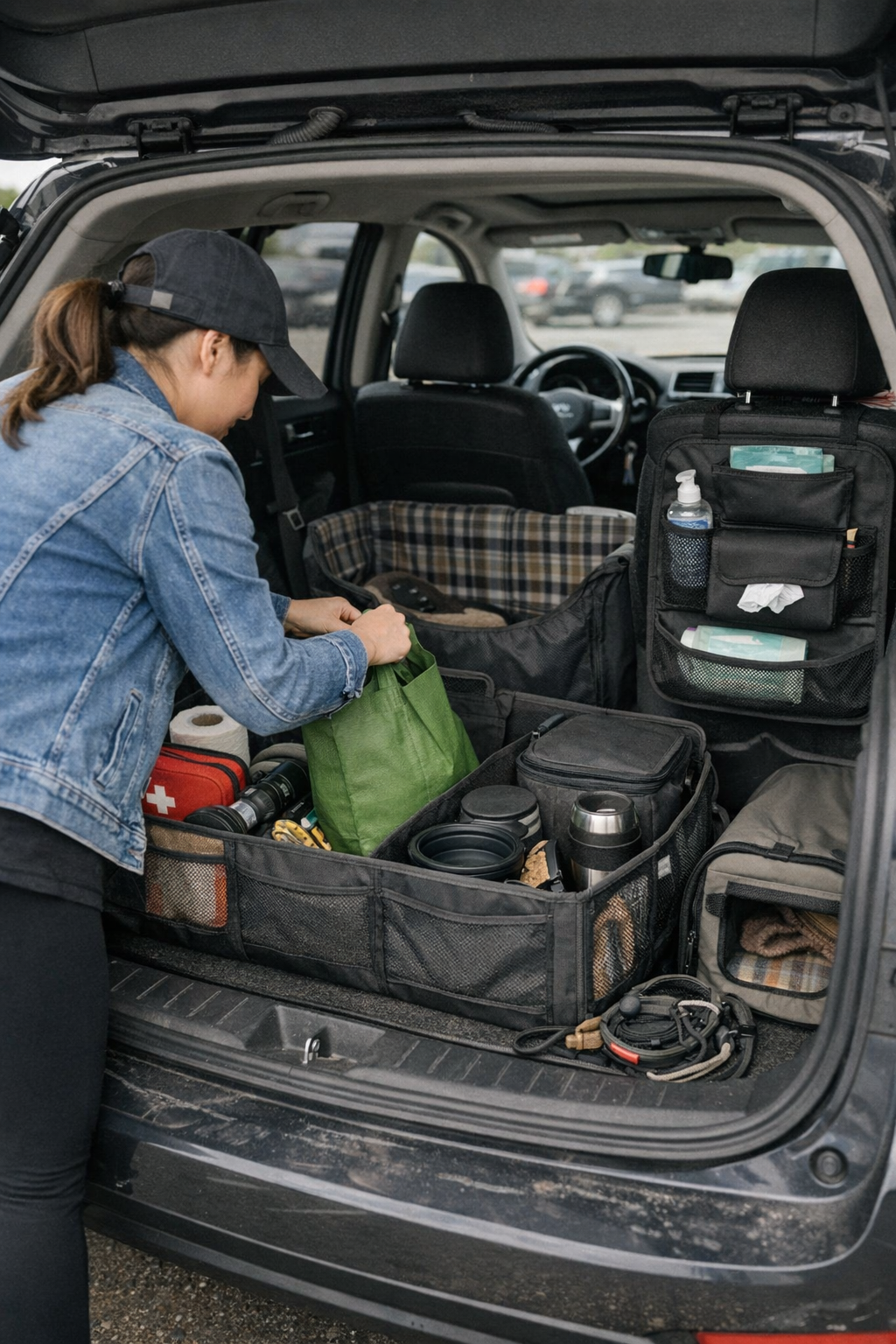
An organized car isn’t always a usable one—especially when you’re sprinting to the driver’s seat, arms weighed down, only to fight with a charger cable you can’t reach and a console that eats small essentials. The illusion breaks in actual use: running late, juggling groceries, or sweating through another school drop-off, your “clean” interior turns on you. A neat setup after a weekend reset somehow stalls your routine by Thursday, when tangled cords, drifting organizers, or blocked tray access add seconds and stress to what should be hands-free, one-move stops. This is where the difference between a DriveWellSupply-style setup built for repeat use, and a standard tidy-up, shows up in real life—when you most want your car to work for you, not against you.
Why Car Organization So Often Lets You Down
Too many car interiors start out crisp—with cables wrapped away, gear zipped out of sight, and every surface wiped down. But a logical layout at rest rarely survives the week. Real-life return: you swing into the driver’s seat after errands with a dying phone, only to find your charger coiled up behind the seat back or looped through that impossible-to-reach console wedge. What made sense in “reset” mode creates invisible struggle under everyday pressure.
Clutter isn’t the real enemy—predictable friction is. The moment you hide high-use items in the name of neatness, your own setup starts sabotaging you. It shows up at the seat edge, under the dash, or anywhere you repeatedly stretch and fish during ordinary drives.
The Difference Between Seeing and Guessing
Day after day, the gap between looking organized and feeling in control is measured in lost seconds and fumbled movements—like:
- Five-minute parking turns into three minutes spent rescuing a charging cable snagged under a sliding water bottle or buried in a deep pocket.
- Low battery means digging through a zipped pouch or under receipts wedged by the seat lever—right when you least want to be distracted.
- The seat-side tray looks intentional, but after two sharp turns, it’s migrated enough to make hand sanitizer a knuckle-bruising ordeal every time the light goes green.
Every missed grab, bent wrist, or extra pause isn’t just annoying—it is structure failure in motion. Momentum collapses. What was supposed to streamline your drive does the opposite once the cycle repeats.
Hidden Friction: Where Order Creates Its Own Problems
Chasing “invisible” clutter by stashing everything behind closed bins or in deep zip pouches often does you no favors. Do you actually have clean, fast access to your must-haves, or has the urge for tidiness buried what you touch the most?
Repeat use exposes where order backfires:
- Charger cables routed discreetly under the mat, only to be trapped and pulled tight when a thermos rolls over them—now even a quick plug-in means both hands and a full bend.
- Seat-edged organizers shift after a week of actual drives, so a simple tissue grab becomes a clumsy pat-down of the floor mat while traffic crawls.
- Trunk bins corral loose bags, but now loading groceries means shoving containers aside—every “order” upgrade comes with a new mini obstacle.
Visual calm in the parking lot often equals physical hassle the moment your routine speeds up—extra steps stacked up during rushed mornings, sudden storms, or mid-errand pit stops.
Repeated Use: The Real Test of a Car Setup
The real verdict on any car setup comes after a full cycle of busy use—never right after cleanup. “Looks great on Sunday” can become “works against me by Thursday” the instant you’re forced to re-do a motion you barely noticed on paper.
Return-to-Car Routines: Where Setup Makes—or Breaks—Your Flow
Trace out a typical dash-through sequence:
- Door pops open, arms full (bags, dog leash, kid’s backpack).
- Phone lands in your lap—charger should be within one smooth reach but is instead juggling for position with a sliding tote or lost under a floor mat fold.
- Keys, wipes, or sanitizer: either where you expect (waiting in a seat-side tray) or missing in action, orphaned in the glovebox after your “big organizing fix,” forcing a rethink mid-routine.
Every extra hunt or awkward bend slices flow out of your day. A smart layout lets you skip steps, not add them. The wrong structure, no matter how neat it looks, turns pressure moments into fumble drills.
Course Corrections: Small Tweaks That Actually Improve Use
The fix isn’t looser rules—it’s accessible design. Replace a zipped-up pouch with an open pocket for wipes and suddenly cleanup happens in-the-moment, not “later when parked.” Anchor charger cables above the center console (not routed blindly under carpets) and repeat plug-ins go from juggling act to automatic. The true value shows after a week—nothing has to be reset, repositioned, or redone after normal mess. The best car setups aren’t the ones that look impressive—they’re the ones that don’t slow you down, even after the third round of stops in a single day.
Real use exposes quiet failures: by midweek, cables slip under the seat, seat protectors shift, trunk dividers rattle aside, and your essentials start slipping away from “right at hand” to “where did I put that?” The visible clutter may be gone, but the function keeps misfiring where it matters—during real, repeated use.
When Lesser Setups Quietly Fail
The comfort of a “fixed” car fades fast when your week exposes the weak link. The charger skips loose, seat pockets sag, and even emergency tools or pet travel kits migrate from their “safe” spot to a low-friction, high-annoyance zone. A setup like this doesn’t just hide clutter—it dulls your routine, making quick actions just slow enough to skip or ignore.
If you find yourself “waiting until home” to plug in, or ignoring a mess because it means interrupting your route to dig through over-packed organizers, your structure has quietly turned against you. Real convenience means gear that stands ready for daily use—not just a surface that looks sorted while parked.
From Static Order to Real Flow: Designing for Repeated Success
The goal isn’t a magazine-perfect car—it’s a setup that tracks your reality, one everyday loop after another. When the phone slides easily into a dock, the charger cable sits where your hand lands, cargo stays fixed in the trunk corner, and nothing blocks your grab for wipes, you feel the difference. The best organization quietly disappears: no contorted arms, no under-breath swearing, no “I’ll clean it up later” habit. Order should move with you, not make you work for it—especially during those pressure-point routines that test setups again and again.
The best structure is the one you forget—because it never slows you down. If your car feels in sync with your habits, no matter how messy the week, that’s the order that actually counts. Practical flow always wins over neatness-for-show. It’s what makes the next drive less of a reset and more of a return to motion.
Find practical solutions for smoother daily drives at DriveWellSupply.