
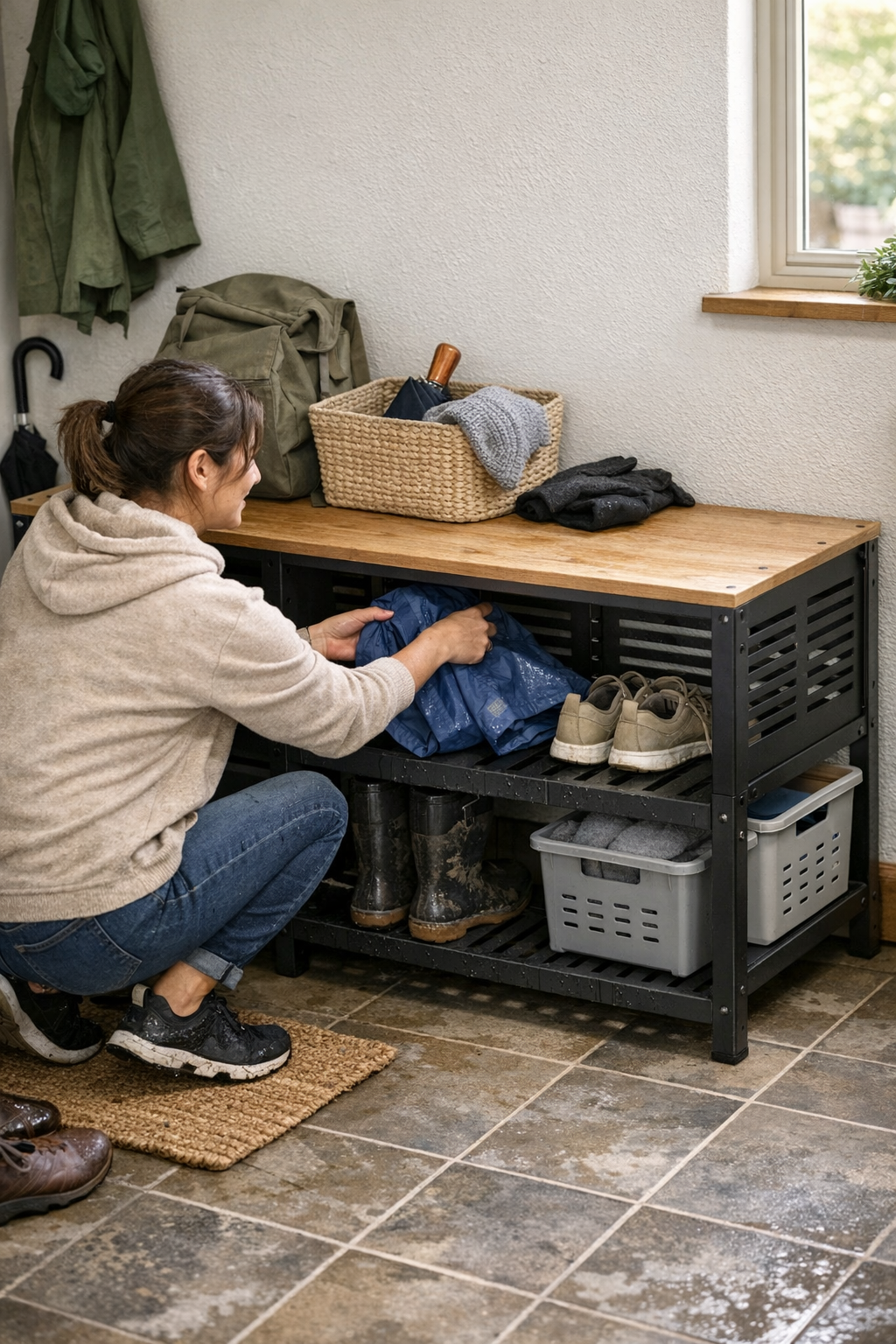
No entryway setup truly gets tested until wet gear collides with routine. The transition from outside to inside isn’t just about arriving—it’s the moment when rain-soaked jackets, dripping bags, and soggy shoes command the threshold. Every decision at that drop zone carries a cost: stash the gym bag out of sight, and you risk must; leave wet shoes sealed away, and tomorrow’s reset is already compromised. When the forecast turns unpredictable or entry points absorb high foot traffic, the wrong storage setup isn’t a minor hassle—it’s a fast-moving bottleneck that multiplies work and blocks flow in everyday life. Betweenry’s world of transition-space storage exists because matching finishes doesn’t solve the churn. Organization that looks resolved once, but breaks down after two wet days, isn’t holding up under real use.
When Closed Cabinets Hide More Than Clutter
At first, sealed benches and tightly lidded cabinets appear to solve chaos. They wipe away the mess—visually—leaving the entryway “finished.” But after a week of wet re-entries, the limits show. Moisture doesn’t quit at the door—it gets boxed in. Shoes closed from airflow stay damp through the next morning. Jackets zipped into hidden cabinets feed a cycle: the interior air hangs thick, damp patches linger, and soon, trapped humidity evolves into the telltale sour scent of mildew. Even neatly lined storage turns into a closed loop—every reset piles dampness onto itself.
These setups unravel fast in actual traffic: shoes jammed in bins remain cold and wet, gym clothes tucked away are musty by the weekend, and “one quick store” quietly turns an entire threshold into another cleaning project. Instead of containing mess, these routines push the cost downstream—now you’re spending Saturdays unboxing, airing out, wiping slouching cabinet corners that never quite dry.
Vented Storage: Airflow as a Daily Reset Button
The everyday cure isn’t visibility—it’s ventilation. Vented storage (open shelves, louvered panels, raised benches) gives damp gear a route to dry, breaking the buildup before it takes hold. Every vent, slat, or open edge is a release valve for trapped moisture. After heavy rain, shoes on vented racks feel touch-drier by evening. But their sealed-off counterparts—shut behind doors—still come out clammy or sour, and the cycle repeats.
On high-traffic days, this difference multiplies: three rounds of arrivals, layers of wet stuff, and yet the vented storage bounces back with ordinary air movement. No full “air-out” session needed, no reshuffling in the morning. It isn’t about making the threshold photogenic. It’s about keeping pace, so the reset is a quick sweep, not a burdensome overhaul.
Real-World Friction: How Wet Gear Pushes Back
Here’s what breaks down in actual entryway flow:
- Shoes in a closed cabinet are still damp at sunrise; the row cracks wide, pushing onto the hallway path as new pairs join, and the controlled look unravels.
- A backpack dropped “temporarily” on a bench lingers wet; soon, the bench edge accumulates hats, homework, rogue socks, and the whole seat disappears under overflow, muting any hope of sitting down.
- Crossing the threshold with groceries becomes an obstacle course: sidestep puddles, dodge hoodie piles, catch a whiff of hidden mildew. Order holds, but movement slows, and each pass-through tightens the bottleneck.
Small Changes That Shift the Threshold Routine
Most improvements don’t require new furniture. Tweaks work: swap a solid bench for a slatted one, drill a few vent holes behind shoe storage, or elevate units to let air circulate underneath. One real-world fix—a two-inch gap beneath a bench—broke the repeat offense of damp shoes refusing to dry. Even propping cabinet doors open for an hour during rushes, though inelegant, cuts the humidity load and keeps cleanup smaller.
The goal isn’t total dry perfection—after a storm, even the best-vented bench can’t magic away puddles—but to cut routine dampness. Prevent gear from stacking wetly on itself and the reset shrinks to a few minutes, not a lost half-day. Entryways that allow airflow resist turning daily arrivals into rolling maintenance projects.
What Vented Storage Can—and Can’t—Do
Keep expectations real: vented storage reduces—not erases—moisture headaches. It buys time, especially in back-to-back wet entries, but heavy coats or waterlogged boots will sometimes still need the mudroom or a drier’s blast. Still, for daily-use shoes, bags, and jackets, even small airflow upgrades lower the maintenance curve and shrink the risk. The point isn’t a staged photo finish—it’s a zone that resets naturally despite the churn, with less creeping clutter or hidden work under the surface.
Why Looks-First Setups Can Fall Short
The visual calm of a spotless cabinet breaks apart once daily reality starts pushing back. A storage area can look “done” on day one, but without breathing room for wet returns, those same shoes and bags start appearing in new, uncontrolled lines along the floor, and the bench turns into a shifting mound of “temporary” overflow. Movement through the zone becomes a sidestep dance. In contrast, vented setups end the cycle: resets are short, spillover retreats, and routine chaos stops taking over the edge of every surface.
Adapt What You Have: Easy Upgrades for Real Gains
Most entryways start with what’s already there. Upgrading doesn’t mean replacing everything—it means diagnosing weak flow and adding pressure relief:
- Drill vent holes in the rear panels of shoe cabinets for airflow without exposing clutter.
- Swap out a solid bench seat for a louvered one, or install a modular slatted top for better drying action.
- Prop up furniture feet—an extra inch is sometimes all it takes for air to circulate and for water to escape.
- Prioritize high-turnover surfaces: wherever wet shoes, backpacks, or coats land first, keep one side open or raised for faster drying by day’s end.
These adaptations shrink the reset burden. The entryway returns to neutral without a domino of chores—even in string after string of rainy arrivals.
The Payoff: A More Workable Transition Space
The only test that counts: does your entry hold up after five days of repeated, wet use? Vented storage creates a baseline that quietly resets itself—moisture clears, movement stays open, and clutter is less likely to colonize corners overnight. The proof isn’t in a glossy photo, but in the pattern: less odor, less mildew, and fewer “deep clean” weekends spent scrubbing what should have dried out on its own.
If your hallway collapses back into clutter after just a few wet entries, or the return path turns into shuffle-and-dodge with every bag drop, it’s not style you’re missing—it’s breathing room. An entryway that dries and resets fast can actually keep up with real life, instead of silently multiplying messes under the surface.