
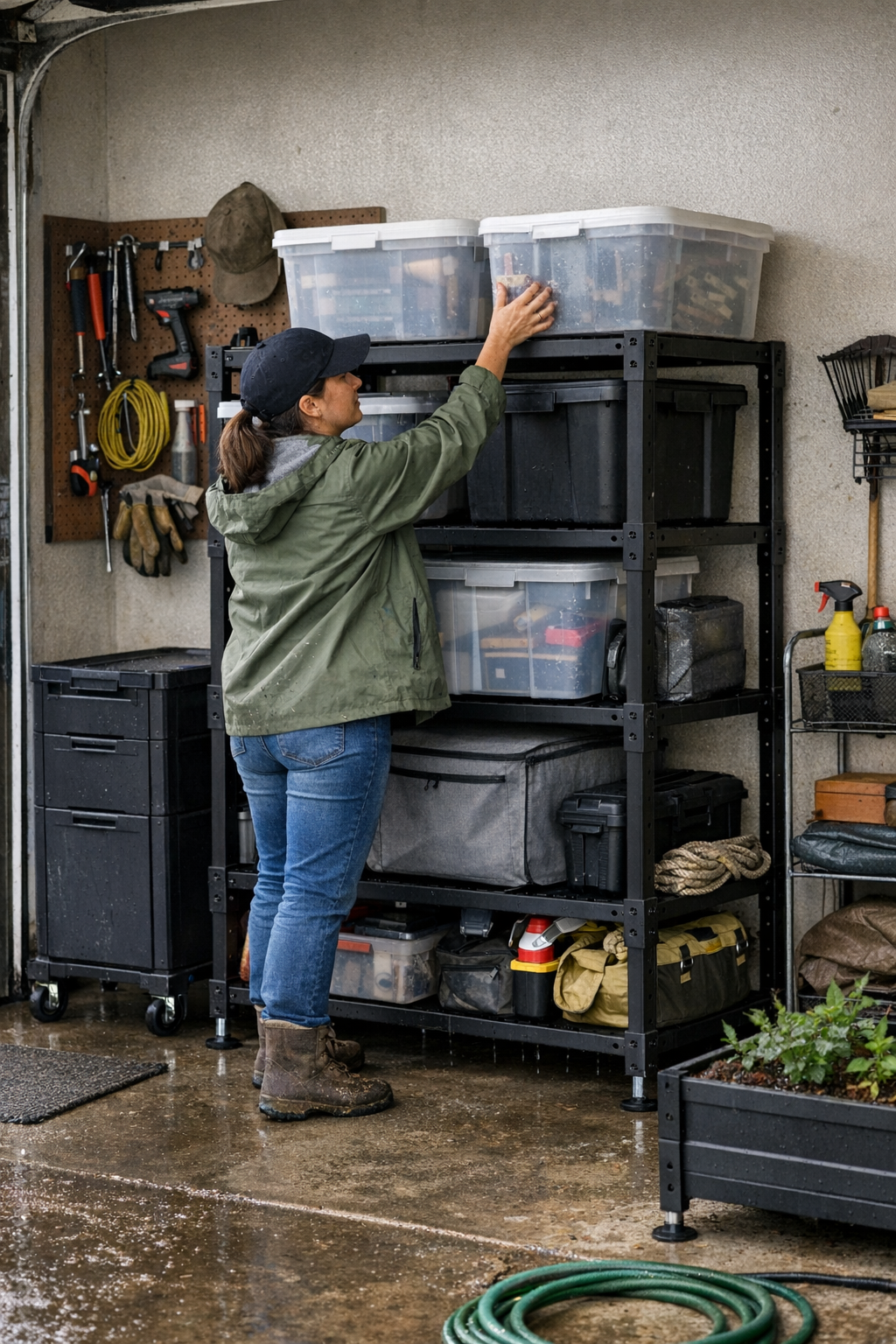
Every tidy garage or workshop comes with an expiration date. The first setup always feels satisfying—a weekend spent stacking metal shelves, lining up bins, and coaxing wall hooks into a grid that makes the space look driven and ready. Open the door, and you’re greeted by crisp ranks of tools and clear walking paths. But that visual order is fragile. The first stretch of wet, unpredictable weather puts the whole arrangement under pressure, and beneath the surface, the cracks spread faster than you think. The routine that felt sharp on day one quickly turns clumsy, weighed down by minor hassles that multiply as the months drag on.
How Rain Exposes Every Weak Link in Garage Storage
At first, it’s tempting to call any packed wall “good enough.” Shelving runs are loaded up, bins line the concrete, and for a while, everything stays more or less under control. Then the weather slides into its third gray week. Muddy boots come in, garden trimmings pile up, and water finds every low spot. Bins stacked low start to fight back; you kneel down only to realize they’re stuck like glue to the floor. Even a minor spill feels like an ordeal as you mop around every shelf post and box edge. Quiet leaks turn into slow rot behind wooden walls, or trigger streaks of rust on lower steel supports—problems you barely register until they’re routine.
This is the kind of friction that creeps up, not crashes in. Cabinet doors that used to swing wide now creak and catch. Handles get sticky, drawers swell, quick grabs become small wrestling matches. Those “quick fix” habits—propping up a bin with a spare board, sliding containers away from puddles, using towels as makeshift moisture barriers—go from rare to permanent. Each work-around edges the whole system closer to chaos, and yet the room still manages to look neat at a glance, lying about how hard it’s become to use.
Looks Organized, Feels Clogged: The Misery of Static Storage
Every storage setup photographs well on day one. But the reality of real use, over time and especially in less-than-ideal weather, peels back the façade. Low bins and flush shelving turn into anchors for condensation. Shelves by the main door become landing strips for runoff. Neat rows get blockaded by overflow—landscaping gear, cardboard left “for later,” a damp bag that never quite gets emptied. Movement slows to a shuffle: you nudge a rolling cart to clear your way, duck past the corner of a cabinet that always juts out, or reach awkwardly behind bundled hoses just to get at a screwdriver.
Wall space, originally meant for fast access, turns patchy and awkward. You use the hooks, but too many things hang in reach without ever really staying accessible. Corners that should be empty fill up with every unfinished project and “active” pile—visible, taunting reminders that the system supports storage, but not flow. It’s storage that works on paper but never quite matches how the space is actually used when the weather turns challenging.
When Wet Weather Turns Routine into Obstacle Course
Picture the reset after three days of relentless drizzle. You tramp inside with spattered boots, tools in one hand, dripping gloves in the other. The bins nearest the door are fused to the concrete by humidity. A storage rack beside the window shimmies with rust, starting to resist every time you pull on it. A plastic tote, its lid warped from inside damp, refuses to close no matter how you press. Last week’s mud lingers as a gritty crust where water pooled, and what once was a ten-second handoff—drop tool, grab boots, swap gear—now slows to a routine of wipes, shuffles, and unplanned wrestling matches.
It doesn’t blow up at once—it just gets messier, slower, and less inviting. Miss putting something back once and a new stack forms “for later.” Soon, a clear aisle clogs, key shelves become landings for overflow, and each pass through the garage means maneuvering past blockades you never intended to build. It’s a familiar downward slide: less access, more reshuffling, and a growing sense that the setup isn’t keeping up with you, just holding you back.
The Shift: How Raised Modular Storage Quietly Solves Everything
Eventually, after enough cycles of frustration, the pattern snaps into focus—and the solution isn’t just new shelves, but a wholesale shift in the way storage meets real conditions. Elevated, modular systems change the baseline: shelves perched above the floor avoid wet zones entirely, open frameworks promote airflow beneath bins, and wide open legs mean you sweep or mop underneath instead of around. No more muscling plastic bins off soggy concrete. No more unloading whole shelves just to discover which box is damp. Instead, weather-induced rewrites—propping things up, rehousing overflow, creating weird new traffic routes—fade out. Every “reset” becomes quick, functional, and almost boring in its simplicity.
One less shelf to drag dry. No more stacked-together bins trapping moisture for weeks. And most days, you don’t give the rain a second thought—you just hang things up, push the cart back to its zone, and move on. That’s the subtle but tangible upgrade: movement returns, bottlenecks disappear, and every item feels not just stored, but ready for use the moment you reach for it.
How Do You Know It’s Time to Adapt?
If your garage is a perfect climate capsule—sealed floors, never a hint of condensation, bone-dry corners even in storm season—you’re lucky and possibly alone. Most setups are at the mercy of at least one weak spot: a door that leaks, vents where cold air condenses, walls that sweat, or concrete that gathers damp overnight. The real signals? You have to sidestep an overstuffed bin to reach anything. A corner always smells musty and never quite dries out. Putting stuff back takes more steps every season. Those are signs the current setup was made for another reality, not for repeated daily flow in the real world.
What Real Adaptability Looks Like: Beyond Eye-Candy Organization
Not all shelving earns its keep over time. Wood warps, steel dulls and rusts, even “heavy-duty” hinges get sticky. The appeal of modular, raised setups is that they adapt—add a riser under a shelf, swap a warped panel, shift an entire bay as needs change or seasons shuffle the playbook. You aren’t locked into a layout that made sense only in dry weather or when storage was static. You can lift lower levels out of puddle range, widen a narrow shelf to keep gear apart, reroute carts for returns that don’t require zig-zagging around permanent obstacles.
This is the real secret to storage that works—and keeps working: it bends, evolves, and keeps access clear, instead of forcing you to fight a losing battle with last month’s footprint. The worst corners become useful again; blank wall feels like an asset instead of wasted real estate. Instead of repeating the same slow dance around roadblocks, you finally get to reset, adapt, and stay ahead of the frustrations that usually collect under the radar.
Flow Restored: Living with a Space That Moves with You
Raise your storage, and the biggest issues just start to vanish—not perfectly, but enough that friction recedes into the background. Water stains and swollen drawers become early warnings, not full-blown headaches. You stop burning ten minutes on cleanup for every trip inside. Wall hooks support what you use, instead of just displaying “stuff.” Aisles stay routes, not catch-alls. Most revealing: entering your workshop or garage actually feels like entering a workspace again, not an obstacle course or a holding pen for seasonal overflow.
The end result isn’t showroom perfection. It’s a setup that resets cleanly, zones that stay accessible, and routines that run smoothly no matter what the weather throws at you. Each season, you’re unpacking less regret and more readiness—the real payoff of a system made for use, not just for show.
Find more practical setups at StackNest.