
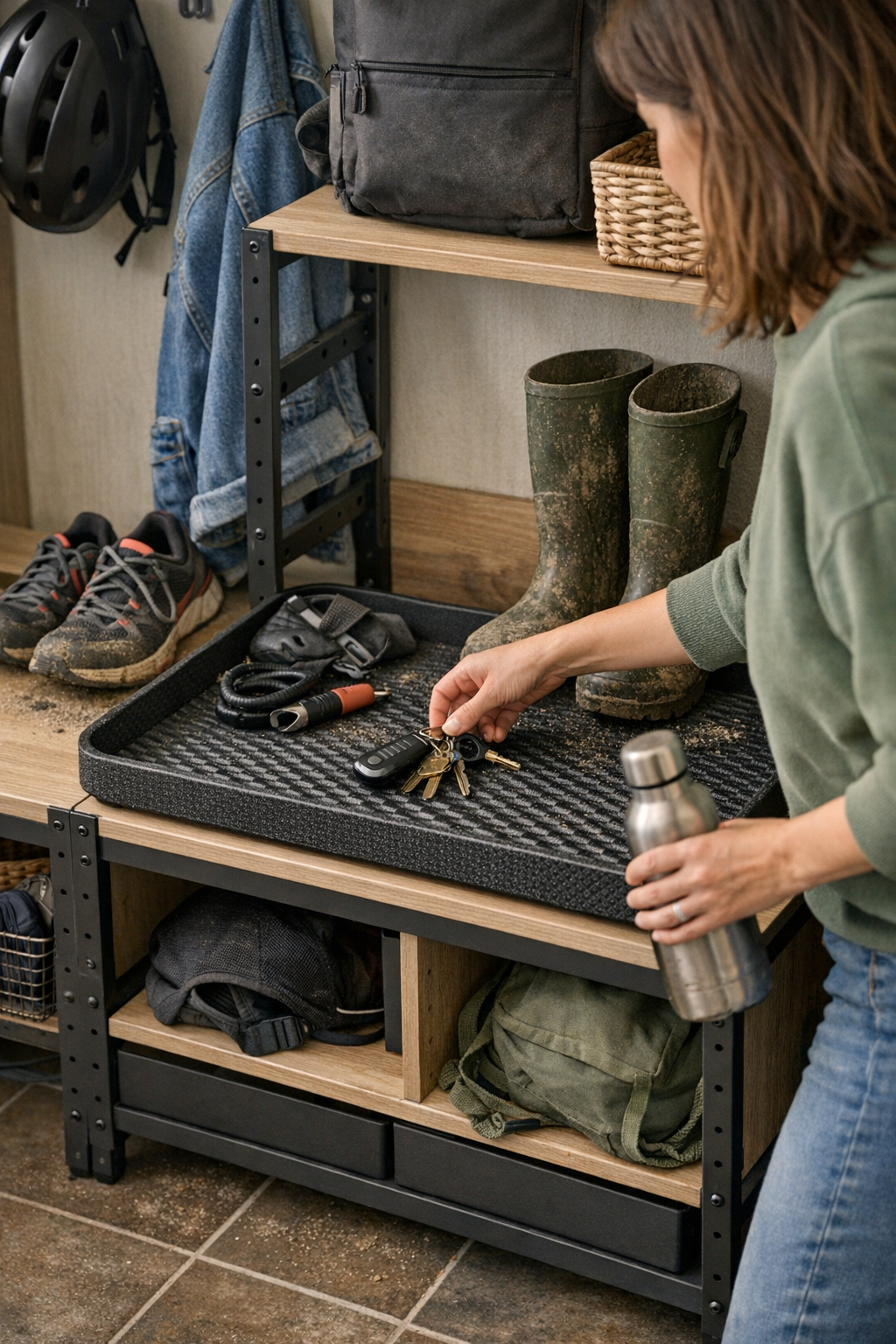
The wrong entryway tray doesn’t just disappoint—it creates a constant, low-level problem that gets harder to ignore with every round of use. If your tray looks sharp on day one but quickly turns into a scuffed, blotchy mess, you’ve seen the setup unravel: bag straps drag, damp shoes mark up the surface, grit and keyrings cut thin lines that no quick wipe really erases. At first, the space holds together—a controlled zone for the day’s drop-offs. But the second week in, the tray looks bruised and tired, making even a “clean” entryway feel unsettlingly out of control. Instead of anchoring the flow, the wrong tray drags attention to every flaw, doubling the mental reset after a normal pass-through. Trays should corral clutter—not advertise every new scratch and spot as an ongoing reminder that the system’s already slipping.
Why Surface Texture Sets the Tone in Busy Entry Spaces
Entryways aren’t quiet museums—they’re collision points for shoes, bags, and whatever’s on your shoulder or in your hands. Every crossing tests the setup: bags drop hard, boots scrape, umbrellas spin water everywhere. On a smooth tray, every one of those moves leaves behind a fresh visual hit. A week in, and you see a gray ribbon where a week’s garden boots cut back and forth, a gouge from a backpack buckle, blurred circles where water never quite dries clean. Even after wiping, the surface holds faint traces—just enough disorder to remind you it’s never truly reset.
Every shared threshold—partners, families, even roommates—amplifies the effect. Small disruptions spiral: one dropped hockey bag or muddy paw print, and suddenly the tray is less landing pad, more billboard for last week’s chaos. Eventually, people bypass the tray to avoid making it worse, or return shoes to the wall instead—chipping away at the point of having a drop zone at all.
Textured Trays: Hiding Everyday Friction
Texture isn’t just a style—it’s practical camouflage against ongoing pressure. Subtle grooves or raised patterns blur new scuffs and water marks into the tray’s surface, blocking the steady march of visible wear that smooth trays always reveal. In a busy entry, where reset expectation is already high, this one detail quietly shifts how the whole threshold behaves.
Picture the weekday stampede: wet boots clatter down, backpacks slide, car keys bounce and scrape. On a glossy tray, each new blemish sticks out, adding another micro-task—wipe now or face the next reminder. On a textured tray, those signs mostly fade, the visual field stays stable, and the demand to tidy up after every round eases. If your drop zone sees muddy gear, pet leashes, or grocery bags in constant rotation, you’ll hit this dividing line fast: smooth trays turn small usage into a maintenance loop—textures let the space absorb and keep moving.
From “Showroom Clean” to “Lived-In Calm”
That brand-new shine on a smooth tray looks great until the first real day: one detour for mud-caked sneakers or a neighbor’s umbrella, and you’re already losing the fight for order. Every mark sets up a choice—drop what you’re carrying and clean up now, or get used to seeing the entry’s decline. Even minor streaks show up and stick in your mind, pushing the urge to reset.
A textured tray is built to absorb the storm. Scratches, mud stains, stray water lines—they break up against the pattern and disappear into the background. Instead of policing the surface, you can focus on keeping the actual pile contained. The result: the tray remains functional and calm, not because nothing happens, but because what happens doesn’t show up so loud. This shift makes the difference between a zone that needs constant vigilance and one that routinely holds up under stress.
How Trays Shape the Life of the Threshold
Real entryways aren’t static—they flex, crowd, and reset a dozen ways per week. Imagine a rainy afternoon: three people barrel through, school bags tumble, a garden tool lands with a clatter, damp shoes angle out half-off the tray, coats pile on the bench. On a smooth tray, the aftermath is immediate: a streak where a soccer bag dragged, a divot from keys, sticky water outlines that survive every drying. Everything looks marked—reset feels like another job, even though most of it is just surface splatter, not new clutter.
Switch in a textured tray, and the picture changes. The surface looks steady, disorder muted: light scatters, blemishes blend, shoe treads and bag bottoms land without consequence. No one hesitates to park muddy boots or a heavy tote—there’s no subconscious “don’t mess it up” pause that leads to shoes splaying into the traffic path or bags leaning against the wall. This isn’t just less visible mess; it means less threshold congestion and fewer routines getting rerouted around a fragile setup.
Reducing Reset Stress, Day After Day
No threshold system stays neat for long. Kids miss the target, bags tip shoes off their row, dog leashes get tossed almost at random. With a smooth tray, that means cleaning, straightening, and bracing for the next round—resetting the surface, not just the piles. Even at its best, a perfectly smooth tray sets you up for disappointment if you can’t keep pace.
A textured tray lowers the basic demand. When the morning scramble leaves behind sand, scuffs, and print marks, they filter into the pattern—you straighten the row and brush out real debris occasionally, but the visual “reset” standard relaxes. You don’t carry the constant pressure to hide evidence of life’s routine mess, because the tray keeps most of it unseen. Cleanup shifts from a chore triggered by anxiety to one triggered by actual buildup, making the whole entryway simpler to keep in motion.
Comparing Cleaning and Upkeep: What Really Lasts?
Smooth trays sell the idea of easy wiping but demand it constantly. Every streak, scuff, or sticky patch pulls your eye until you clean. Textured trays might need a quick brush to clear out grooves occasionally, but the routine feels lighter—because most marks don’t read as “mess” at all. For a threshold already pressured by muddy weather or quick turnarounds, being able to go days between serious resets is more than a convenience—it’s the difference between a functional entry and one that always feels on the verge of disorder.
Take a drop: when a metal water bottle lands edge-down, a textured tray hides nearly all trace; on a smooth tray, the dent lingers, adding to a slow pile-up of small, permanent flaws. These tiny differences decide whether your entry feels at risk of tipping into chaos, or whether it quietly absorbs the routine shocks of daily flow.
Choosing Trays for Real Entryways, Not Just for Show
A drop zone lives or dies by how it handles the real pressure of repeated, imperfect use. The tray that looks pristine the moment you set it down means little if it can’t stand up to the cycle of shoes, bags, and gear. Texture, in this context, is less about appearance and more about how the whole setup behaves at its limits—especially for tight thresholds, shared routines, or entryways that double as gear stations. Textured trays consistently outlast smooth ones by diffusing marks, lowering the urge to resettle, and making the entry’s order visible but unstressed.
If your current tray keeps you tense—racing to catch new scuffs, rearranging bags to hide dings, dreading every muddy day—it isn’t just an annoyance. Over weeks, that system quietly erodes the efficiency you actually want. Textured trays deliver a real, durable order: not picture-perfect, but stable and ready, so the threshold works as a transition, not a bottleneck. For more practical entryway and drop zone solutions tuned for real, everyday routines, visit Betweenry.