
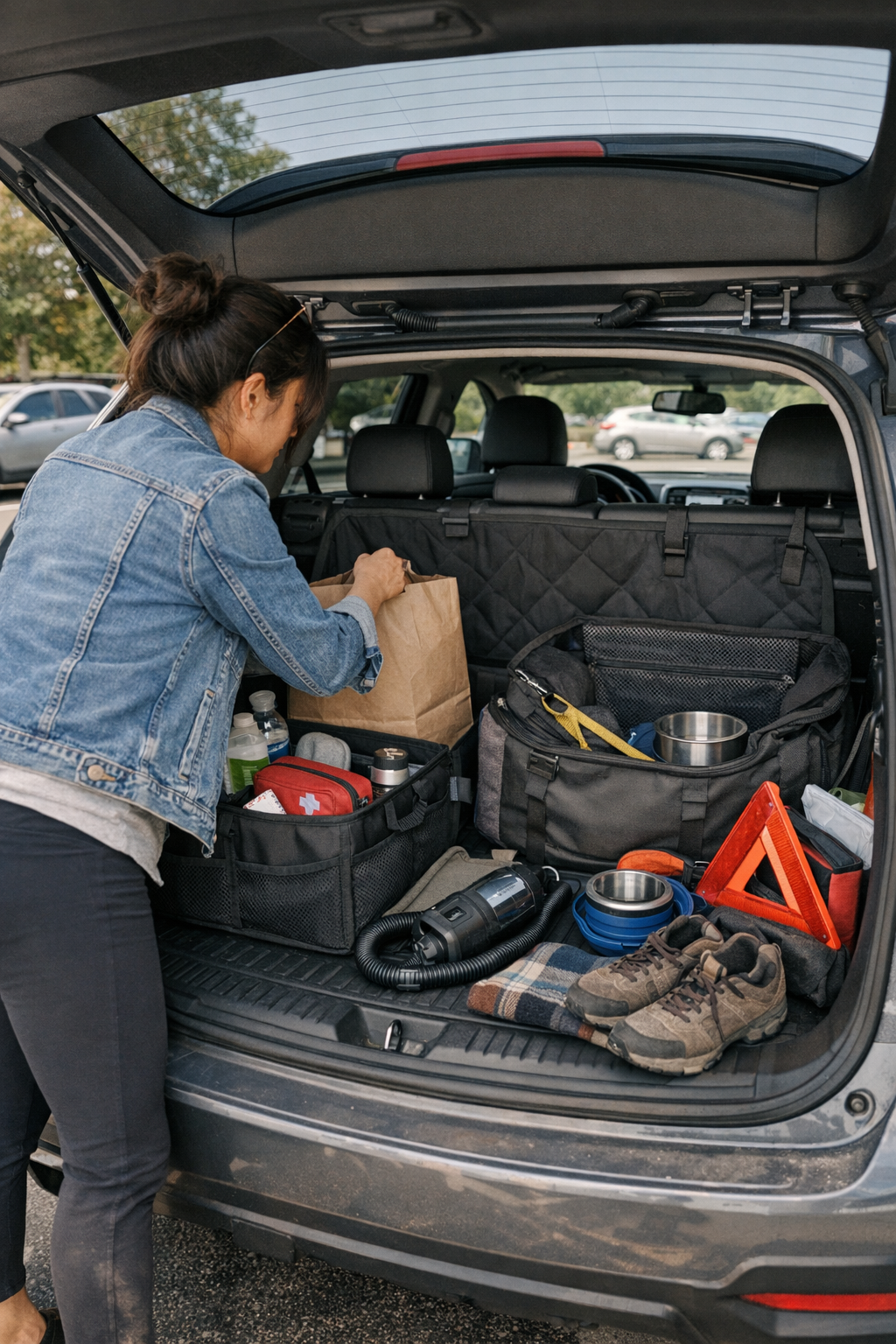
A car can look organized yet still trip you up at every turn. Slide behind the wheel after a weekend cleanup—fresh bins, crisp trays, perfect order—and things seem under control. But by your third coffee run or midday errand dash, it’s clear: the cable you tucked fights your hand, the “mail spot” leaks letters across the footwell, and every drive means sliding an organizer aside to grab what you need. These aren’t just minor hiccups—they’re proof that car organization fails when it only looks tidy instead of actually working in motion. What separates a staged interior from a functional one is how it feels on a busy Tuesday, not how it photographs on Sunday morning.
Why Car Organization Breaks Down in Real Use
Any setup can look impressively neat when the car is parked, doors open, nothing moving. The real test? Regular use: seat swaps, reach for your mounted phone, toss in charging cables, grab a mask, and go. Too many organizers, even smart ones, become sources of friction as soon as you’re back in motion. The difference shows in use, not in stillness—that’s when the flaws flare up:
- Charging ports blocked off by a storage pocket that never felt “in the way” until you needed a fast plug-in;
- Phone cradles so perfectly aligned on paper that you have to twist awkwardly to reach from the seat in real traffic;
- Mail and receipts that shift at every brake, ending up underfoot or wedged into corners despite their “zone”;
- Charging cables that snake tighter across the center area each time you re-enter, creating their own daily knots;
- Trunk spaces chopped up by bins that make unloading groceries or boxes a frustrating Tetris game.
Organizing by sight alone hides friction until routines grind—every awkward grab and cable snare is a micro-failure that stacks up fast.
A Simple Method to Expose Real Friction: The Tape Test
Buying a set of organizers and slotting them where you see “extra” space feels logical—until they’re installed and the actual routine begins. Before committing, run a live simulation: use masking or painter’s tape to map out your planned zones for a few days.
Tape off a phone tray spot, a document pocket next to the passenger seat, a trunk section for groceries. Do nothing else—just drive as you always do, three to five days. Watch what breaks down:
- A mail zone taped in place quickly fails as letters slump past the boundary during a sharp brake—free to drift into foot space;
- A taped charging “corner” pulls your cable taut, creating an awkward angle you notice before noon on day one;
- Trunk lines make sense until your bag shifts, and the new “order” means heavy lifting or spills getting routine items out.
This isn’t about how the setup looks, but whether it survives repeated cycles. What holds up in theory often falls apart when you hit the road and reach, grab, and load at full speed.
Real-World Scenes: Where Organization Fails—And Succeeds
Reaching for the Phone, Again
Your phone mount sits next to the gear shift, exactly where instructions suggested. Yet on every drive, your elbow bumps a cable or you twist your wrist just to grab your device. Multiply it by ten trips, and the “smart” location turns into a source of daily irritation—proof that perfect placements on paper often block real-world movement.
Sliding Mail and Unstable Bins
A designated “mail zone” seems to promise clutter control. But in practice, envelopes pile up until corner turns send them sliding, or sudden braking launches them toward the floor. No tray or taped boundary holds if it doesn’t actually lock movement—leading to quick relapse into chaos as the routine repeats.
Trunk Spaces That Don’t Fit Your Routine
Tape off a trunk zone and it’s organized, until two errands in a row demand both groceries and sports gear. Rigid bin dividers mean you’re now hauling bags sideways just to get anything out—and on busy days, the neat setup you trusted grinds daily function to a crawl.
The Hidden Cost of Looks-First Organization
If you organize to keep surfaces pretty, you pay in slow motion everywhere else. Every tangled cord, rescued receipt, or bin you move to get beneath—these are costs that repeat across dozens of drives. The real debt is measured in seconds, small frustrations, and the creeping sense that you work for the car instead of the other way around. Re-entering the vehicle after each stop shouldn’t feel like retracing steps from your last fix; if it does, looks-first order is quietly draining your energy, not giving time back.
How Small Adjustments Make a Big Difference
The advantage of the tape test is quick feedback: after two days, you’ll know if a divider needs shifting, a cable needs slack, or a bin needs to move out entirely. A ten-centimeter adjustment away from the console is often all it takes to turn phone grabs from awkward to automatic, make cables finally rest flat, or let the mail spot actually hold mail. Many real improvements are small, visible mainly in how much smoother the car feels—one-handed grabs work, untangled cords stay put, and cleanup becomes routine instead of recovery.
What to Watch For During Your Testing
- Repeated slowdowns: If you’re picking up the same item slower each time—phone, cable, mask, mail—it’s a sign you have an access flaw, not just clutter.
- Sliding or buildup: Anything that slides out of its “zone” or piles up somewhere new reveals where current boundaries don’t match actual driving forces or habits.
- Accessibility vs. order: An organizer that keeps things tidy but slows down essentials—especially on re-entry—means you’re sacrificing use for looks, and the cost builds every week.
- Compromising other spaces: If a caddy blocks knee room or an under-seat bin shifts into the way during boarding, you’ve traded today’s problem for tomorrow’s inconvenience.
Finding the Setup That Lasts Beyond Day One
The best setup is usually the one that survives your actual routine, not the one that fills the most space or impresses on a quiet day. It’s about finding the lineup that supports your movements—phone, wallet, cords, dog leash, mail—without slowing any of them down over three or four days of return-to-car tests.
- Use patterns make clear which organizers actually serve you and which create new friction;
- Repeated loading and re-entry exposes subtle delays you never spot in a freshly staged car;
- Often, removing one unnecessary bin or shifting a boundary is more valuable than adding another clever product.
What you gain isn’t a perfect look, but the relief of a smoother loop—less friction, fewer resets, and a sense that your car’s setup adapts to you instead of requiring workarounds.
Turning a Tidy Car Into One That Works
Real car organization isn’t a static achievement—it’s a moving target judged by what survives the commute, the pickup run, and the daily return. When you let real flow shape your choices—testing with tape, spotting friction, and changing what doesn’t fit—your car finally starts working with you. Less workaround, less forced tidiness, and more time spent moving cleanly through every routine.
Find the organizers and driving essentials that work with your habits—not against them—at DriveWellSupply.