
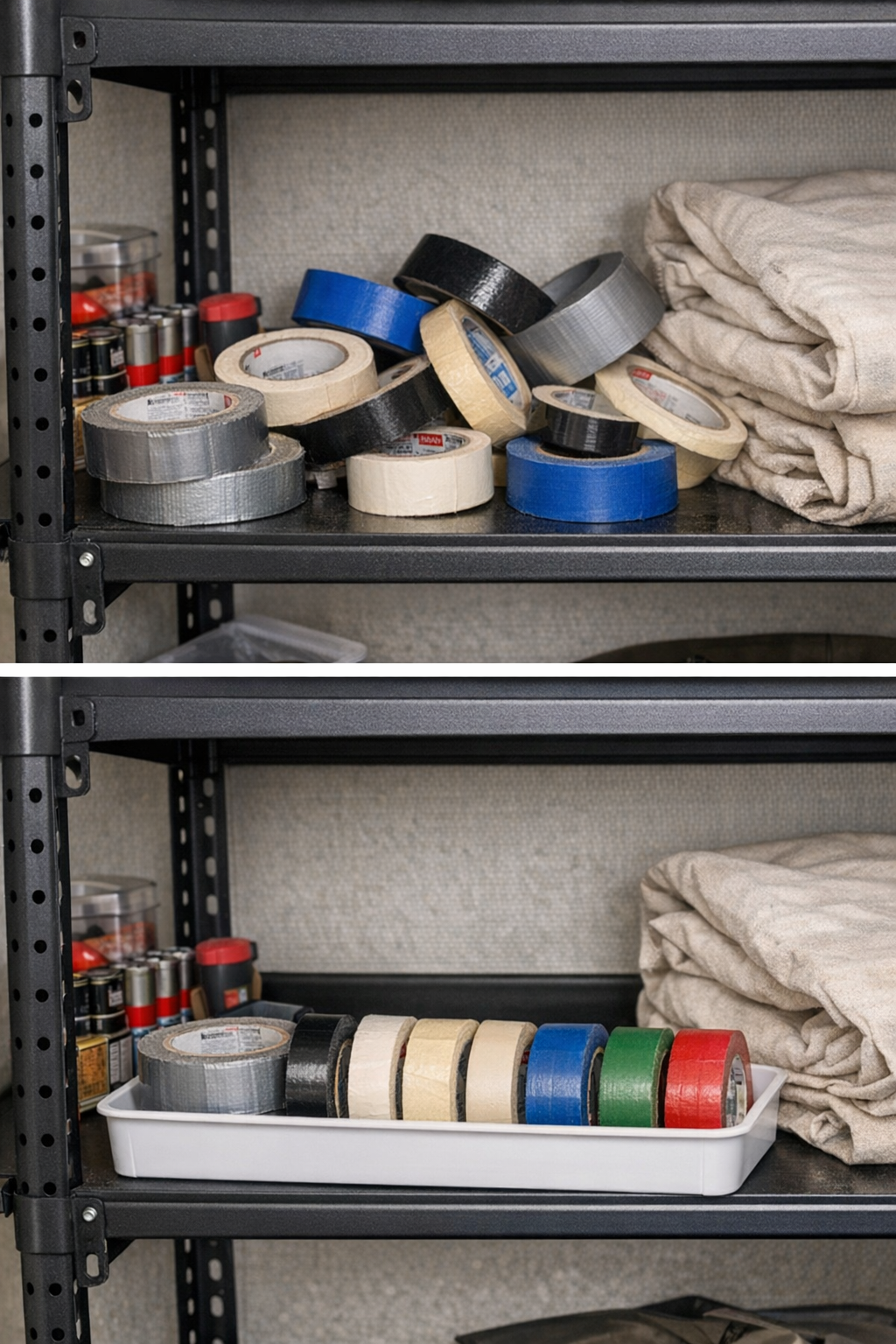
The Tape Roll Shelf: Neat for a Day, Chaos by the Weekend
Open that storage closet or garage shelf and you’ll see it—those tape rolls lined up, labels facing out, offering a flash of “finally organized” relief. But let a weekend pass, or invite the real world of repairs, kids’ crafts, or frantic supply grabs, and the order collapses. Tape shifts. Rolls slide into new territories, pile into awkward stacks, or vanish behind battery bricks and bins. The promise of easy access becomes a cycle of digging, shuffling, and sighing—an old friction disguised as tidiness.
How Tape Rolls Escape Organization
It’s one thing to arrange a shelf so it looks organized for a photo, and another to keep it that way for more than two days of actual use. Tape rolls are especially notorious: grab one quickly and the others jostle out of line. Half-used rolls get tossed on top while searching for a specific label, and by Tuesday, painter’s tape is fraternizing with extension cords. You know the drill—reach for masking tape and move an entire stack aside, or find duct tape hiding two bins over. Open shelves do little to keep the chaos contained.
The mess isn’t a sudden avalanche, but a slow shift. By week’s end, it takes two hands to rescue the right roll—carefully, unless you want tape tumbling onto cleaning sprays and sandpaper. Every retrieval is a minor negotiation with the shelf, dragging the job out longer than it should be.
From Shelf Rows to Trays: When Enough is Enough
That first, neat row appeals for speed—but never holds its ground. No one plans for mess; we line up tapes by type and call it done. But within days, open shelves turn into tape parking lots. Maybe you wedge an extra roll down the side after a rushed cleanup, only to return later and wonder why nothing is where it belongs. The shelf goes from showcase to scavenger hunt.
This is the moment trays make their entrance—not as a grand solution, but as a practical boundary. Drop in a low bin, a shallow painter’s box, anything with sides. Suddenly, tape rolls stop wandering. One-handed resets are possible: finish the job, sweep the loose rolls back into the tray, and move on. It feels subtle—barely a change—but those thin edges quietly enforce order long after the photo-op is over.
Clutter Outpaces Good Intentions
Don’t underestimate the hidden toll of a shelf slipping into disarray. One day you’re spending an extra thirty seconds searching for the right tape. Next time, you’re inching a heavy bin to dig out a buried roll, or unstacking a pile just to grab something small. Categories blend: painter’s tape bumps up against cleaning supplies; electrical tape tumbles in with rags. The time spent hunting accumulates—not dramatic, but persistent enough to notice.
Worse in shared or high-traffic spaces, this slow spread is almost inevitable. Hall closets, catch-all garage shelving, the laundry corner—it only takes a handful of misfiled supplies before every zone on the shelf starts to lose purpose. Tiny errors, like a roll out of place, stack up into regular disruptions. What should be one grab-and-go action becomes a mini reset every time.
What Defined Boundaries Really Do
Trays don’t guarantee perfect order, but they keep disorder from spreading unchecked. Add even a shallow tray and watch what changes. Tape rolls huddle together, easy to see and grab, instead of leaking into the next category. You skip “shelf Tetris” and accept some daily mess—now hemmed in and quick to reset before it takes over.
There’s a visual difference. After a couple of busy days, a taped-off line of rolls is usually gone, but a tray holds steady. The tapes stay upfront, labels readable, always reachable without moving half the shelf. You’re not hunting around or stacking and restacking every time. The minimal boundary holds, turning a swirling mess into a managed little zone.
Scenes from the Real Storage Trench
You come home from a late project, toss tools and leftover tape onto the shelf, intending to regroup later. Two days later, painter’s tape is missing—it rolled across to the bin with batteries after a housemate’s cleanup. Another afternoon, you’re rushing and the duct tape falls behind a heavy bucket of screws, wedged out of sight. One roll in the wrong place means seven minutes rearranging, stacking, and moving things you didn’t mean to touch. The shelf’s organization crumbles under normal, even responsible, use.
With everyone grabbing supplies—kids, partners, or just you over and over—the shelf never gets a true reset. Categories blur, patience thins, and the original logic is lost. Unless you put up some kind of resistance—a tray, a bin, just enough structure—the shelf keeps slipping from “set up” to “cluttered again.”
Containment: Calm By Design, Not Accident
What a tray does isn’t dramatic, but it’s steady. Instead of finding tape stuck in a box of light bulbs, you see categories reappear. Every tape roll stays visible, always in its home, accessible without digging. Best of all, the tray stays shallow—deep containers just hide the mess. Low sides mean quick visual checks, easy grab-and-go, and effortless returns. Resets take seconds, not minutes; frustration ebbs away because everything fights less for space.
With a Tray, Shelf Friction Drops
- Put-away is instant. Tapes don’t sprawl—they slide into their spot, every time.
- Other supplies aren’t invaded. No more tape rolls crashing into paint, light bulbs, or batteries.
- Lost rolls are a thing of the past. You look and see what’s missing, immediately.
Most critically, you get a shelf that keeps working, not just for show. Order that endures through quick grabs, messy projects, and real rotation—not a showroom-perfect fantasy, but a usable reality.
Small, Real Fixes for Tapes That Behave
Pick a tray that fits just your main tape types—too roomy, and you’ll stack; too tight, and you’ll choke the system. Don’t overload it: cramming every last roll invites a whole new jumble. Opt for low-front trays for that one-glance label check. Every couple of weeks, do a quick scan: if you spot a roll that’s gone rogue, toss it back before it builds a new pile-up. A few short habits, one thin tray—suddenly, your shelf starts holding the line, not dragging you back into another hunt.
For storage fixes that hold up to lived-in routines—closets, shelves, and the daily shuffle—visit ClosetWorks.