
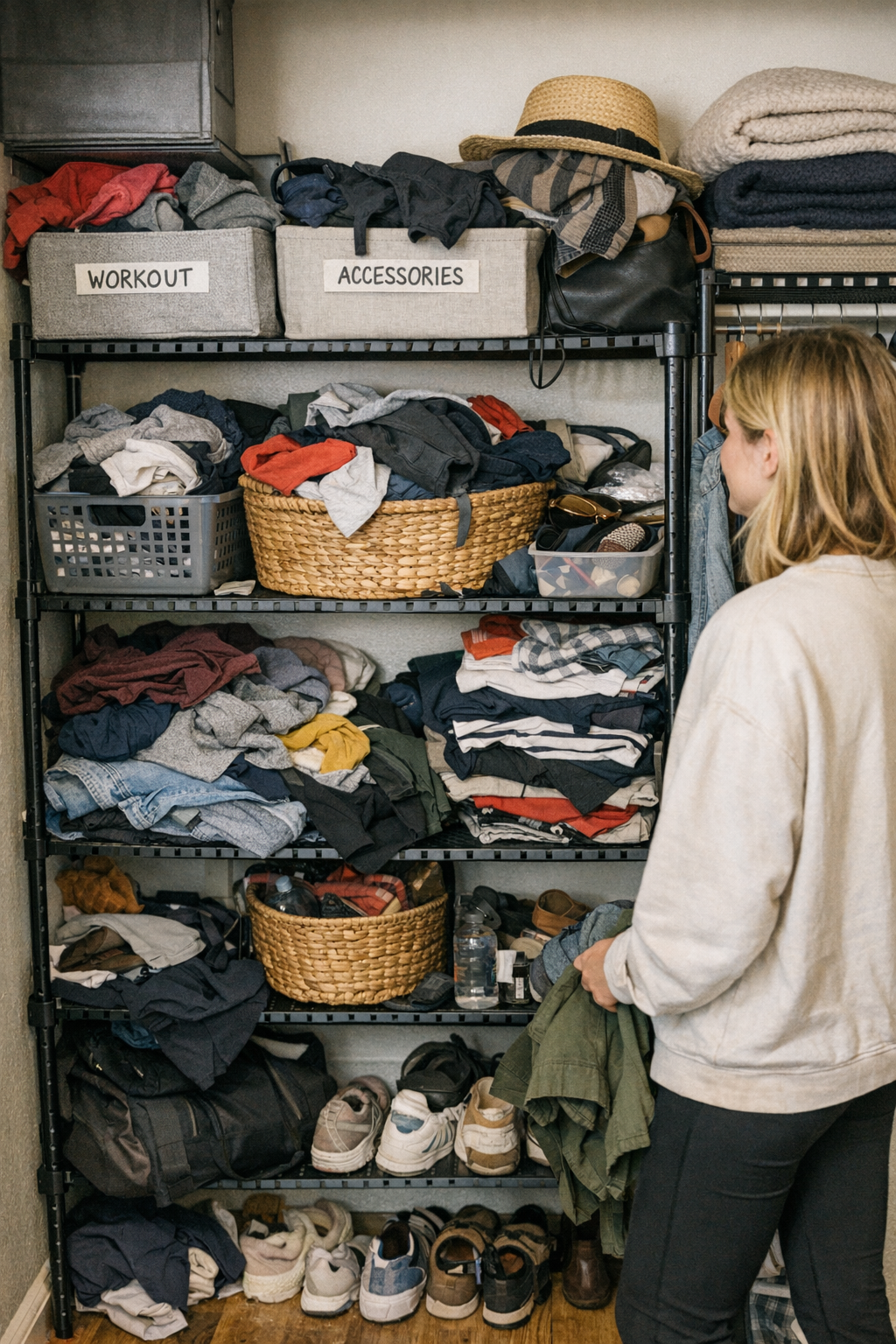
Everyone loves that first glimpse of a newly organized closet: rows of shirts lined up, bins sitting like sentinels, everything freshly folded and labeled. But three days later, the reality of daily life sinks in. You’re reaching for socks while half-asleep, nudging a stack of t-shirts to grab the only clean one at the bottom, or shoving a hoodie on top of a too-full shelf. The order that looked effortless Sunday evening starts to fray before the week’s even half over.
Why “Picture-Perfect” Setups Break Down
On day one, tightly assigned spots and hard-edged bins seem logical—the closet has zones, each item a home, nothing wandering. But it’s an unnatural pace to maintain. Routines don’t pause for the system: kids come crashing in for soccer gear, your partner moves stacks to find that one missing shoe, or you’re late and barely toss things back. A single sluggish morning or a couple of nights skipping the full reset, and the uniform rows dissolve into something almost—but not quite—organized.
Real habits always win. Even with the best intentions, most days don’t run on closet discipline. Shirts meant for one pile land sideways on another. Folded stacks slide out of square each time you reach in. Overflow builds on empty shelf corners. Soon, it takes just a day or two for a “finished” closet to slip into a repeat cycle of half-kept categories and improvisational storage decisions. If you’ve ever found a winter scarf tangled with last summer’s shorts, you’ve felt this drift firsthand.
The True Everyday Pain Points
It’s not just the big messes. It’s friction in the in-between moments. The stack of jeans that collapses when you fish out the bottom pair. The labeled bin for hats that now holds hats, gloves, and a jumble of mail. The shelf that was supposed to be “sportswear only” but becomes a catchall by midweek. Entryways tell a similar story, with shoes spilling into traffic lanes and mittens quietly annexing every available slot.
Overflow and the Trap of Not-Quite Clutter
Most of the time, it happens quietly. There’s still the illusion of order—nothing dramatic, just little trade-offs: slippers wedged behind a backpack, workout gear overtaking the “jackets only” hook, or folded stacks slowly giving way under the weight of one-more thing. The closet’s surface might look okay, but reach for something, and you’re met with resistance—items jammed tight, categories bleeding into each other, grabbing one thing always displaces two more.
Resets: Where Systems Succeed or Fail
The toughest test isn’t first setup—it’s whether you can quickly bounce back from everyday chaos. If restoring order means emptying half the shelf to fix one stack, or unloading a bin to get things back in their lane, resets start to slip. Low-energy days or busy evenings make strict boundaries impossible to enforce. Instead of a 60-second straighten-up, you’re looking at a half-hour re-sort nobody wants to tackle. Little messes layer up; “almost organized” quietly becomes barely managed.
What Actually Happens Between Mondays and Fridays
Imagine the morning rush: you’re already running late, rifling for the right shirt. In the process, half the stack slumps, and you cram it back however it’ll fit. The next day, you do the same, but now the section meant for folded shirts morphs into a jumble, scattered with a loose sock or a gym band. By Thursday, bins are mixed and shelves have surrendered any last sense of division. What looked like clear zones five days ago now feels like pure improvisation.
Flexible Zones for Real-World Closets
Rigid systems are no match for messy mornings. Storage setups that last build in the flexibility to absorb off days and imperfect returns. Swapping tight dividers for larger baskets or grouping all “everyday shirts” in one open zone makes post-chaos resets easier and much faster. Instead of fighting against the grain of your daily habits, the closet adjusts—accepting quick stashes and rough returns without the system unraveling.
This isn’t giving up on structure; it’s getting smarter about where you need it. Keep categories for high-use items loose and accessible—easy to drop in, easy to pull out. You don’t need absolute order for order to work. The faster things can get back in place (even if “place” is a bit fuzzy), the less the chaos spreads. A closet that resets in a minute with a little sweep is one that stays usable all week—even when life gets messy.
Dialing In on What Actually Works
Match the setup to your real rhythms—not your “someday” self. Notice the spots where things always slip and adjust those rules first:
- Store your frequent-rotation clothes at chest height, so you’re not always reaching behind or shifting stacks to grab what you wear daily.
- In high-traffic spots, replace tightly labeled bins with open baskets. Wide categories (“all workout gear” or “kids’ outerwear”) survive everyday chaos much better than hyper-specific ones.
- Leave “free space” every few shelves or cubbies—a built-in buffer for laundry days, midweek overflows, or that random oddball item that has nowhere else to land.
Apply this logic in any zone under pressure: entryways, laundry rooms, even mudrooms. Open baskets beat narrow cubbies for catching hats, water bottles, and scattered chargers. The goal isn’t immaculate order—it’s resilience, so when routines stretch or break, your space flexes instead of falling apart.
Spotting Trouble Before it Spreads
Clutter rarely erupts all at once—it seeps in, item by item. The pile that grows unaddressed. The stack that teeters until nobody wants to touch it. The system that can’t be reset quickly becomes the system that gets ignored. The fix: set up so you can course-correct tiny missteps in seconds—one stray shirt, one mixed bin—before the mess grows muscles. No ten-minute restacks, no guilt spiral, just an easy path back to usable order.
Choose Resilience Over Perfection
The closets that actually make life easier aren’t the ones that look untouched in magazine photos. They’re the ones that help you recover after real, hectic days. When your storage setup lets you shrug off a bad week and restore order in sixty seconds—not sixty minutes—daily stress drops. A closet that bends with your habits is one you can actually keep using, not just admire once it’s freshly cleaned.
Find practical closet storage solutions that match your real routines—and help your home work better every week—at ClosetWorks.