
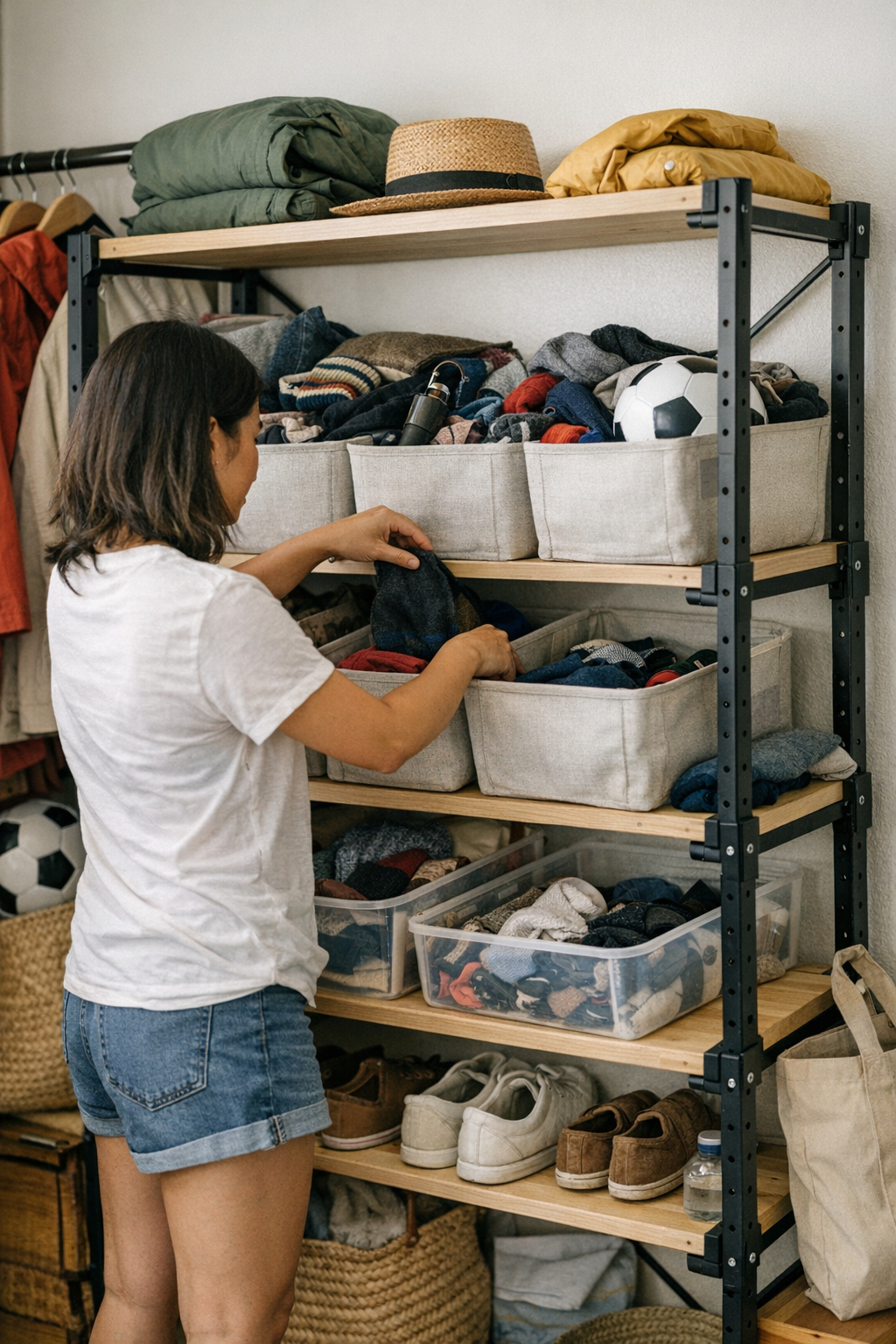
Order That Disappears: Why Closet Organization Rarely Sticks
Step into most homes, and you’ll spot the ritual: closet shelves lined with bins labeled “Socks,” “Hats,” “Workout Gear.” For a day or two, everything clicks—socks all in a row, hats stacked in their own bin. It feels possible, even likely, that this time the system will hold. But real life bulldozes the plan. Morning routines spill socks into the sweater bin. Hats get tossed over scarves. The neat, named surfaces start to conceal a mess that’s only getting harder to navigate. And when you’re late, you don’t have the luxury to gently file everything in the right place—so items stack up, logic blurs, and what looked organized becomes a daily scramble all over again.
Why Label-First Systems Crack Under Real Life
A wall of labeled baskets appeals in theory: each thing in its place, chaos tamed by crisp handwriting. But actual daily use reveals the limits. You stack folded shirts in the “T-Shirts” bin—by Friday, that bin is overflowing, so the next clean shirt perches on a pile in “Sweaters” instead. The “Gloves” basket gets invaded by a rogue scarf, then gym socks sneak in when you’re out of time. Every category starts to blur. When bins are too full, overflow isn’t rare—it’s routine. Organization that only works when everything is perfectly returned is a setup for slow collapse, not sustainable order.
It’s not laziness; it’s the reality of how people move. Looking for a watch in the “Accessories” bin? Everything else gets jostled. Shelving winter boots means nudging aside shoes you just put away. The more a system relies on exact returns, the more brittle it becomes—one rushed move breaks the pattern, and the cracks spread.
Beneath the Surface: The Hidden Mess in “Tidy” Closets
Closed bins mask the drift—until you need something. Open the lid on a “Winter Accessories” box and you’ll dig past sunglasses, tangled scarves, gloves from two winters ago, and maybe a rain poncho tossed on top. From the outside, everything still looks orderly. On the inside, it’s a jumble. Every search means more rummaging, stacks lose their shape, and what should have been a quick grab becomes a mini excavation.
This isn’t just slow or clumsy—it’s unsustainable. When your setup depends on everyone perfectly remembering what belongs where, mistakes pile up. A single off-week—one rushed laundry return, a bag of shoes dropped at the wrong end of the closet—leaves the system struggling to recover. By Saturday, “resetting” isn’t a two-minute tidy. It’s a full-on sorting session.
The Relentless Morning Rush
The real test happens when you’re in a hurry. Picture the start of a weekday: the “Rain” bin—intended just for umbrellas—now holds a scarf, two mismatched mittens, and a soccer jersey. Shoes are stacked three deep, so every retrieval means shifting pairs and collapsing rows. The “easy” access vanishes, and delays add up in inches—not quite chaos, but never smooth. Each day multiplies the odds that you’ll just shove things wherever there’s space, pushing the closet further from its neat beginnings.
When Resetting Overtakes Usefulness
The system’s cracks show in how long resets take. Need something from the bottom basket? Time to lift and restack every bin above. Labeled shelves spark their own confusion: does this thin scarf live with hats, or does it squeeze back into the “Accessories” bin with half the rest? Each unlabeled or overstuffed bin is a tiny hurdle, slowing you down just enough to skip the step next time.
Soon, every misfiled piece becomes tomorrow’s problem. Original categories fade as people adapt on the fly. Instead of order, you get a slow buildup of hesitation—where does this go?—and what started as a five-second reset balloons into a ten-minute chore once a week. If putting things away feels like work, the system isn’t serving you; you’re serving the system.
How Flexible Zones Rescue Everyday Storage
The turning point comes with honest adjustment. Trying to force stricter categories and more labels usually just entrenches the drift. What actually works: setups designed for the way you live, not just the way closets look in catalogs. Open bins become easy drop zones for high-traffic items. Shelf gaps are wide enough to let you see and grab what you need without shuffling four stacks to get to a single glove.
The shift is visible and practical. Scarves land in open bins where they’re quick to grab and easy to drop back. When a section fills up, items calmly spill into the next space—without collapsing the whole system. At the end of a busy week, resetting takes minutes, not an hour. No one wonders where to toss the extra mittens. The closet keeps working, even when the “right” bin is full or the label is ignored on a hectic night.
The Best Setups Assume Imperfection
The sustainable setups don’t count on everyone pausing and recalling the master plan every time. Open baskets handle daily churn, while rarely used zones or guest gear get more defined spots. There’s slack in the system—enough give so one missed return doesn’t trigger unraveling. Labels don’t stop overlap, but flexible design catches it before it spreads.
How to Spot a Closet That Isn’t Really Working
Watch for these classic signs your storage isn’t syncing with your routine:
- Bins that start out organized, but end up as catch-alls.
- Putting things away feels tedious—not quick or obvious.
- Reset sessions keep getting longer as categories blur.
- Indecision about where anything belongs—even for things you use daily.
These little sticking points grow week after week, gradually draining time and adding silent stress to your routine.
Design for Your Routine, Not the Ideal
The answer isn’t to abandon order but to make it fit the patterns you actually follow. Use labels where they help: shelves for backup linens, or baskets at the top for out-of-season gear. But focus flexibility where things move most—open bins at eye level, dividers that let a folded stack breathe, and shelves you don’t need to reach behind just to get daily essentials. If a bin becomes a mixed bag, that’s feedback, not failure—it means the flow needs a tweak, not a stricter label.
Small Fixes, Real Relief
Monitor how you interact: Do you dread tackling the bottom shelf? Are the most-grabbed items buried behind closed baskets? If you’re always shuffling the same things from pile to pile, your closet’s asking for reconsideration. Try raising a bin for easier access, spreading out shoe racks to lessen crowding, or dropping rigid categories for open zones. These small shifts can add back those lost minutes—making daily resets so quick you barely notice them.
Order That Holds—Even When “Perfect” Slips
A closet isn’t truly organized just because the labels line up. Real order is the kind that survives the everyday mess—the one you can keep without a chore list. If your resets shrink, your access speeds up, and your stress goes down, your system is working—even if that last bin is always half-mixed.
For products designed around daily realities—shelves, racks, and bins that can take real-life routines in stride—visit ClosetWorks.