
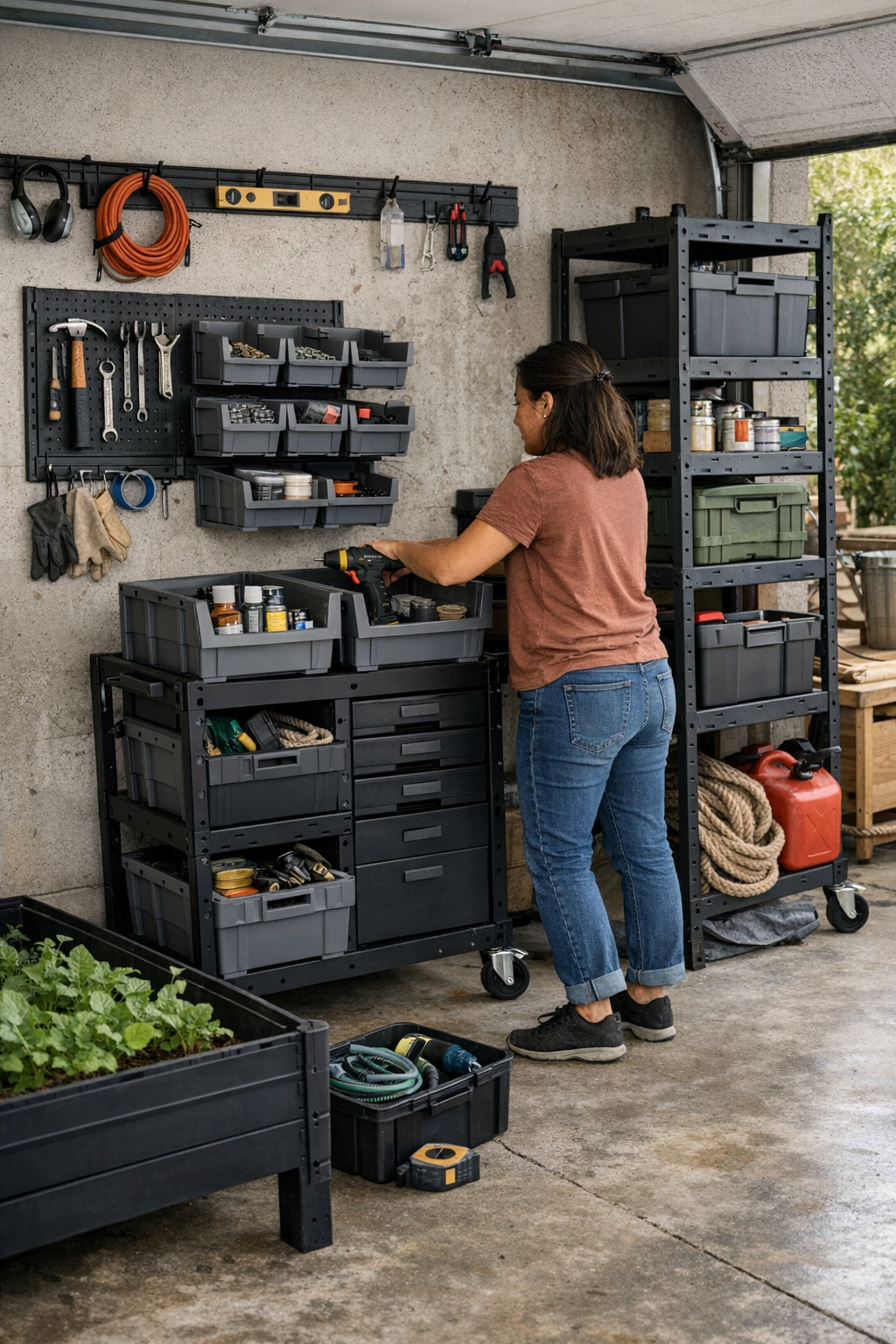
The first day with a new storage setup—whether it’s in the garage, garden, or workshop—always feels like a minor victory. Tools have homes. The floor is finally clear. You can see the workbench and imagine move-anywhere productivity. But the real verdict doesn’t come on setup day. It arrives in the churn of real use: when you’re pushing through errands, bouncing between tasks, and suddenly that “perfect system” starts putting bumps in your path. What started as neat and promising can quickly turn into an obstacle course, crowding your routine where it should step aside.
How Storage Systems Start Working Against You
Those wall racks, rolling carts, and modular bins promise to bring order. And at first, the improvement is obvious—you walk in, no piles underfoot, everything slotted in place. But as the calendar fills with half-finished projects and new supplies, reality sets in. That rolling cart you loved on day one? Now it’s blocking the aisle every time you need to drag the mower out or bring in a sack of soil. Wall racks show off your collection, but your most-used tools end up just out of reach or buried behind a row of things you use once a season.
Friction starts small, then builds: a pair of bins blocking the drill for the third day in a row, a cart wedged in the exact spot you want to turn, a corner that never quite empties out. At first, it’s a few extra seconds. But stack these up—five nudges, three detours, the daily search for snips or a box of fasteners—and your routine slows. The “organized” area gradually fills with tools left out, overflow zones, and a creeping sense that the storage solution is just reshuffling the mess at a different angle.
Where Storage Systems Fail the Day-to-Day
The flaws don’t show during a careful Sunday setup—they emerge after weeks of improvising. Imagine grabbing a handful of screws in the middle of a busy Saturday, only to swerve around the same rolling cart that keeps popping back into the path. Or dropping a wrench onto a countertop, then realizing you need to unstack two bins just to put it away again. The little hassles multiply until you find yourself leaving tools out—because returning them feels like another chore.
- Pulling three stacked bins apart just to fish out the one thing you always need.
- Pushing the cart aside for the fifth time that morning, just to squeeze by.
- Parking tools on a half-cleared bench, promising yourself you’ll sort them “later.”
Most setups don’t collapse in a single dramatic event. Instead, the routine grinds down. The area built to help you work ends up breaking your stride—and all the neatness counts for little if you can’t move, grab, and put back tools in real time.
Why “Tidy” Isn’t Always “Efficient”
Looking organized is not the same as working efficiently. The clean rows of bins might impress at a glance, but if every trip means unstacking and tucking away awkwardly, you’re paying with time. Wall racks can clear the floor but make you stretch, reach, or shuffle sideways each time you need the gear you reach for daily.
Consider the deep bin stack: it looks space-savvy—until you’re lifting three containers to dig out a socket set from the back. By the end of the project, an overflow pile appears “just for now”—right in the walking lane. A week later, the corner that should funnel supplies becomes a dead spot, holding whatever didn’t get put away because the process was just a bit too much hassle. Slowly, resets get ignored and the surface meant for working is reclaimed by clutter.
Shifting from Storage to Movement
The fix isn’t always more storage. Sometimes it’s subtraction—removing what gets in your way. After months of repeating the same detour, clearing out the overstacked bins and relocating the bulky cart changed the entire flow. Suddenly, the shortest route wasn’t blocked. Rather than three sidesteps to get across the space, it was a direct walk. The friction points—those subtle pauses and hesitations—vanished, and tools returned to their spots because it only took a second, not a reshuffle.
Watch for repeating roadblocks: If you’re always shifting the same container or inching past the cart that almost fits, those are signals. The right move might be clearing that one high-traffic zone or reassigning where “overflow” lands. Sometimes moving a single choke point is enough to reset the area—without bringing in another organizer or gadget.
Pinpointing Where Things Really Go Wrong
Wall-Mounted Racks: Convenience or Compromise?
Nothing beats cleared floor space on paper, but reality bites when racks get overloaded or hung above a comfortable reach. Instead of a grab-and-go, you’re balancing on tiptoes, reaching behind objects—or just leaving the tool on the bench for next time. Efficiency gives way to workaround: the “temporary” pile, the forgotten pair of shears, the bags that start nesting on the nearest chest instead of going up on the rack.
Bin Systems and the Dead Corner Effect
Storing bins side by side or front to back can look efficient, until every use means shuffling containers. Over time, the extra steps (and resistance) add up, and those “organized” bins become magnets for small piles—items stacked on top or just dropped nearby because returning them means disrupting the configuration. Dead corners aren’t truly empty; they’re the places that absorb whatever doesn’t have an easy return path. The result: slow but steady creep of clutter into what used to be clear space.
Making Storage Work for Your Routine
The best storage setup doesn’t just look tidy—it makes every movement smoother. When you can grab, use, and return something without sidestepping, restacking, or hesitating, the system works for you, not against you. True improvement is about reducing decisions and effort in the reset, not maximizing how much you can jam onto a rack.
Every gadget promises a cleaner workspace, but only the system that fits your daily routine actually keeps order in play. Look where your flow is getting interrupted—those nudge points, chokepoints, and clutter-friendly corners. Don’t hesitate to tear up what isn’t working: shift containers, clear out the cart, and reclaim direct paths. The goal isn’t perfection; it’s practical motion. The best storage is the setup you hardly notice—because resetting the area is so easy, you do it without thinking, not just on clean-up day.
Find modular systems, rolling carts, wall setups, and practical tools for working spaces at StackNest.