
Why “Organized” Can Still Mean Frustration
The photo-ready closet is a siren song. Rows of matching bins, almost military-perfect folds, and a shelf that practically dares everyday life to mess it up. But give it a month—sometimes just a week—and that glossy “after” look often starts working against you. Socks end up buried behind bins that block your reach. The “tidy” stacks soften, lean, and collapse as you fish out a single shirt. Shelves become slow, awkward obstacle courses instead of helping hands. Somehow, clutter returns—not as a mess you can see at a glance, but as a string of tiny slowdowns, shortcuts, and silent frustrations that linger in your routine.
This is the trap: setups that solve for appearance on day one, but not for how you use your space twenty days—or two hundred days—later. A closet system that seemed perfect on a Saturday afternoon routinely starts to buckle by Wednesday, when the bin you need is under three others, or you have to reshuffle an entire stack just to grab gym shorts before work.
When Looks Deceive: The Downside of Fast Fixes
The “Organized” Illusion. It’s tempting to grab a set of bins, snap on some lids, and call it done. Deep bins promise to hide chaos. Tall stacks create the momentary high of order. But under weekday pressure, these fixes unravel—because perfectly contained isn’t always perfectly usable. Most of us don’t have the patience (or time) to unstack and restack bins just to reach the daily basics—and the more steps it takes to get to what you need, the more temptation there is to leave things out “for now.”
Picture the hallway closet before work: In a rush, you swing open the door hunting for your gym bag, only to face a wobbly tower of bins. Each one you move threatens to unmake the careful order you spent a weekend creating. By Thursday, stray gloves lurk at the back, scarves are balled up in corners, and the shelf loses its logic. If grabbing one thing means shifting three others, the system has failed real life—no matter how good it looked the day you finished.
Where Storage Starts to Slow You Down
The truth leaks out in seconds lost: delays you only notice when they add up. Need a hat? Now you’re pulling lids off opaque bins, rooting blindly, and causing an avalanche by the third try. Soon, the lids stay off, overflow takes over, and the idea of “resetting” the shelf feels heavier every day.
Open baskets sound like freedom, faster access, and ease—but if there’s no divider, they devolve just as quickly. Small stuff sinks to the bottom; headphones twist into glove tangles. Within weeks, what was “organized” morphs into a mixed catchall you dig through instead of use.
How “Perfect” Setups Fall Apart in Routine Use
Every system shines—until you use it. Take the classic shelf of folded t-shirts: crisp lines on Monday, slumped stacks by Friday. Every time you grab a shirt in the middle, the neat pile sags or slides, and you’re restacking after a single pull. Or the tidy row of shoes by the door that, after three busy days, has extra pairs creeping up the wall, lost mates hiding behind boots, and the “zone” evaporates under rush hour reality.
Spotting the Real Issue: If you catch yourself constantly restacking, moving items just to reach a basic, or sighing at the sight of a shelf that should make life easier, you’re not failing at organization—the system just isn’t matching your daily moves.
Small Tweaks, Big Gains: Making Storage Actually Work
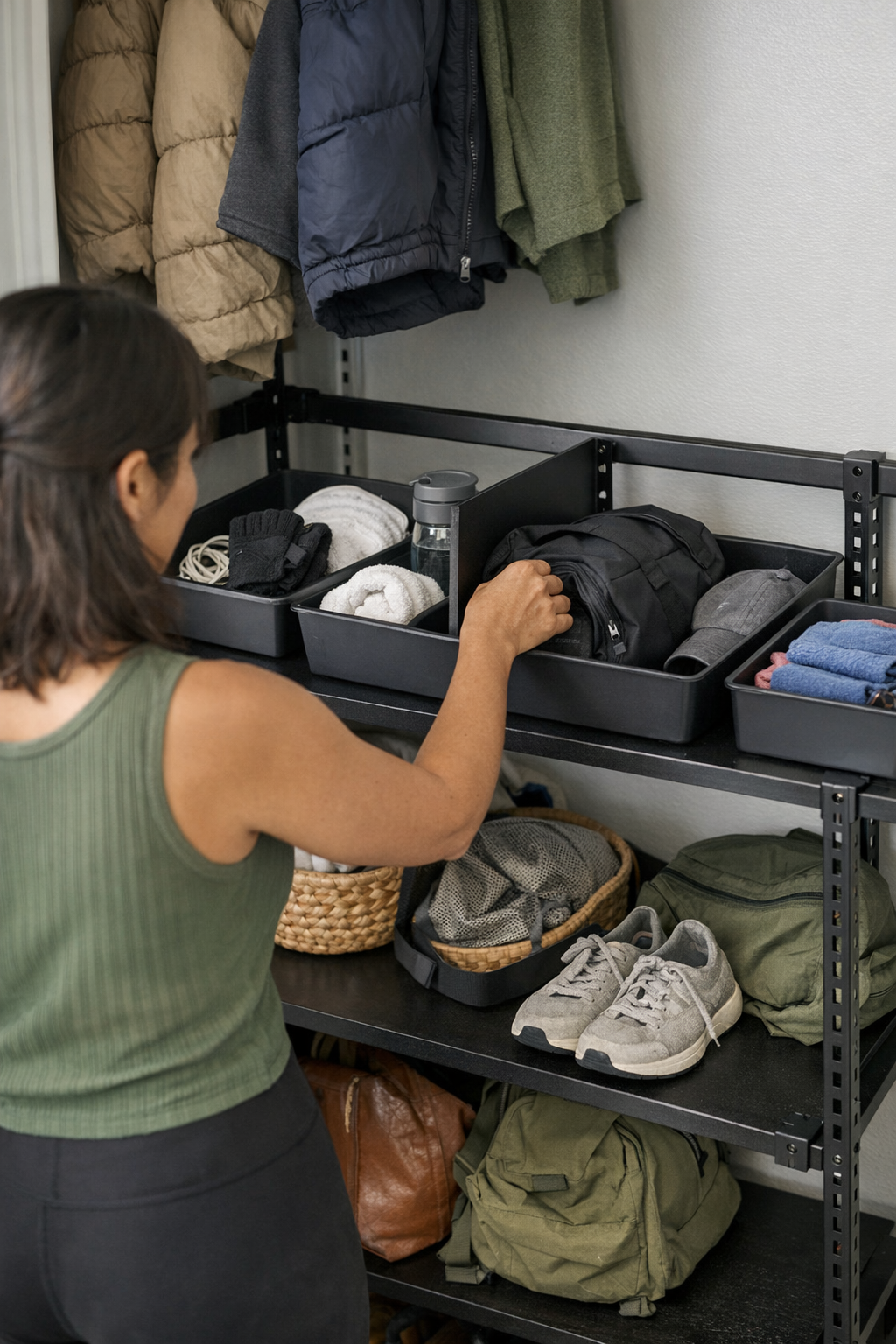
Real fixes aren’t grand gestures. In one hallway closet overhaul, swapping deep bins for shorter trays and adding a vertical divider changed everything: the gym bag became a one-reach grab, not a rescue mission buried behind tote bags. Hats and gloves finally kept to their lanes. With trays only one item deep, nothing disappeared—and even at the end of a long day, the quick reset felt doable, not draining.
This change didn’t turn the closet into a magazine spread. But it did make roles clear, cut down on stuff left out “for now,” and nearly erased the old habit of stacking things wherever there was room.
Why Storage Logic Fades—And How to Prevent It
The biggest culprit? Expecting rigid structures to fit routines that always shift. Too many bins, and it takes three steps to put anything away—so you don’t. Slicing categories too thin means you stop sorting altogether. Real homes reward flexibility and visibility: fewer, open containers with clear boundaries and easy access. They aren’t always photogenic, but they hold up through hectic mornings and messy weeks.
Design for Habit, Not Just for Show
The gold standard isn’t the shelf that impresses visitors, but the setup you actually want to keep using. Choose containers based on real grabs and put-backs. For your everyday routine, use open trays and baskets—dividers where needed—so you see what’s there and can return things without hesitation. Keep lids and closed bins for out-of-season sweaters or backup bedding you reach for a few times a year, not for the things you need at 7 AM.
Keep an eye on the warning signs: that pile growing on top of a bin, the object that won’t quite fit its box, the repeated detour around an overfilled basket. These are clues—use them to fine-tune, not overhaul. Often, the smallest tweak (a divider, a shorter tray, a shelf lifted two inches) delivers the most relief, making daily access easier and keeping clutter from sneaking back in.
Make Your Storage an Ally—Not an Obstacle
No one’s routine is picture-perfect, and no storage system will always stay that way. But a setup with smart visibility, honest boundaries, and fewer steps does more than just look good—it operates in sync with you. Whether it’s your primary closet, the rush-hour entry zone, or that kitchen shelf you raid five times a day, storage that truly works makes busy, messy weeks feel a little smoother. Instead of frustration hiding beneath the surface, you get support you can count on—even when life gets messy.
Find practical closet systems, shelving, trays, dividers, and more at ClosetWorks.