
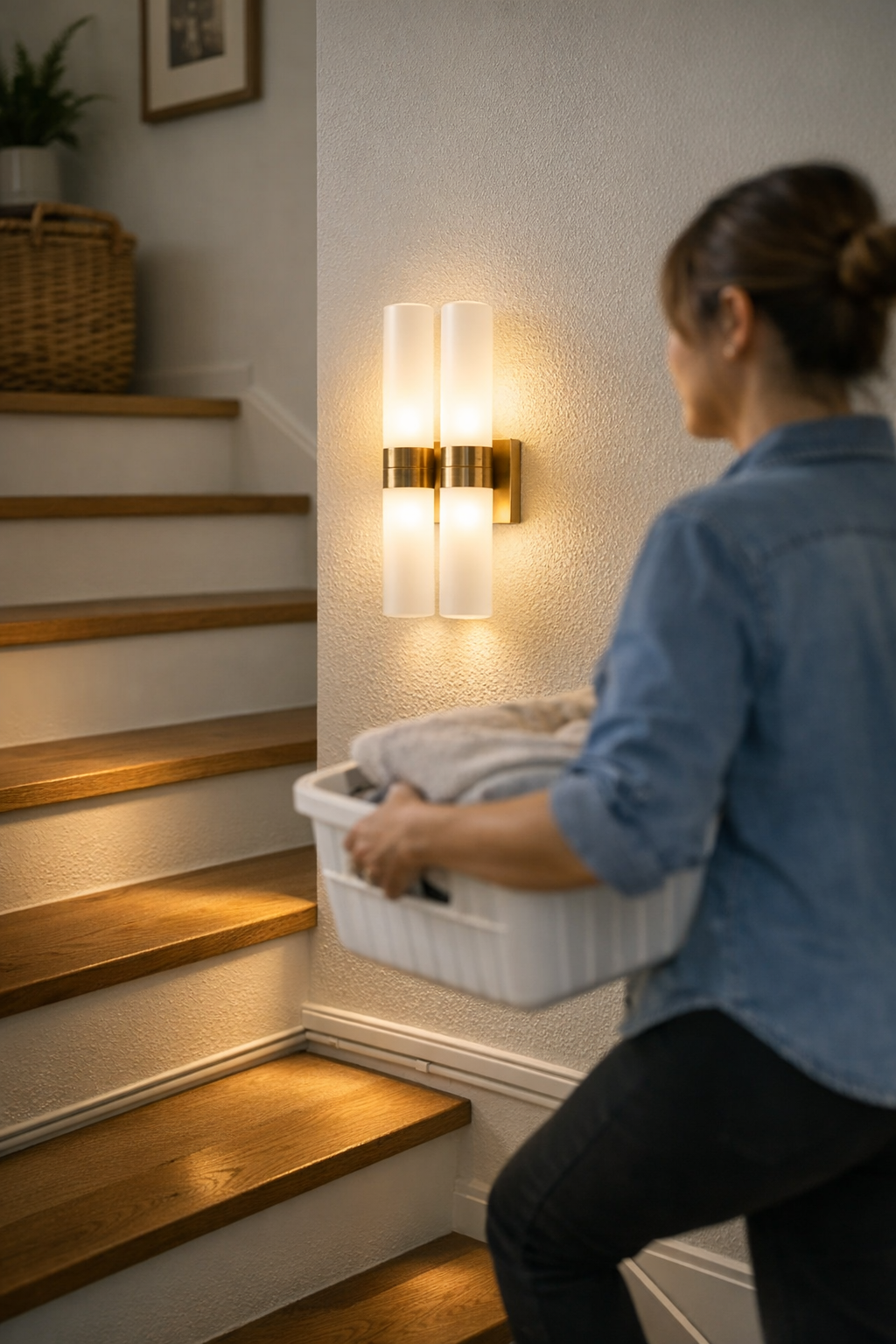
A staircase can look sharp in every photo—and still feel like trouble every single night. The wrong lighting means one cold patch of glare by the landing, cables running exactly where your foot lands, and step edges that blur under your eyes the minute daylight disappears. If you judge your stairs by appearance alone, you’re almost guaranteed to miss what matters: the moment you slow down, shift the laundry in your arms, or duck your head to sidestep a misplaced fixture, you know the setup is working against you.
Why the Right Stairway Lighting Isn’t Just About Looks
Stairways aren’t just pass-throughs—they force you to move at odd angles, balancing in low or shifting light. Many setups only target the surface: more brightness, or at best, neater cable runs. But correct lighting support depends on where—exactly—the beam lands and how every bracket, tray, or strip stays out of your path. The fixture that seems “hidden” can cast new shadows. Tidy cables can still grab a shoe or a vacuum. Brackets that hide well in photos may jab a hand on the way up. None of this shows up until you’re using those stairs, again and again, after sunset or with an armload slowing your focus.
There’s a gulf between “visible stairs” and step edges you trust. Missed coverage forces people to pause at dark spots, double-check risers, and grip rails tighter than they want—especially after dusk or with a box in hand. That discomfort is quiet, persistent, and easy to underestimate until it becomes the nightly routine.
Common Lighting Hazards That Sneak Up in Daily Use
Glare Where You Least Expect It
A misplaced fixture on a split stair and you’re staring straight into a harsh spot, not seeing where your foot needs to land. Daytime means nothing here—at night, that flash steals your sense of the tread. Even a half-second’s hesitation builds a new, awkward caution into what should be an automatic routine.
Shadow Traps and Dim Edges
Minimal wall lights, panel LEDs, or step strips aim for a clean finish but regularly leave corners murky and edges blurred. The steps might look distinct during install, but glare spreads and the bottom risers fade. You notice it when kids jump over a shadowed patch or older family members hug the rail for an extra second. It’s not just cosmetic: it’s a missed cue that slows everyone down, often at the most-used parts of the stairway.
Cable Clutter and Support That Interferes
The sharpest light installation is ruined by exposed cable loops—or even “almost-hidden” channels with poorly tested placement. Shoes catch, cleaners snag, and after a week, every run is a visual distraction or a real trip hazard. Sleek brackets feel invisible at first, then draw attention the first time your hand catches the rail or a toe bumps an edge. The elements meant to support cleaner lighting often invent their own small frictions if placed without living-through testing.
When Well-Intended Fixes Still Fall Short
Installers focus on looks—flush-mount, cable hidden, bracket slim. But after a few weeks, the setup’s real personality appears: slow movement through shadowed zones, bottom risers in semi-darkness, the hard-learned path to avoid. The spot that looked solved on paper becomes the edge you wish were clearer each night you carry groceries or laundry baskets up and down.
Lasting improvement almost always trades flawless visuals for invisible usability. The perfect install fades from view only when movement is so natural you forget the lighting exists—because now, you never have to second-guess the next step.
Small, Targeted Changes That Make the Biggest Impact
Adjusting Light Placement for Real Clarity
True change can come from something as basic as lowering the wall light to just above each tread—delivering even, practical coverage without blind spots. Suddenly, your route doesn’t break pace near the shadows. Arms full, dusk in the hall, you move without stutter or hesitation—the steps are clear, the edges revealed, the daily climb stops feeling like a minor obstacle.
Keeping Cable Management Practical
High, “invisible” cable runs often become the worst offenders after a week of real use. A well-placed cable tray along the baseboard isn’t invisible, but it keeps the floor path clean—no loops, no snags, less visual chaos. Every time you vacuum without catching on a stray cord, you see the value in practical setup over showroom invisibility.
Learning from Everyday Friction
The real proof is felt after dozens of rounds: hands relax on the railing, tired feet glide up and down, and guests make it through without even glancing at their steps. You no longer think about the lighting, the cables, or the next fixture bump—the staircase becomes just a path, not a puzzle. That’s the mark of a setup built from lived experience, not just a tidy appearance.
Frequently Overlooked Questions (With Straightforward Answers)
Should stairway lights be motion-activated for safety?
Not always. Motion sensors help in unpredictable homes, but steady, always-on step lighting—placed for actual use—means consistent guidance at every hour. No flashes, no waits, just steps you can trust instantly, even in the dark.
What color temperature works best for stair safety after dark?
Neutral white (3500K–4000K) carves step edges clearly without harshness or a medical look. It sidesteps the too-cool, too-warm extremes, making night trips feel guided and comfortable…not clinical or hidden in gloom.
How do you keep stairway cables both safe and out of sight?
Use the lowest-profile channels you can, pressed tightly to the baseboard or tucked beneath the stair lips—never on the open run. Try the cable path for a week before finishing: only daily movement reveals the annoying snags you won’t spot at installation.
Building a Stairway That Holds Up to Real Life
The install that holds up best is rarely the one that could win a style contest—but it delivers where you move, day after day. Low-mounted fixtures, solid cable trays, and tested support pieces mean fewer corrections, less mental tension, and a stairway that finally disappears into routine use. The real test is weeks later: quick movement, no slowdowns, no thought wasted on lighting—just steps that work with your life, not against it.
You don’t need the cleanest look—you just need stairs that meet you where you live, reducing drag and removing the subtle hassles that pile up in everyday routines.
For lighting and support options built for how stairs are actually used, visit LightSupport.