
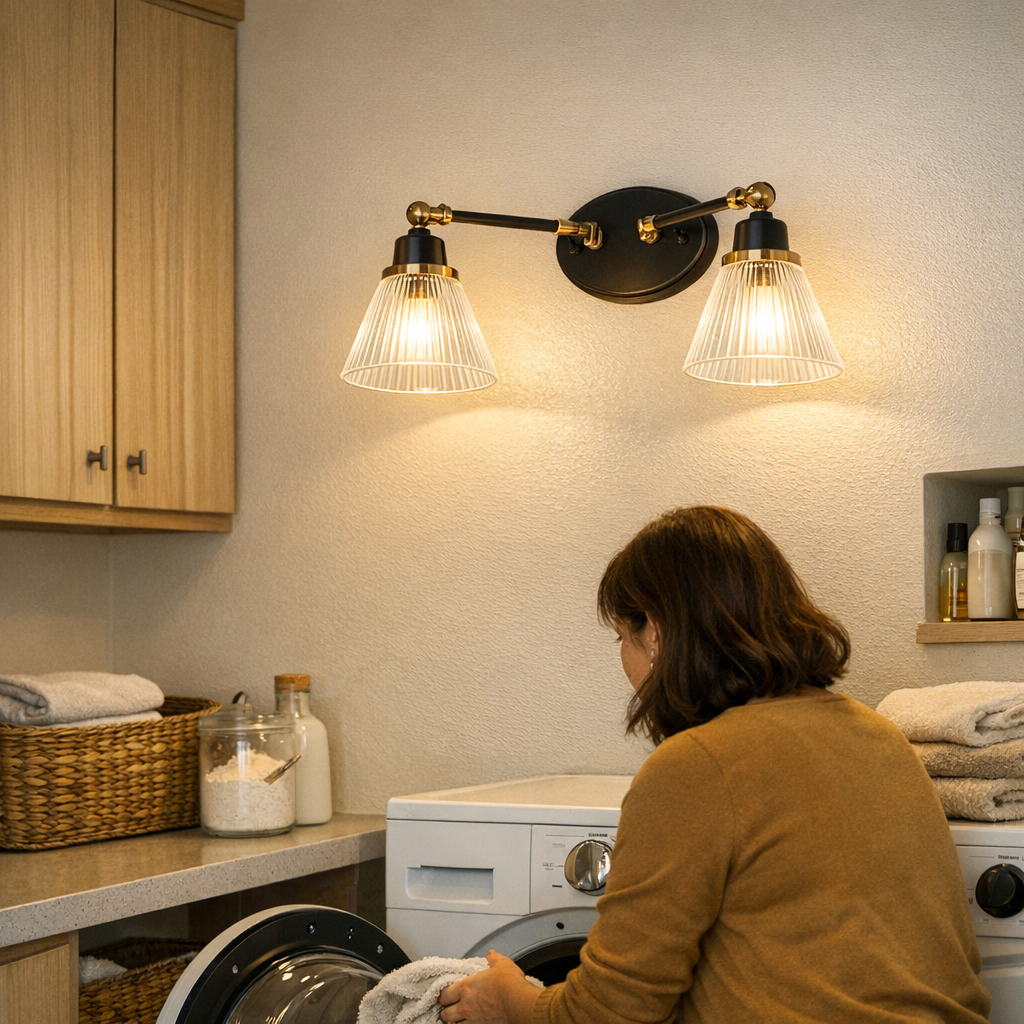
Unstable lighting gives itself away the moment your routine is interrupted—a flush-mount fixture spins a few degrees every week, a wall sconce starts leaning, or the bathroom mirror throws unpredictable shadows just as you’re getting ready. In busy rooms like hallways, stair landings, laundry corners, and entryways, even minor vibrations from footsteps or a shutting door quickly expose the fault lines of weak mounting. The result isn’t just visual annoyance; it’s a daily reminder that your lighting isn’t keeping up, stripping away trust in spaces you cross again and again.
When Everyday Vibrations Become a Lighting Problem
Hallways, stair turns, laundry rooms, and entryways bear the real test of lighting installation. Every footfall, slammed door, or HVAC rumble sends vibrations pulsing through drywall and ceilings. If your fixture is attached with flimsy anchors or sits on hollow sheetrock, these vibrations loosen the grip fast. The fixture you once gave no thought to becomes a minor irritant—never failing outright, but shifting, rattling, and throwing light off target in ways that slowly get under your skin.
You might notice:
- Ceiling lights drifting out of alignment, so shadow lines jump every few days
- Wall sconces twisting closer to the wall or tipping sideways, casting glare or creating a blank spot along the hallway
- A recurring, buzzing hum or faint rattle whenever someone walks above, or the heat kicks on late at night
With every small shake, the fixture’s aim slips a little further, distorting the light’s reach and chipping away at the even spread you thought you chose for good.
Subtle Shifts, Daily Friction: When Lighting Undermines Routine
Lighting doesn’t go from perfect to useless in one day. Instead, each shake means light that should guide you safely down the stairs instead surrenders to uneven shadow. The bathroom mirror no longer lights your whole face—just one side, forcing a squint. The bright spot at the laundry counter fades, so you grope for the fabric softener in semi-darkness. The discomfort grows through repetition, turning ordinary crossings, chores, and pauses into small moments of hassle.
Recognizing the Patterns
Poor fixture stability isn’t just cosmetic—it creeps into your routine in quiet, annoying ways:
- Hallway crossings slow down: A once-bright passage develops a dark side as a ceiling fixture sags, forcing you to step more carefully.
- Task work loses clarity: The kitchen counter edge blurs as the fixture drifts, so slicing or cleaning becomes less certain.
- Stair turns feel riskier: As a stairway light points off-center, shadow lines cross the steps, making each descent slightly less sure-footed.
The friction rarely reaches the level of a crisis, but it repeats: small stumbles, shadowy corners, slower movement. Lighting that only looks right from a distance leaves your movements out of sync with the room you rely on.
Why Some Lighting Shifts—And Some Holds Strong
Most chronic lighting problems are anchored—literally—in how the fixture is fixed to the structure. Any vibration-prone spot exposes hardware shortcuts. Flush-mounts, wall sconces, and panel lights secured with single anchors or minimal plates can’t resist the repeated shudder of use. In high-traffic or utility zones, hard mounting into ceiling joists or wall studs isn’t optional if you want the light to stay where you need it.
Case In Point: Laundry Room Fatigue
In a laundry area, vibration is the norm. A flush-mount secured with a broad, anchored mounting plate absorbs every slam of the washer, every swung door, every cycle’s rumble. Swap in a fixture hung from a single drywall anchor, and within weeks the light hums with each spin, starts to wander, and leaves laundry corners marked by stubborn dimness. Each laundry run, you notice—until upgrading the mounting hardware finally puts an end to the guessing game.
Stairway Lighting: Cumulative Damage in Small Degrees
Upstairs, a stair landing light that used to align cleanly now throws odd angles by the third week. Repeated tread sends quiet tremors up through the mount, shifting the fixture just enough to add glare on the first step and shadow gaps by the fifth. This isn’t a dramatic drop, but a slow decay in confidence as you notice yourself testing each step instead of moving with speed.
Simple Fixes That Restore Reliability
Fortifying the mounting point brings fast, visible results:
- Install toggle bolts on drywall to anchor through the sheetrock, spreading the load and stopping drift
- Whenever possible, secure fixtures into joists or wall studs to make the connection vibration-proof
- Choose wide, solid backplates—especially for wall sconces and flush-mounts—so each shake gets absorbed, not transferred
One small upgrade—stronger plate, proper anchor—can silence a recurring buzz, stabilize a sagging light, and bring real clarity back to spaces where lighting failure used to show up every day.
What Changes When Lighting Stops Shifting
When the fixture is truly anchored, lighting starts to disappear—in the best way. You cross a hall and feel the whole floor spread in even clarity. No more nudging a wayward sconce, no leaning in to catch the right angle at the bathroom mirror, no slowed step on a half-shadowed stair. The mark of success: you forget about the lighting altogether, because every surface is actually ready when you are.
Stability isn’t about engineering out every possible shake. Life keeps moving; rooms aren’t motionless. But the right fix absorbs the chaos, preserves balanced spread, and keeps movement in sync with your routine—rather than working against it.
Tips for Fixing or Preventing Lighting Drift
- Investigate new rattles: If a fixture starts humming or clicking, check mounts before uneven shadows or flicker set in.
- Notice drifting light or dark edges: If expected clear spots look uneven, see if the fixture has shifted—catch it early with a simple adjustment or stronger anchor.
- Reinforce problem areas first: High-traffic corridors, stairways, bathrooms, laundry corners—anywhere routine use causes repeated shock—get priority for reinforcement.
You don’t need perfection or overbuilt industrial fixtures; you need lighting that stays true through ordinary motion. Real clarity means lighting that works every time—across mornings, late nights, and all the in-between rush when you can’t afford another stumble, squint, or search for the counter’s edge.
Find practical, stable lighting specifically made for the heavy routines of daily indoor movement at LightHelper.