
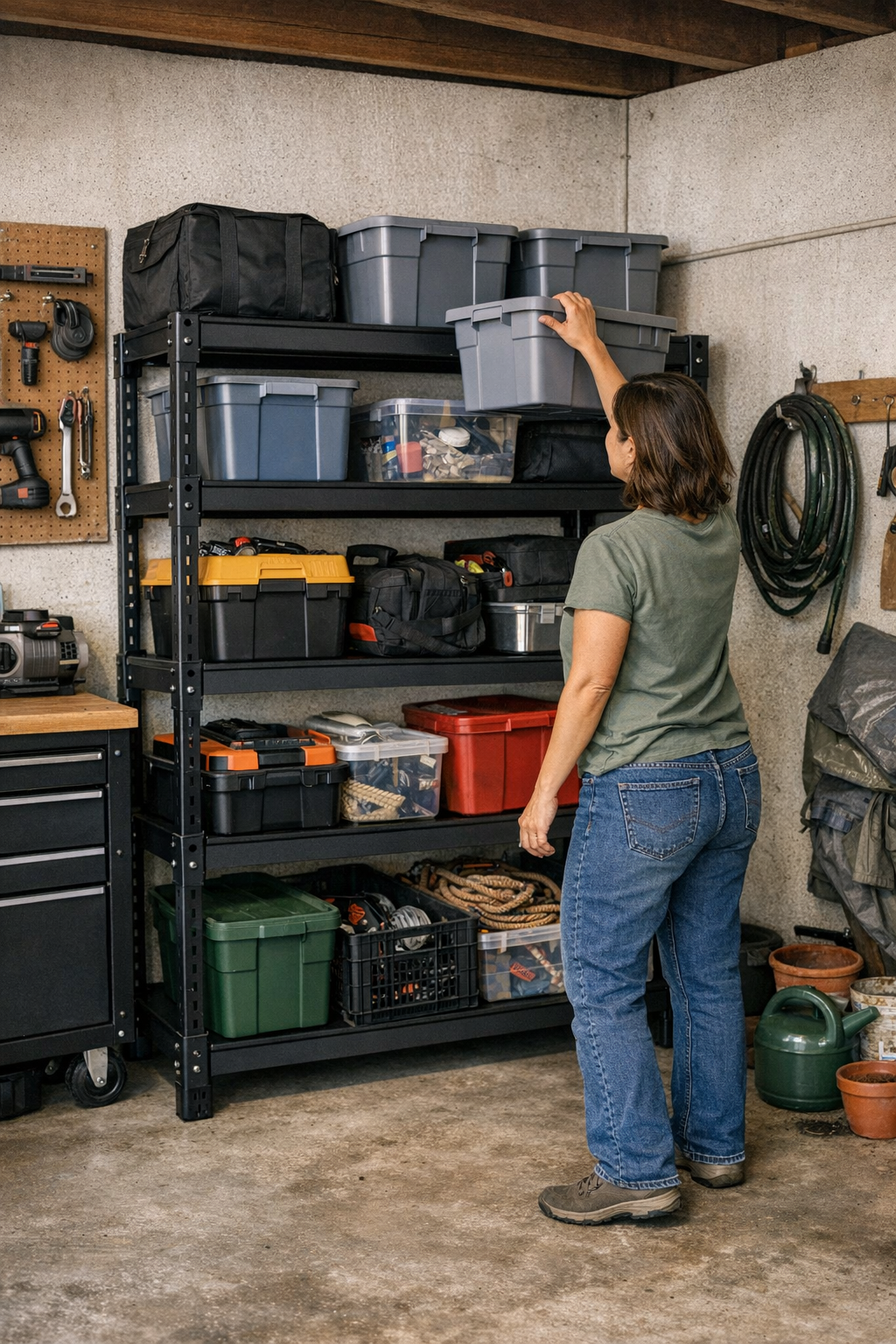
The allure of modular floor-based shelving in a garage or workshop is immediate and unmistakable: everything finally lifted off the concrete, bins crisply stacked, and storage climbing vertically to reclaim lost space. On day one, a freshly assembled multi-tier unit promises to solve the chaos. But it doesn’t take long for these shelves to reveal their real impact—especially when every project, tool swap, or seasonal bin return tests their place in your daily flow. The “extra storage” starts to demand its own attention: sidestepping a blocked path to the corner, steadying a wobble with one hand while groping for a storage tote with the other, reshuffling bins just to reach a single item. What looked streamlined now quietly interrupts the rhythm of real work.
Stacked High—And Suddenly in the Way
Setting up a five-tier shelving unit feels optimistic—the empty floor, visible boxes, every inch seemingly put to work. But the real verdict arrives not at assembly, but in ongoing use. Grabbing tools mid-task, returning heavy bins after a long weekend, or just trying to squeeze a rolling cart through becomes a low-stakes obstacle course. The higher the shelf, the more it flexes under awkward loads or shifts if your floor is even slightly out of true. Small imbalances multiply: you start bracing each reach, nudging a shelf after a bin slips into place, feeling just enough motion to hesitate. Tidy placement morphs into an ongoing act of balance—in both sense and practice. And as frames begin to rock or shelves sag under uneven weight, you’re forced to slow down, sidestep, and hope the setup holds.
When “Organized” Turns Into an Obstacle
Fast-forward a few weeks. The bins on the bottom shelves now handle most of the action; they’re fastest to grab, easiest to return. The top tiers? Slowly abandoned to awkward, seasonal, or just-for-now overflow. Suddenly, those upper shelves aren’t practical—they’re a test of caution. You climb a stepstool, steady the edge, carefully juggle items around a sagging panel. That parked work cart you set next to the shelf? You now maneuver it every time you want into a corner. Movement narrows. Each return of a bin becomes a mini puzzle, shuffling from one spot to another, just to land everything securely. Instead of cutting through tasks, you’re managing the shelving—and new piles start appearing on the floor “until later.” The illusion of order drifts; the footprint keeps expanding as walkways and dead corners gather the spillover.
How Instability Sneaks In—and Stays
Instability rarely announces itself all at once. It seeps in: a wobble after a hurried reach, a flexing shelf when unloading something heavy, a spot on the upper right you avoid unless absolutely necessary. That formerly tight edge, now skipped because the entire frame shifts with the lightest touch. These aren’t isolated quirks; they’re warning signs that the system isn’t holding up to the real routine. If you find yourself adjusting movements, avoiding certain spots, or thinking twice before using top tiers, the shelving is actively subtracting from your space’s function—bit by bit, every day.
The intended gains—clear floors, open wall space—get clawed back as overflow bins land on the ground again, traffic paths choke up, and you end up shifting things around just to access what you need. Sometimes it even spreads: nearby shelving gets cluttered as you return things on autopilot, or a once-clear wall starts stacking up with temporarily homeless items. Instead of taming mess, the shelving becomes a new source of sprawl.
The Real Upgrade: Stability Over Sheer Height
The real turning point comes when stability—not just capacity—takes priority. In one clutter-prone workshop, removing the top tier from a towering unit (and reinforcing the rest) didn’t just lower the profile; it changed the entire experience. Suddenly, every reach was direct and confident—no more balancing a bin by the tips of your fingers, no more slow placements to keep the frame still. Paths stayed open. You stopped parking the utility cart in odd spots to avoid blocked corners. Instead of endlessly resetting wobbly shelves, you could return tools and storage in one fluid motion. Overflow no longer piled up on the floor because returning items felt reliable and fast. The shelf footprint finally matched the work routine—not just the available wall height.
A stable setup isn’t just about staying upright—it shapes every movement. With wobble and sway eliminated, resets became quick, bins settled on the first try, and that “organized” look finally translated into a workspace that stayed clear between projects. You used the shelving because it worked—not just because it was there.
Smarter Modular Shelving—How to Make It Actually Work
Track Real Movements—Not Just Storage Capacity
Notice how often you brace a shelf, sidestep bins on the floor, or avoid upper tiers altogether. Every moment spent steadying, rehousing, or doubling back means the system is adding friction, not removing it. Over time, those little adjustments rob you of valuable space—and compound the original clutter issue.
Cap Height, Reinforce the Frame
Don’t default to maximizing vertical space just because you can. A well-reinforced four-tier unit outperforms any unsteady five-tier stack in a real, frequently used area. Reinforce the joints, anchor if possible, and stop adding levels when reach and stability dip below everyday comfort. That discipline pays off in every future project—returns are quicker, nothing sways, and storage stays where it belongs.
Respect Walking Lines and Return Paths
If shelving forces you to shuffle carts, squeeze through corners, or dodge “temporary” bins on the ground, pause and rethink the setup. Reclaim those walkways by shifting units a few inches or adjusting orientation—open, clear paths mean your storage layout supports your routine instead of boxing it in. Watch for those overlooked corners and wall edges that quietly gather overflow: they’re signals that current shelving isn’t fitting actual use.
Full Shelves vs. Functional Space: Don’t Confuse the Two
An overpacked, sky-high shelving system can turn into daily resistance if the frame can’t shrug off real, repeated use. The extra capacity starts out invisible, but it steals back time and energy, one slow reset at a time. Clogged movement, yet another reshuffle just to grab one tool, or that growing pile in front of the shelves—it’s all evidence that looking organized isn’t the same as working smoothly.
A strong, slightly shorter shelving unit doesn’t just “fit” the wall—it opens up the room to function. With true stability, you regain floor paths, cut out repeated shifting, and reclaim both time and space. The rest of your gear finally has a clear, permanent home—and your workshop or garage actually keeps pace with what you do, not just how you want it to look.
Find practical modular shelving and storage options that work for real spaces at StackNest.