
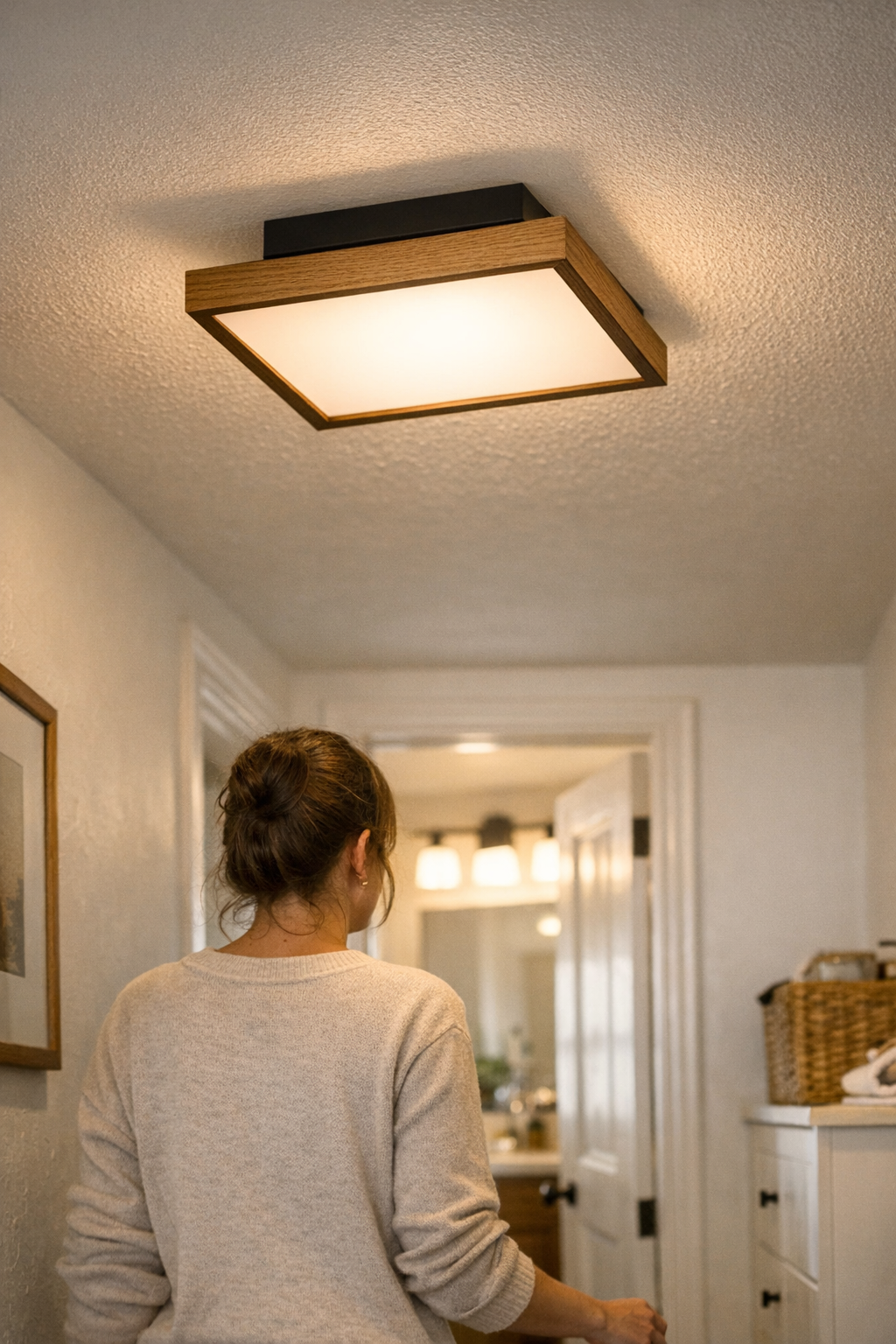
Looks can fool you—especially with indoor lighting. That new ceiling fixture might sit flush and look seamless on day one, but real use quickly reveals its limits. In high-traffic zones like busy hallways, cramped stair turns, fogged-up bathroom mirrors, or workhorse laundry counters, you stop noticing how pretty the fixture is and start noticing every wobble, shifting shadow, glare patch, or dark edge. When the base flexes or drifts—barely visible at first—your morning routine turns into a hunt for the right angle or a silent battle against poor visibility. “Finished” lighting becomes the nagging chore you revisit every week.
Where Flawless Looks Fade: The Real-World Consequences of Flex
Showroom fixtures all pass the eye test, but daily life exposes differences fast. Flex enters the scene when a fixture’s bracket only bites into drywall or patched plaster—never quite reaching the certainty of a joist or stud. At first, you’re fooled: the ceiling looks clean, seams are tight, the room’s bright. But daily routines begin to strain weak points that escaped notice on install day.
After a few weeks, walk those same routes—upstairs corridors, around bathroom mirrors, along laundry counters. Soon, shadows stretch where none used to be, the fixture sags a fraction, or a seam collects dust that never used to settle there. Maybe you hear a creak every time you dust, or reflections stay off-balance no matter how many times you nudge the bulb. None of these changes are dramatic—just a steady accumulation of small, irritating mismatches that remind you the job isn’t really done.
When “Illuminated” Isn’t the Same as “Usable”
Different rooms reveal the problem in their own way:
- Hallways and Corridors: The bulb is on, but every slammed door sends tremors through the fixture. One wall starts to vanish into shadow; you don’t notice until your path shifts to avoid the dark edge.
- Bathroom Mirrors: The fixture lines up over the center—at first. Over time, flex causes a shadow to creep over one side, or glare pools right where you need clarity. Shaving or makeup gets slower, less precise.
- Stairway Turns: Light looks fine from a distance, but take the turn and realize the angle’s shifted again. The bright patch never matches the safest path, especially after heavy use or a round of cleaning.
- Task Counters and Utility Areas: Under-cabinet light starts strong, but after weeks of routine bumps, part of the counter fades. You fumble to see cutlery or tiny hardware because a loose base sent light askew.
These are not just small aesthetic annoyances—they are practical, ongoing visibility problems. Not quite bad enough for 911, but just frustrating enough to slow you, break your focus, or make routine tasks a pain.
Small Flex, Big Friction: The Subtle Strain of Repeated Contact
Anyone who’s dusted a creaky flush mount knows this ritual: at first, it barely budges—a whisper of movement during cleaning, a tilt after a bump in a narrow spot. Over weeks, the base arcs away, seams fray, and the weight starts prying at the fixings. Shadow lines deform, light spreads unevenly, eventually even the wiring junction feels the pressure.
Field rule: If a fixture crunches under your fingers or shifts too easily, don’t just twist it back and forget it. Many homeowners keep fighting the same crooked fixture every season, never tracing irritation back to weak mounting under everyday wear.
The Hidden Cost of Weak Mounting: Wiring, Alignment, and Your Routine
Two lights from the same box might look identical on day one—same brightness, same finish, same LED promise. The difference isn’t visible until weeks later: one still sits snug and even, the other has begun its slow slide into misalignment. A joist-mounted fixture just stays put—shadows fall where planned, the space stays tidy, and clean-up is fast. Support from drywall or thin plaster means even small jolts—from a spring-cleaning, a slammed door, or a toddler’s reach—become cumulative drift.
Frustration pops up during:
- Foot Traffic: Corridors see every step rattle the mount, shifting light and forcing you to squint or adjust stride.
- Maintenance: Bulb changes or a simple wipe-down disrupt alignment, turning quick chores into repeat fixes.
- Routine Changes: Each new season or minor schedule twist reveals the weaknesses in lighting that should have stayed invisible.
The Real Fix: Rethinking How Fixtures Meet the Ceiling or Wall
Toggles, anchors, and patched holes might stall problems, but long-term, the fix is simple and rarely cosmetic: secure the fixture—or its backer bar—directly to a joist, stud, or solid blocking. It’s less about weight, more about how each daily jolt, shift, or cleaning attempt is silently transferred through the mount. Done right, this stops seams from growing, shadows from creeping, and—most important—keeps wire connections healthy for years instead of months.
Scene: Fixing a Bowed Hallway Fixture
Picture a narrow corridor, overhead plaster, a semi-flush light anchored only by wall plugs. Looks fine—at first. But after weeks of footsteps, the fixture bows, shadow lines drift, and hairline cracks gather dust overhead. Light stops reaching one side, and the walk feels strangely unbalanced every night.
Remount it to the nearest joist—the bow ends. Shadows quit migrating. No more hunched dusting or wondering why the hallway feels “off.” You don’t notice what’s changed at first—what’s different is the daily nagging finally stops.
One Reliable Upgrade for Living With Your Lighting—Not Just Looking at It
Fixtures anchored to solid support earn their invisibility. Day after day, the light works, surfaces stay evenly bright, and you no longer choreograph your movement to avoid a glare, an awkward angle, or a shadowed patch you can’t reach. Whether you’re checking the stairs at night, cleaning the bathroom mirror, or prepping food along a counter, everything just functions. No flex. No repeats. No subtle drift that pulls attention away from the task at hand.
The best lighting upgrade isn’t more fixtures or new bulbs—it’s fixing the part you can’t see: the attachment that holds the line against real, repeated use.
Visit LightHelper for practical indoor-lighting solutions built for real use.