
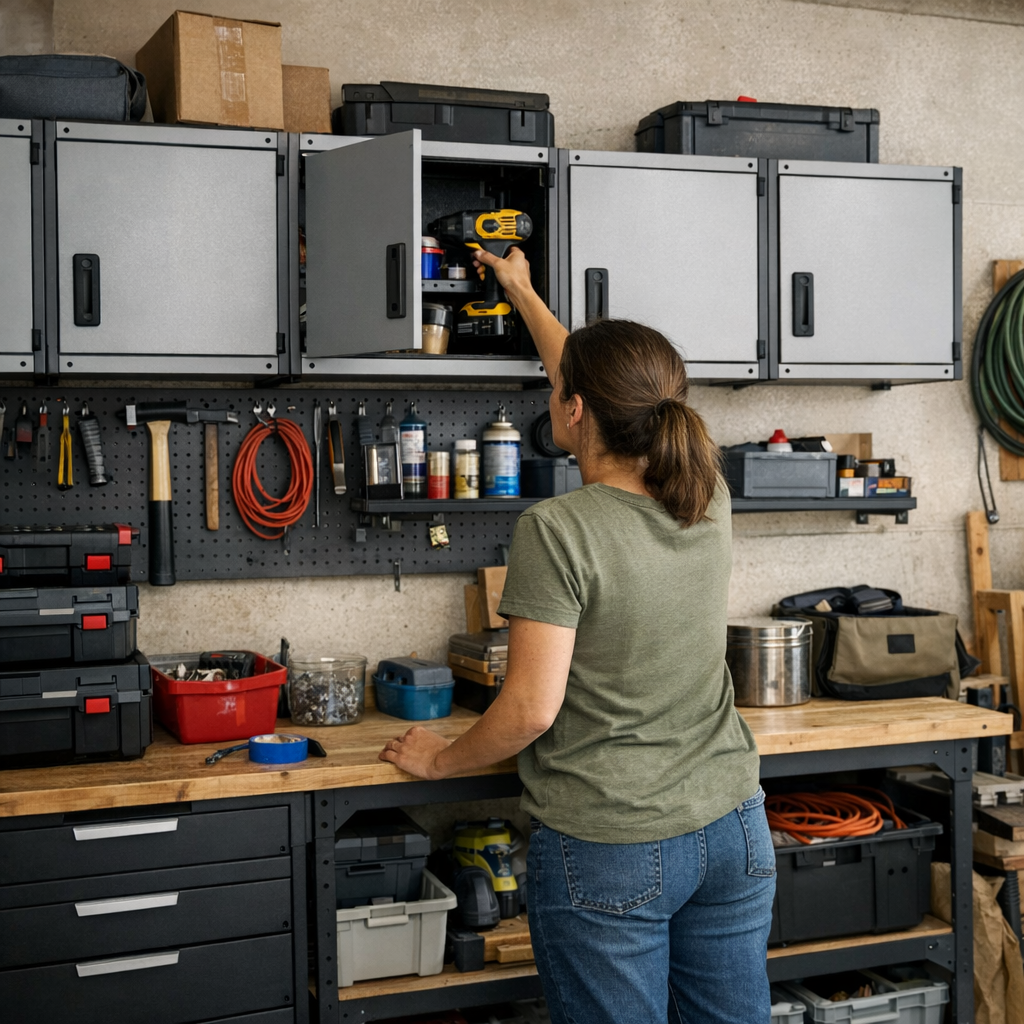
Wall cabinets come with the promise of order, but the real verdict reveals itself in motion, not just in looks. Walk into any freshly setup garage or workshop: everything appears tight, measured, purposeful. Doors close flush, shelves are empty and inviting, and for maybe a day or two, the illusion holds. Then the routine starts. You reach, stash, grab, return, and suddenly the small flaws surface. A door whose hinge always catches. A cart you have to edge sideways—again—just to squeeze past. Each interaction isn’t chaos, but every little snag edges the space closer to it.
Early Impressions: Visual Order, Hidden Friction
The satisfaction on install day is real—wall storage fits perfectly and promises a lasting reset. But let a few real jobs run through—a Saturday tire swap, a scramble to find the right bit on a Tuesday evening—and the system’s tolerance for daily life gets tested. The left cabinet now bumps the shelf if you aren’t precise. That cart, which fit beside the bench on day one, now needs a two-step shuffle just to open a cabinet all the way. Handles that lined up in catalog photos start becoming daily hurdles instead of time savers.
What unravels the order isn’t a single big mess. It’s the drip of micro-frictions: a hinge drag that means you hesitate before closing the door, a door that has to be nudged twice, the subtle pileup of “I’ll do it later” tools sneaking back onto the benchtop. Each reset is just a little bit slower, and the space starts rewriting itself around what’s awkward, not what’s useful.
Fitting In Isn’t the Same as Flowing Well
Plenty of setups look brilliant on paper. The wall is lined, every inch accounted for, and technically, everything “fits.” Yet fast-forward to real life, and the cracks appear: a shelf that’s just deep enough to snag long-handled tools, cabinet doors that threaten to collide if opened in the wrong order, sections crowded with bins you rarely touch because they’re never on your direct path. Friction breeds improvisation: today’s tools get stacked on the nearest cart or stashed “just for now,” and by the week’s end, you’re walking around overflow piles that seemed impossible on install day.
One stubborn hinge becomes ten missed resets a day. The routine falters. Instead of breezing through clean returns, you’re constantly adjusting, shifting, or outright avoiding the areas that should make life easier. The visual order’s still there, but beneath it, movement slows, intent gets foggy, and the system begs for a redesign.
The Telltale Grind: Everyday Annoyances in Action
The reveal is always in the details: dropping a clamp back onto the shelf as dinner’s served, sidestepping a cart to grab a bit box during a hasty fix, or constantly steering around a cabinet corner that eats up path space. Maybe it’s the organizer tray you keep shifting, or the dead zone that ends up as the “overflow” pile—those awkward corners where surface clutter quietly accumulates, out of necessity, not design.
Even the smartest modular systems slip in tight quarters. The wall’s covered in storage, yet you’re still reaching awkwardly or unlocking another bottleneck. Deep shelves become tool traps, mobile chests—ideal on day one—now block the best routes, forcing you to reroute every morning. The more you tweak, the more you realize: “full” doesn’t mean “usable.”
Micro Fix, Macro Difference: One Hinge, All the Change
Picture a midweek evening: you’re juggling a finish nailer, ready to stow it, and again the cabinet door jams an inch before closing. Do you force it—risking a click that doesn’t quite seal—or leave the tool out, telling yourself you’ll fix it later? By tomorrow, more gear crowds the bench, and your reset is ruined. Now imagine swapping out that basic hinge for one self-adjusting model: suddenly the door clears, swings closed without thought, and your tools actually end up where they’re meant to—each round trip seamless, not a second guess.
That’s what keeps the system alive: near-invisible upgrades that transform daily flow. Not dramatic makeovers—just tweaks that erase friction before it multiplies.
Judge By Routine, Not The Showroom
Looks count, but the real measure is motion. Pressure-test every part of the setup the way you actually use it: open doors in succession, return tools mid-sprint, see what snags, stalls, or demands a workaround. That’s when tiny gaps and misalignments announce themselves—the millimeter differences that become ten-second delays, again and again, as the weeks grind by.
What stayed perfectly square when empty can drift fast as weight stacks up: hinges sink, shelves flex, doors rub. A setup that starts stiff and sharp may, by midmonth, become a place you dodge rather than use. Every hairline misfit is a momentum trap just waiting to emerge in routine resets.
Fix Problems Early—Or Prepare For Creeping Clutter
Tackle friction the moment you feel it. If reaching for a tool means bracing a shelf with your knee, or you’re catching an out-of-true door twice a session, don’t let it pass. Adjustable or soft-closing hinges are more than upgrades—they’re ways to keep access smooth, movement one-handed, and surfaces from becoming permanent drop zones. Sometimes a shelf needs to shift by a finger-width, or a default hinge needs replacing with something that self-corrects or swings wider. Tiny changes now are what block messes from snowballing later.
Tip: Install-day perfection rarely survives first use. Check again once cabinets are loaded and routines are underway. Re-align. Retighten. Minor adjustments made early stave off the fatigue of fighting your own storage week after week.
The Payoff: Real Movement, Real Reset
The difference starts to show—cabinets that close with a casual push, nothing grinding or lagging, pathways that stay clear no matter how many cycles you run. A setup tuned for motion means you’re not sidestepping obstacles or retracing old pile-ups. Instead, every hand return finds its place, corners stay open, and you spend more time working than setting the stage. Zones clear with a wipe, not an hour’s sort. Cabinet storage becomes a tool, not another maintenance headache.
Getting ahead of friction pays out daily, in the way you flow through a project, not just the way your space photographs. The right tweaks let the order you see on day one actually survive week five—and make the workshop, or garage, feel like it works for you, not against you.