
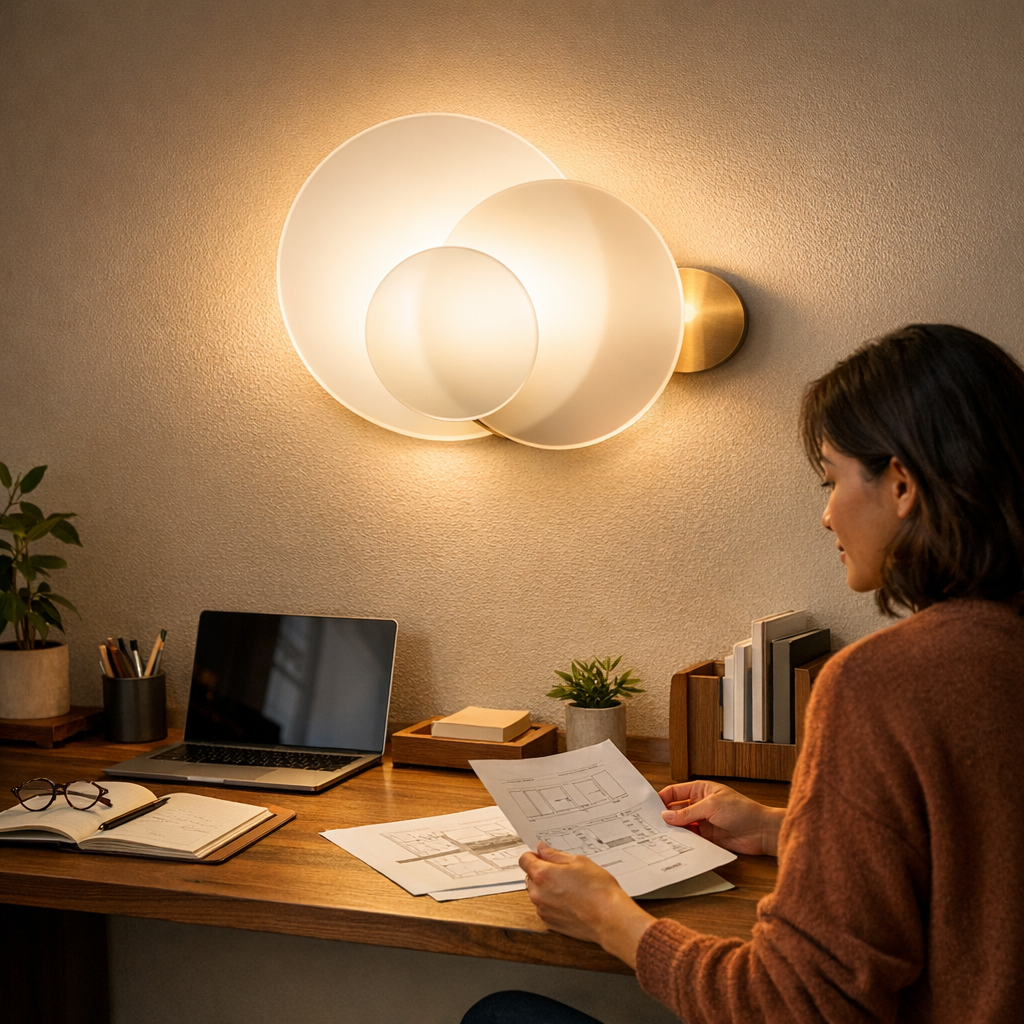
Minimalist lighting setups often solve one problem by creating another. A slim desk lamp or flush-mounted LED strip may leave your work surface looking pristine—until the first week of real use reveals the cracks. Suddenly, the left side of your desk is hidden in a fog of half-shadow, monitor glare makes you shift your seat, and crisp cable runs start slipping loose with every new device you plug in. What appeared effortless at install becomes a subtle daily hassle, felt not in the photo but in every moment you chase lost pens or push lines of glare off your notes. The promise of “barely-there” quickly gets outpaced by the friction of actual routines—who cares if your setup fades visually if it leaves you stuck mid-task?
Where Clean Install Meets Daily Interruption
The first day after mounting a panel light or running cables tight against the wall, your space looks resolved—no clutter, open surface, no visible mess. But order that only holds still doesn’t stand up to repeated use. Reach for a marker at the edge of your work area, and your fingers land in the dim because the beam stops short. Adjust your laptop position, and now a cable is clipping the corner of your hand. Every plug-in or device swap nudges another wire out of line. None of it loud, but all of it repeated. The product disappears visually, but the inconvenience it creates keeps cropping up in the background—proof that hidden doesn’t mean handled.
Desk Edges and Work Surfaces: The Reality Check
Desk edges and task surfaces are where slim lighting reveals its weak spots. A perfectly flush under-shelf strip can spray enough light for most of the desk, yet leave the front few centimeters stubbornly dim. That’s the real-life storage zone—where tools drift, crumbs land, and your eyes get strained scanning printouts. Even a slick, cable-free look won’t offset a dead zone where you need to actually see. The result? Day after day, you find yourself constantly pulling things forward, shifting positions, or just ignoring that shadow stripe—a tiny flaw that scrapes at routine efficiency.
Shared Zones: Tidy Install, Uneven Outcome
On a shared study table or busy kitchen counter, a minimal fixture with neat cable paths can’t control what happens once the routine picks up speed. One person’s book stays well-lit; another’s recipe lives in a gray patch. Reflections off glossy surfaces throw hot spots back in your face. Cables that started tucked flush start trailing into arm’s reach after a few quick movements. The system that looked finished on day one becomes increasingly fussy to use, and everyone adapts with small workarounds—twisting, repositioning, taping down one more segment—but the basic mismatch is still there.
The Cable Compromise: Invisible or Just Out of Sight?
One of the biggest draws of low-profile lighting is the hope that wires will finally vanish. But nearly every “invisible” cable run starts falling apart the first time you move gear, recharge, or unplug. Adhesive clips pop free in the heat, velcro tabs sag, and a snug path from last week is now a new trip wire in today’s routine. Instead of noticing the light, you notice the mess—cables peeking around the desk edge or pulling power bars out with them. The detail that was supposed to stay backgrounded makes itself impossible to ignore.
Support Hardware: Strong Start, Sliding Finish
Most bracket mounts or cable clips feel bombproof during install, but the test doesn’t start until you start using them. Each lamp angle adjustment, each unplugged device, puts slight pressure where adhesive eventually gives up. Screw-in brackets or deeper anchors help, but a weak mount quickly turns stable light into wandering illumination—a desk that flickers not from tech issues, but because the light bar keeps sliding off-track. Before long, you spend more time pushing pieces back into place than getting work done under their beam.
Adapting in Real Time: Micromoves, Major Relief
One small shift can unlock a big difference. Sliding a bracket a centimeter forward finally lights the desk’s edge—a zone you kept losing pens in. Replacing a sagging adhesive strip with a rigid screw mount means your cables hold shape no matter how often you work or swap devices. When each visible beam actually covers the active work area and wires hold their run, the surface stays both clean and easy to use, even on days when everyone shares the space or uses it hard. Suddenly, there’s less pushing, searching, or compensating, and more just getting things done.
Everyday Adjustment: Clarity Over Clean Lines
The real verdict on any slim lighting setup comes from the hundred small moves you make after install. If you’re nudging the lamp again to chase away a shadow, adjusting your seat angle for the third time to dodge glare, or re-taming cords by lunchtime, the friction is not solved—it’s just better hidden. Minimal hardware has to hold up not just for the first Instagram photo but for the daily routine it’s there to support.
Real-World Fixes: Make Minimalism Work Under Pressure
- Reach the edge: Place your beam so it covers the entire work zone, not just the center. Adjust brackets or shift strips so the useful edge—the place you actually write or handle small parts—isn’t lost in shadow.
- Secure where it counts: Anchor cables at the real points of use—right at the plug-in, not just along the back edge. Over time, physical fasteners (screws, mechanical clips) keep lines in place better than any adhesive.
- Fight glare, not just clutter: Where shiny surfaces reflect the beam back, change the angle or add a diffuser. A desk lamp that’s ultra-thin but aimed wrong turns task lighting into eye strain.
Beyond Looks: Minimal Still Has to Work
The setups that succeed don’t just hide hardware—they remove the interruptions you would have put up with anyway. A “silent” light isn’t silent if you’re constantly compensating for what it misses. A line of cable that never sneaks out, a bracket that’s solid months later, a beam that reaches right where it’s needed—these upgrades shrink daily friction and disappear by truly supporting your routine. Minimalist doesn’t mean accepting less function for a sleeker look. If your surface looks clean but still feels awkward to use, you haven’t solved clutter—you’ve moved it from the eye to the fingertips.
A little more attention to bracket placement, cable support, and light spread at day one can mean months without mid-task frustration. The best hardware lets you actually ignore it, and focus on the work, hobby, or gathering in front of you. That’s when setup stops being the problem—and the light starts letting the space work as intended.