
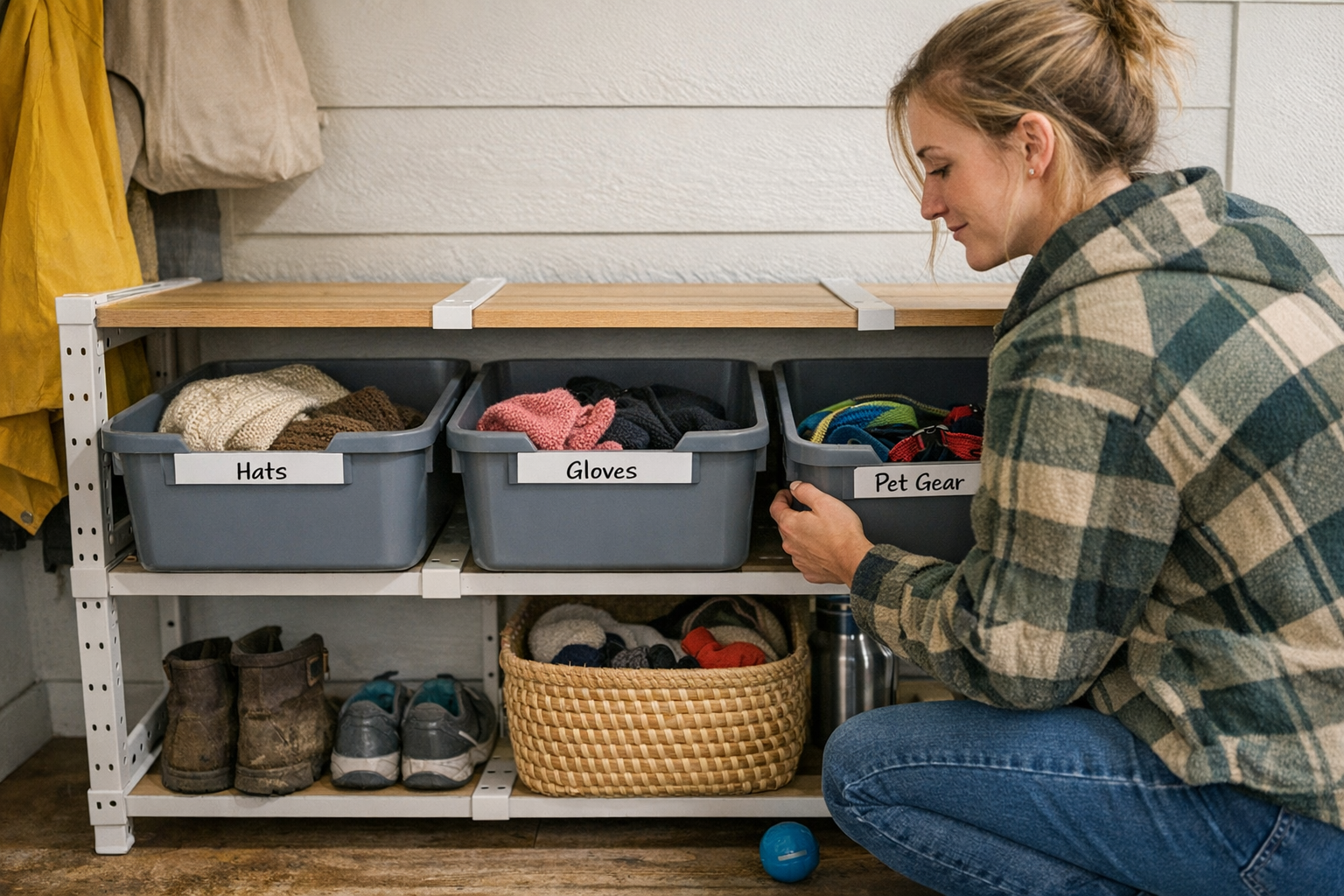
You can line up bins, print perfect labels, and start the day with a shelf that looks flawless. But by evening, the system’s already faltering—a glove lost behind rain boots, a tangle of hats jammed in the wrong slot, and a quiet sprawl of clutter leaking onto the nearest chair. Closets, mudrooms, and utility shelves all entice us with the dream of instant order, but the truth surfaces once real life kicks in. If every bin is wedged tight—no clearance, no give—that “organized” look is just a snapshot. The minute you need to grab, slide, or swap anything, friction creeps in.
When “Tidy” Means Trouble
In busy homes, storage is never static. Mornings mean rifling for one glove while rushing out the door. Afternoons bring damp hats and surprise school projects needing a home, fast. A shelf lined with bins might look sharp, but if each container fits like a puzzle piece, choices evaporate. One stuck bin and the whole routine detours.
Order unravels fast: bins put back out of sequence, kids tossing random items into whatever’s closest. Label logic fades as you grab for one thing and find three other categories caught up in the mix—leashes lost among scarves, winter gear squeezed into gaps meant for shoes. Soon, the floor is picking up what the shelf can’t keep contained.
Shelf-Edge Labels: Smart—If the System Can Breathe
Shelf-edge labels are unbeatable for fast pivots—if you build in room to actually move things. That flexibility makes sense in places under daily siege, like entryways: one week, raincoats and umbrellas; the next, soccer cleats and sunglasses. When each bin glides out with minimal effort, old labels peel off, new ones snap into place, and the whole shelf keeps up with shifting demand.
Lose that slim buffer, though, and you lose momentum. Too many bins crammed in, and basic adjustments become wrestling matches—two hands bracing, sides scraping each other, and categories stuck in yesterday’s order. Good intentions get postponed. Labels make less sense. Gear starts piling up in makeshift stacks, while bins stubbornly refuse to budge.
Can Your Setup Survive Mudroom Mornings?
Picture the chaos before school: baskets labeled for hats, gloves, pet leashes, all lined up beneath tidy shelf-edge tags. In reality, kids jam mismatched mittens wherever there’s space, busy hands shove the leash into the closest bin, and now you’re juggling containers just to restore order. If bins are jammed against each other, you give up fast—the “put back” step becomes a balancing act, leaving items stranded until the next overdue reset.
How Overfilling Backfires—And Clutter Creeps In
It feels natural to max out every inch and create tight, perfect rows. But that’s when storage goes from efficient to exhausting:
- You fight to extract one bin, taking two more with it—or tipping a full stack
- Labels get ignored; things land wherever there’s open space
- Now you’re hunting, not finding—gloves in with scarves, stray keys buried at the back
- Overflow zones appear: scarves balled up on the side, shoes gathering in the hallway, the shelf’s boundaries broken
What once looked under control has devolved into a shuffling game—resetting takes longer, and every “quick clean” just smears stuff from surface to surface.
The Quarter-Inch Rule: Breathing Room Beats Perfection
The easiest upgrade? Leave at least a quarter-inch gap between every bin. Just enough for a clean, one-handed slide—not enough to waste precious space, but plenty for smooth access and easy resets. That tiny margin lets bins glide out, labels update in seconds, and new categories shuffle into place without upending the whole line.
Now, when you switch hats for sandals or winter for spring gear, your shelf keeps up. Instead of wrestling half the row, you adjust one container and go. Categories stay clear. Bins return to their places without a fight. Resets become a 30-second spot check, not an hour-long overhaul.
When Bin Labels Win Over Shelf Labels
Shelf-edge labels aren’t magic for every context. If you have deep storage—linen closets, garage shelves, or those back-of-the-pantry tubs that rarely move—a label stuck right on the bin works better. Less swapping, less fuss, and category stability make the whole system more straightforward. But wherever categories keep changing and bins move weekly, shelf-edge labels with built-in space always handle the churn best.
Small Habits, Big Difference
Even the best shelf spacing needs a nudge. Once a week, pull bins forward, skim through contents, and reset anything sliding off course. That quarter-inch clearance turns this into a quick routine—no wrestling, no digging, just a fast realignment that resets the space before clutter returns. Labels stay meaningful, visibility stays high, and finding what you need takes seconds, not searching.
Ready For Daily Change—Not Perpetual Reset
Real organization doesn’t mean frozen perfection. It means shelves designed to welcome swaps, not punish them. Leave space for bins to move, pick a labeling system that fits your reality, and keep routines light and flexible. That’s how you keep closets, mudrooms, and utility shelves working—ready for everyday shifts, instead of slipping into slow-motion chaos.
If your bins strain to move, your labels don’t guide, and your gear ends up everywhere, the fix is usually simple: a tiny bit more space, and labels that match the pace of real life. Let your storage breathe, and it will work with you, not against you.