
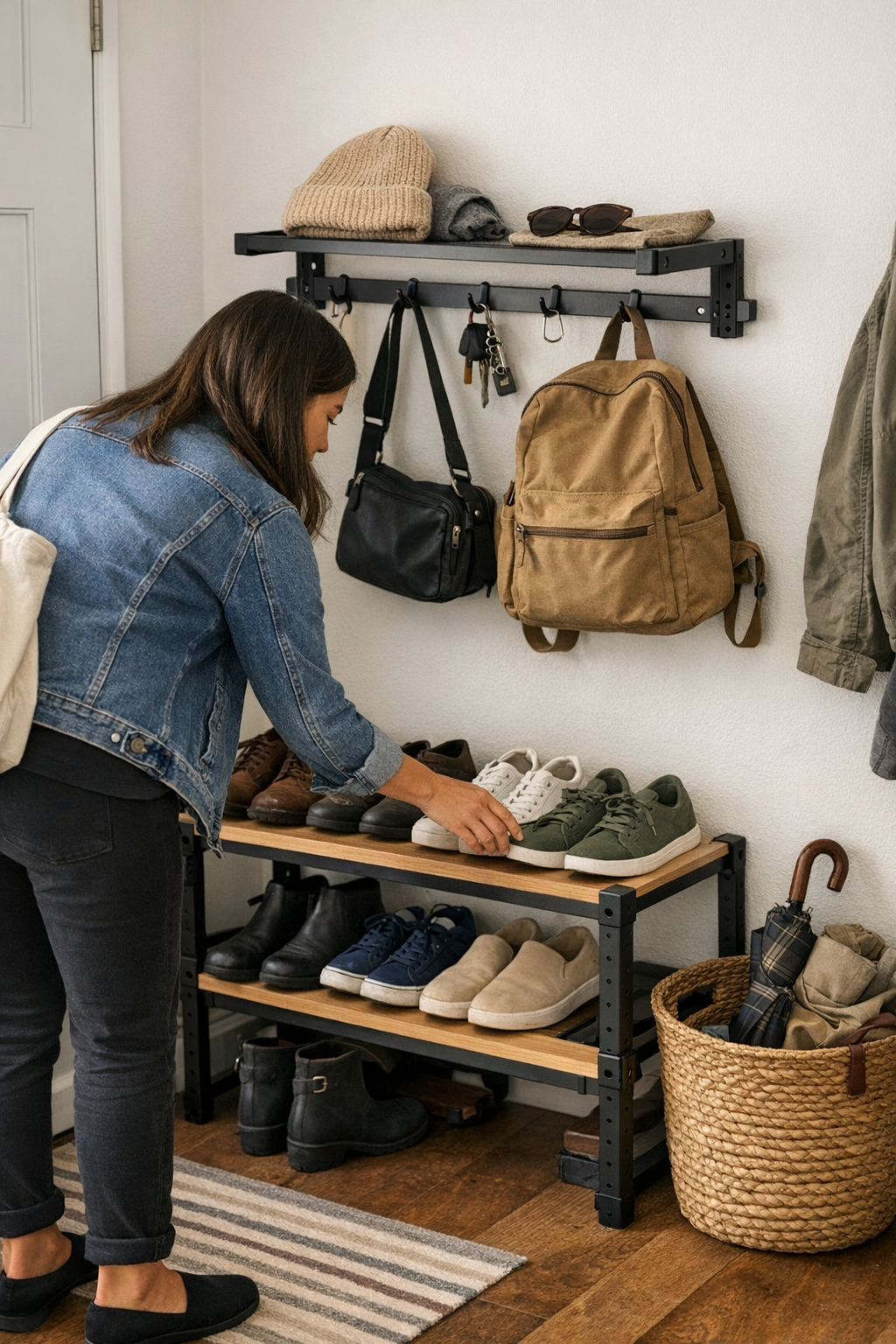
Most entryways fall apart the same way: the bag you just dropped blocks the path, today’s shoes start a second row, and every reset takes longer than last time. No matter how clean it looks after a weekend sweep, beneath the surface, the friction returns—movement slows, overflow builds, daily routines stumble at the door. Whether you’re stacking shoes on a bench, using a slim wall rack, or trying to keep bags corralled in a cubby, the core problem isn’t just storage—it’s whether your setup keeps pace with real life: the rush out, the fast return, the pileup just inside the threshold.
The Hidden Cost of Deep Storage in Entryways
It’s tempting to assume a bigger bench or deeper cubby solves clutter: more room, more out of sight—or so it seems. What actually happens is deep storage becomes a slow-motion trap. Shoes migrate backward into double rows, every new bag pushes an old one farther from view, and anything left “just for now” disappears into the pile. Items vanish, retrieval takes extra steps, and resets spiral: digging for lost gloves means unloading half the bench. Each workaround—a jacket slung on the corner, a bag balanced on top—signals the whole system is stalling.
Deep storage hides clutter—until it doesn’t. After only a few days, deep entryway setups breed their own mess. That stray shoe set aside on Monday is still blocking the bench on Thursday, and yesterday’s bag sits under today’s jacket. Pathways shrink. The threshold that should help you move instead creates choke points, forcing last-minute searches and slow resets. “Temporary” placements stick; routine bends around the buildup. Clutter drift stops being an exception and becomes the default.
Shallow Storage: What Changes When You Flatten the Row
Shallow storage—wall racks, slim benches, single-depth shelves—removes the places where overflow hides. There’s no hidden back row and nowhere to stash a jammed bag. Every item stays exposed in one line. The logic is clear: what you see is what’s in use. When something’s missing, it’s obvious; when overflow starts, it’s immediately visible. The setup holds you accountable, not the other way around.
That visibility comes with a real trade-off. On crowded days—spiking with sports gear or extra shoes—shallow setups hit the edge fast: overflow collects in plain sight, not behind or beneath. But this limit is feedback, not a flaw. You’ll know exactly when the threshold can’t take one more drop, rather than slowly smothering in hidden piles. Deep storage quietly collects unfinished resets; shallow storage says “enough” up front. In daily use, that saves time. No digging, no guesswork, no mental checklist—just a visible reset point as soon as you walk in.
Routine Stress Test: Morning Exits and Fast Returns
Real problems show up during weekday chaos, not Sunday resets. The alarm rings late; three people rush through in ten minutes. Boots stack up in front, a bag lands half-off the bench, gloves slide down the side. In deep storage, new layers form—finding one shoe means unloading whatever backed up ahead of it. The whole entryway slows down. A slow reset today makes for a mess tomorrow.
Shallow setups turn missing or misplaced items into immediate signals. If something’s gone, the empty spot shows it. If something shouldn’t be there, it stands out. After school or work, the return is fast: a quick scan, grab what belongs, drop what doesn’t. Resets shrink to a sweep of the hand, not a full excavation. There’s less temptation to pile things “for now”—the line fills, overflow stays visible, you’re pushed to deal with it before the path blocks again.
From Looks-Organized to Functions-Every-Day
If you’ve ever stuck with deep storage “because it looks tidy,” you’ve felt the downside. On the surface, the bench or cubby seems orderly, but under the coat pile or behind the first shoe row, chaos creeps in. Eventually you’re shuffling bags for a quick seat or dragging out every scarf to find what you need. The threshold turns into an obstacle course—not a passage.
Switching to a shallow, wall-mounted rack changed the routine instantly. No stacks to lift, no layers to sort—just a single line of shoes and bags visible at a glance. If overflow happens, it’s right on the floor in your way. You see what doesn’t fit, so you deal with it before it blocks the reset. Overfull bins aren’t concealed under other items; they nudge you to clear out what’s over the line. The difference isn’t just a neat look—it’s a faster, less annoying reset under pressure, day after day.
Where Shallow Depth Surprises You
Shallow storage doesn’t create a perfect entryway. But it does make the edge visible. On busy days, when shoes start creeping past the end of the rack, the problem is out in the open, forcing a quick pickup or admission: too much gear, not enough flow. You can’t ignore the pile, but you won’t spend five minutes looking for what disappeared behind last week’s coat. Reset friction is lower because there’s nowhere for problems to hide—what’s out of place is right in front of you, every pass-through.
For small entryways or shared routes, that matters. The path stays unblocked. Movement through the threshold isn’t pinched between stacked bins or half-dropped bags. Every person uses the same, visible row—resetting becomes a series of small, fast actions, not a single major cleanup. The trade is clear: you lose deep “capacity,” but you get a reset routine that keeps up with daily return flow, not just with weekend appearances.
Everyday Tips for Real-World Transition Space Setups
Balance visible limits with controlled overflow. If your routine includes extra shoes or bags some days, keep a small overflow bin close—but cap its size so it doesn’t start a new clutter zone. Lean on moveable or adjustable shallow racks that slide, extend, or swap as seasons shift or the family’s needs change. Place them where you already drop bags, not just where they look good in photos.
Use built-in “pause points” for mini resets: after dinner, or during a weekend pickup, clear anything that’s drifted past its limit. With shallow storage, these spot-fixes stay manageable—you’ll never be two layers deep, so reset time stays short and control returns, fast.
The Subtle Difference: A Threshold That Works With You, Not Against You
What actually matters is how momentum holds up. Too-deep storage buries friction until it stops you cold—a blocked bench, a lost shoe, a reset you keep postponing. Shallow, open layouts show you what’s there and what’s missing as soon as you look; resets become a normal part of passing through, not a dreaded cleanup task.
No setup banishes clutter or pressure completely, but the right format catches buildup before it blocks the way. Shallow storage isn’t about perfection—it’s about seeing problems early, fixing them fast, and keeping your entryway flowing. Even on the busiest days, the system helps you move—not just tidy up after the fact.
Ready to see how your entryway can trade deep clutter for everyday flow? Start here: http://www.betweenry.myshopify.com