
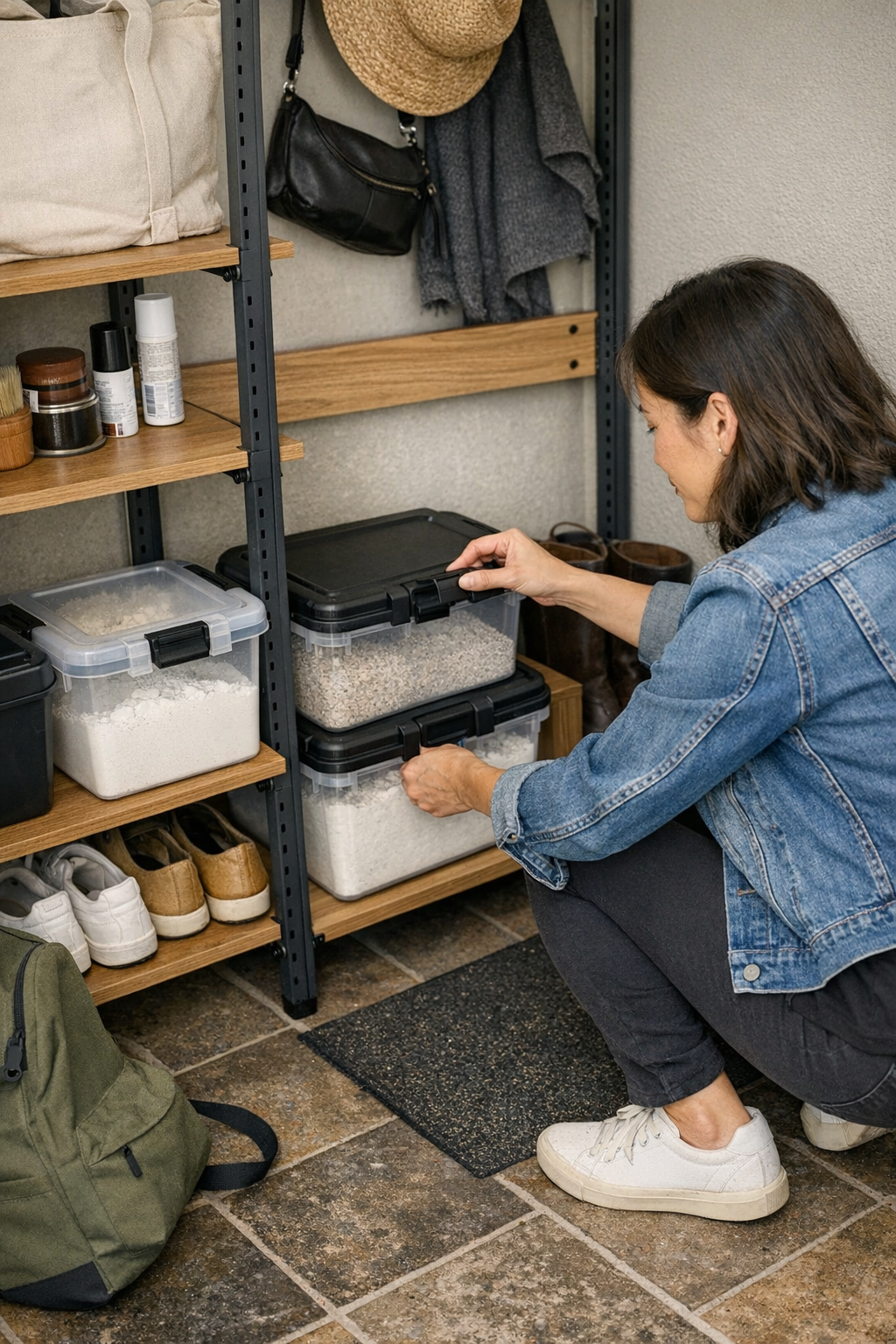
Entryways and drop zones seem built for order, but in real life, they’re friction points waiting to happen. You start with good intent—bins for supplies, a designated shoe spot, a ledge for bags—but the system breaks within days. Shoes sprawl past their row. Bags eat up bench space or block the path. And the “organized” supplies? In daily use, open bins turn into leak zones: cleaning powders coat shelf edges, grit forms a band under the bench, and stray messes accumulate in seams you barely notice at first. It’s only after daily routines—bags dropped, shoes kicked off, hands reaching for powder in a rush—that the whole setup reveals itself: more hassle to reset, more messes to track, less actual order than you started with.
When Open Bins Turn Convenience Into Mess
Open bins tempt you with instant access. No lids, no pause—just grab the nearest supply and move on. But threshold spaces don’t stay still. People rush through, supplies shift, and the pressure multiplies:
- Shoe cleaner gets grabbed mid-sprint, bin left skewed for the next person.
- Bags tossed in a hurry clip shelves; a container teeters and tip spills over the edge.
- Moisture from wet gear seeps into powder containers, and the contents clump or fuse into sticky corners.
The first spill is small—a quick puff of white powder as someone misjudges the reach. By week’s end, residue tracks along baseboards, and powder is worked deep into seams. The ease of open access quietly costs you time. Each micro-spill or stickiness pushes the whole threshold toward a cycle: fix the mess or ignore it and let it multiply. Either way, fast access becomes endless aftercare.
Shared Spaces Multiply the Problem
Few entryways serve just one person. Most are collision points for shoes, bags, and shared supplies. Every extra user increases the chances of containers getting left ajar, bins shoved out of line, and powder escaping where it shouldn’t. Open bins in this setting don’t just save seconds—they fuel disorder: powders migrate under benches, wedge into corners, and soak up stray humidity. Cleanup escalates with every damp footprint and shaken bag. The price of that easy grab isn’t visible on day one; it’s the slow grind of reset routines doubling, as every pass-through wears the storage down a notch further.
Real Life in a Crowded Entryway
Picture a slim threshold on a rainy morning. You crouch to tie shoes; the bench is half-covered with bins. A powder tin tips and creates a faint dust trail across tiles. Next, wet bags arrive, mixing mud with whatever powder escaped yesterday. Within three days, the bench legs are gummy, shelf corners are rough, and the supposed “quick-clean” area is now stuck in cleanup mode. Wall shelves and vertical units help, but when bins are left open, powdery supplies jump zones—coating ledges, drifting to the floor, drifting through routines, and quietly raising the daily reset load.
Sealed Bins: Containment Over Convenience
The real fix is sealed bins—solid walls and latching lids that stop migration cold. It isn’t about making routines perfect. A latch means one more second per use, but delivers hours back in reduced cleanup and replacement. The practical difference stands out the first week if you match the bin size to your shelf or bench:
- Powders stay dry, shielded from every damp bag and weather-soaked shoe.
- Latching lids absorb stray bumps and seal against humidity, even in crowded entryways.
- No crust of residue under the bench, no powder bands along the wall—just a reset that’s fast and actually finishable.
You’ll still get minor setbacks—supplies get left behind, a bin goes unlatched now and then—but sealed containment keeps the mess from leaking into the rest of the zone. Instead of fighting slow-spreading grit, you refill supplies when they run out, not every time the weather shifts. The result: transition spaces buffer mess rather than spread it.
Cleaner Resets, Faster Movement
After switching to sealed storage, many notice their reset load drops. Wiping down corners becomes rare, sticky powder patches barely appear, and shoe dust stays inside bins instead of creeping out. Bags get tossed down without triggering a supply avalanche, and rows of shoes can be managed even in tight entryways without the overflow of last week’s mess. The setup stops slowing you down—its order actually matches its intent, hour after hour.
Why Minimal-Look Setups Break Down
A setup that wins on Instagram rarely survives the pressure of real re-entry: open baskets, exposed containers, “everything visible” systems. The weak point isn’t obvious at first. It shows in:
- Trailing powder leaks no one notices until they’re embedded in seams.
- Supplies clumping or fusing after a single rainy commute.
- Surface order that crumbles by midweek as layers of small tasks resurface.
- Pass-throughs slowed by a path jammed with overflow and drifted supplies.
And it’s not just shoe powder. Any granular, spill-prone supply—de-icer, sand, shoe freshener—escapes containment in an open system. Every “quick trip” amplifies the breakdown, as small resets become routine interruptions.
Practical Tips for Reliable Entryway Storage
- Pick bins to fit your flow: Sealed, slim bins tall enough for powders but narrow enough to avoid crowding the bench or blocking the path.
- Label clearly: In a shared space, clear category labels head off the “open every bin” search and keep the system sealed.
- Catch tray below: A shallow, wipe-clean tray beneath bins catches the spills that do happen—reset is a five-second dump, not a deep clean.
- Weekly check-in: Inspect for stickiness, clumping, or powder outside the bin. If the zone seems messier each day, audit for missed bin closures or misfits in your setup. Ongoing drift means it’s time to adjust.
Turning Setup Into Stability
Switching to sealed bins may not feel dramatic, but it draws a hard line between “looks organized” and “actually works.” Surfaces remain clear for days, not hours. Supplies feel ready instead of requiring a pre-clean. The real gain is routine reliability: entry energies can stay on movement, not recovery. Less powder creeps out, less dust settles in seams, and the area remains a passage—not a project.
When entryway resets go from daily drama to a monthly habit—and your supplies stay dry through the worst storms—the space finally matches how it’s actually used. There’s a clear difference between a setup that performs for a photo and one that holds together every day, at every pass-through, for every person who moves through it.