
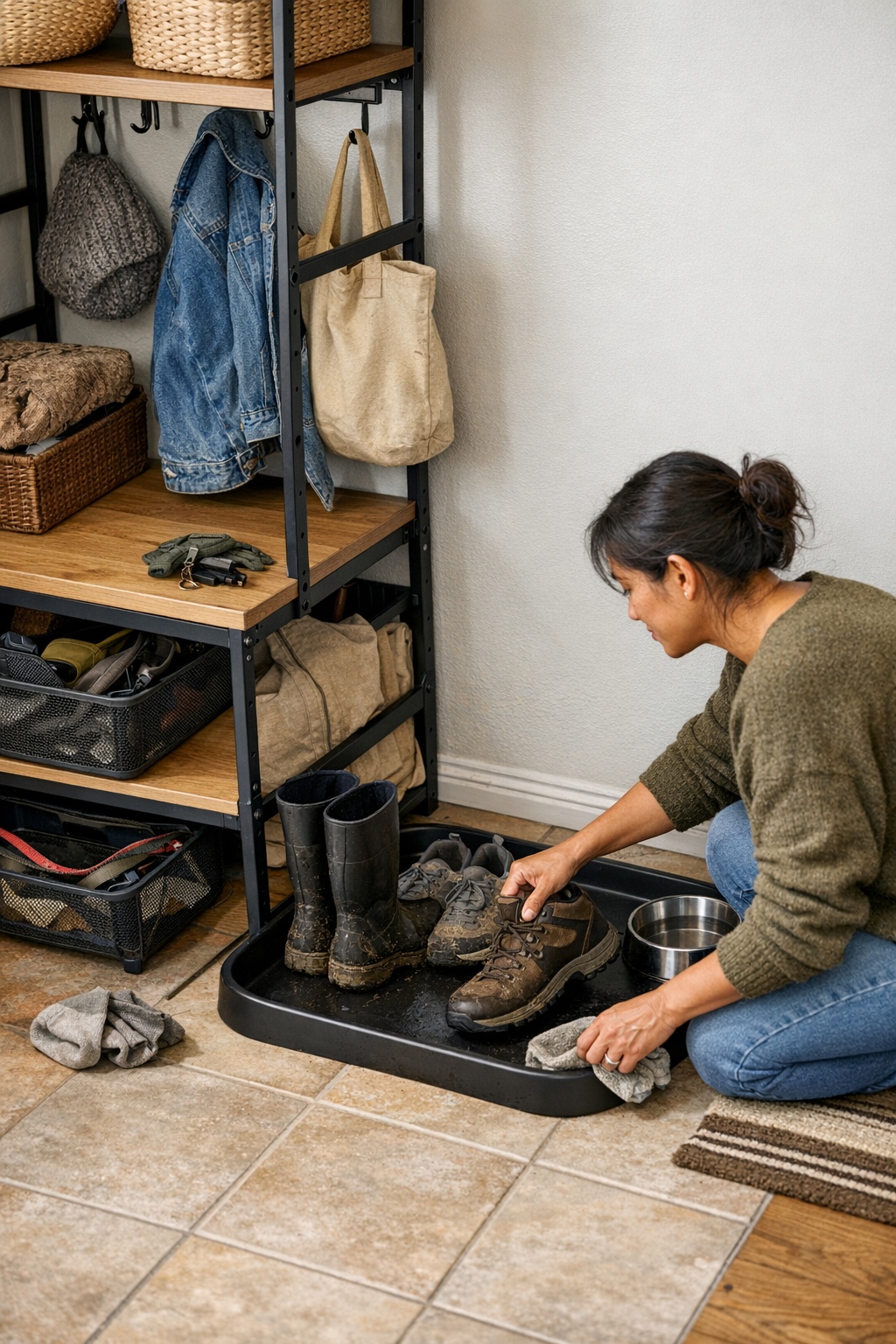
In real entryways—the high-traffic, always-in-flux drop zones—organization isn’t about that first-day reveal. It’s about what happens after you’ve lined up shoes, tossed bags and watched the floor reclaim itself with mud, grit, or yesterday’s rain. The overlooked culprit? The interior corners of your entryway storage trays. When storage corners are sharp, grit and moisture settle deep into the angles, turning a quick wipe-down into a frustrating, almost daily reset struggle.
When the Entryway Works—Until It Doesn’t
It’s easy to believe you’ve solved the mess after adding trays and bins—at first. Shoes get dropped in, the bag lands (mostly) where it should, and the space looks temporarily under control. Fast forward: a few wet commutes, a toppled lunch container, a steady drift of dirt. You spot the shift right along the tray’s edges—damp streaks, debris trapped tight against the wall. What started as a managed threshold quickly becomes a boundary you’re fighting to maintain. The ‘set it and forget it’ promise of entryway storage gives way to the reality of scraping out grit from deep, hard-to-reach corners, while the zone you cleared starts to blur back into chaos.
The tray’s internal corner design doesn’t just add up visually—it compounds friction with every reset. Those ninety-degree angles gather what your routine brings in and refuse to let go. You wipe and realize the clean line stops short, leaving behind a stubborn halo in the exact spot meant for order. The frustration isn’t just that dirt remains, but that it accumulates faster than you can keep up.
How Rounded Corners Change Daily Cleanup
Switch to trays with rounded inside corners and the main difference lands during real cleaning—when there’s mud, spilled water, or sandy shreds from a gym bag. Instead of hunting into corners with a detail brush, you swipe once and the debris is gone. Water drains in a pass, not pooled for hours. Silt and grit get carried away by a rinse. No second pass, no soaking, no pretending you’ll get to it later. That difference becomes unmistakable as you repeat resets during the week—not silently dreading cleaning up the threshold, but actually finishing in a single move, and moving on.
Evening Resets Feel Lighter
Most families can’t schedule a dedicated deep clean for the entry. Resets come between work and dinner, before bed, or just after the next round of drop-offs. With rounded-corner trays, these bursts of cleanup don’t turn into mini-projects. Hit it with a damp cloth or lift under the faucet, and you’re finished. No gritty surprise on your next pass-through. In setups where bags fly in and kids’ shoes land sideways, the speed and completeness of the clean is the thin line: the difference between a truly ready zone and a stubborn base layer of yesterday’s mess.
Real Friction: What Accumulates When the Corners Aren’t Right
Entry zones aren’t static shelves—they’re highly active, high-pressure spaces. Shoes start in rows but migrate wide with each return, bags bump against shoes, and larger items like hockey sticks or strollers quickly test the limits. In a sharp-corner tray, each wet day leaves behind harder lines of dirt. Grit builds where you barely notice until it’s suddenly obvious—and then annoyingly stuck. By evening, runoff collects not in the open, but precisely in that narrow, unreachable runway at the tray’s edge. Any attempt to reclaim the clean zone turns into sidestepping mess or wrestling tools into corners never intended for them. Your movement slows, routines stack up, and the illusion of order cracks on the daily threshold reset.
Let this continue a week or two and you get real consequences: edge stains, baseboard dampness, smells creeping in, and eventually a subtle hesitation every time you cross the space. The overflow becomes self-reinforcing—one dirty bag or shoe can turn the whole drop zone from resettable to semi-permanently off-balance.
Sharp Vs. Rounded: Which Holds Up Under Real Use?
Stacking sharp- and rounded-corner trays in the same entry, their strengths emerge in opposite cycles. Sharp-corner trays give a crisp look against benches and cabinets—at first. But as each day brings new shoes and runoff, their corners quietly become sediment traps. Daily, you face a choice: spend extra time for a barely-complete clean, or put it off and accept more mess tomorrow. The reset delay isn’t hypothetical—it stacks onto the time, energy, and willingness you have to keep using the system at all. Over time, what started as ‘organized’ now quietly becomes a bottleneck you avoid, leaving your routine to work around, not with, your storage.
Rounded-corner trays approach the transition zone with a different logic: anticipating not perfection, but mess, and offering a reset you can actually keep up with. The edge may not sit razor-flush against the wall, but that’s the point: nothing gets trapped. After rain, kids’ practice, or simply one busy return, you can lift, rinse, and see everything washed clean on the first try. Meaningful payoff: less dread around cleanup, more trust that your chosen entryway setup won’t quietly betray you two weeks later.
Practical, Lived-In Examples
Picture the weeknight checkpoint: Rain boots thud into the tray, backpacks drop off the side, the leash uncoils still damp. Minutes later, you survey the aftermath. With sharp-corner trays, the surface wipes up—corners do not. Even after two passes, the dirt line hugs the edge. With rounded corners, the same sequence empties with one efficient wipe, even after multiple rapid-fire entries. Mess leaves with you, not dug in for next round.
Or the inevitable Saturday catchup: You want to clear out overflow before guests arrive, or just to restore passage for the week ahead. Sharp-corner tray: you’re bracing for ten minutes kneeling, toothbrush in hand, cursing those design decisions that seemed so minor. Rounded-corner tray: the entire zone is back to clean with a mop or hose in under a minute—no corners to battle, no mess left lurking. The time saved and the feeling of starting fresh is tangible.
Small Differences, Big Impact in Setup Performance
This isn’t theoretical—it’s the difference between setups that stay manageable week after week, versus ones that create new friction and slow your movement. A tray’s corner shape decides whether the space genuinely resets or quietly devolves into the same old clutter spread. In places where the path tightens, the bench edge overflows, and temporary drops keep multiplying, crisp corners look controlled at first; rounded corners maintain actual, practical control through real family use. Setup choices like this signal whether you’ll spend your time living in the entryway, or fighting with it.
One Useful Tip
Stuck with sharp-corner bins or trays right now? Line them with a flexible mat trimmed to round out the inside corners. It won’t erase the cleaning dead zones, but it does intercept much of the debris and lifts out for rinsing in seconds. Until you can swap to full rounded-corner solutions, this small retrofit buy you a real-time advantage without remaking the whole entry.
Why Setup Details Like This Decide How the Threshold Actually Feels
The reality at the door is a constant tension—you want order, but the pace of daily life keeps breaking it down. Whether you’re dealing with a tight entry zone or a wider drop area, cleanup friction shows itself in dozens of small ways: shoe rows spilling wide, bags blocking reset flows, walls looking clear but clutter drifting back in. Rounded-corner trays are the kind of unglamorous fix that carries real weight. They turn a threshold from a battle for temporary order into a space you can restore—quickly, every time, without dreading the next cycle of mess. That’s not about catalog looks; it’s about whether your setup truly keeps pace with repeated use.