
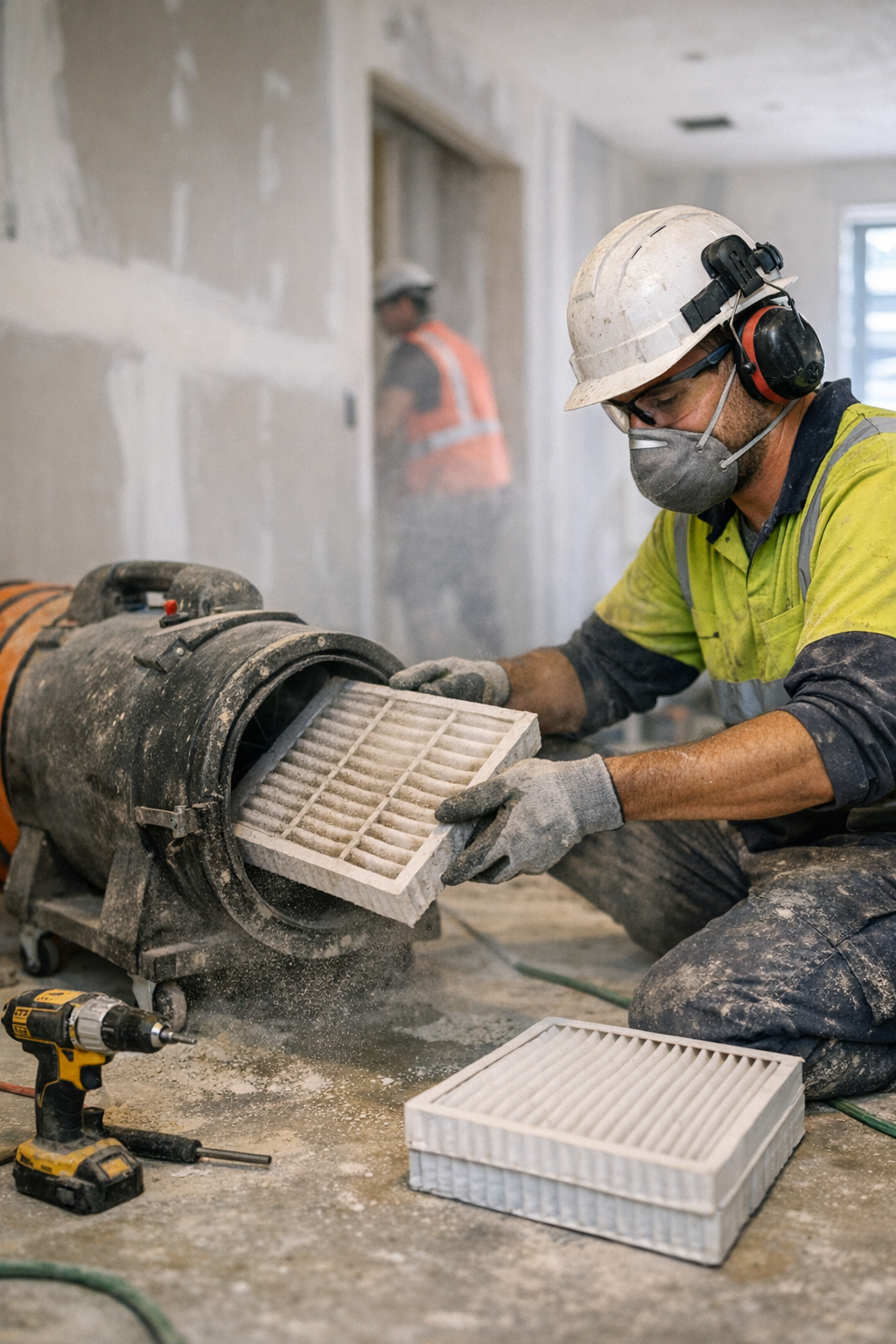
There’s nothing abstract about dust and poor airflow on the job—it’s what turns an eight-hour shift into a true endurance test. Midway through a sanding day, or right as you’re setting up for another pass with the cut station, you notice it: the stale heaviness in the air, a creeping rasp in your throat, the weird hum that rides the background. It’s not just inconvenience. It’s wasted energy, slower cleanups, lost focus, and the mounting pressure of knowing that your ventilation—supposedly your backup—is now the point of failure.
That breakdown rarely starts with the tool itself. Most times, it’s the attachments—the shrouds, filters, and cuffs you slapped on because “they fit”—that quietly turn a solid fan into a stalling, straining headache. Raw horsepower won’t save you if your seals are loose or filters are choked. The devil’s in the details: a brittle edge on your shroud, a filter left in one shift too long, a coupler flexing just enough to bleed suction while you’re neck-deep in drywall dust.
Overlooked Attachment Issues That Drain a Workday
The little signals show up before anything dramatic happens. Maybe the fan starts hesitating when you punch it on, or you catch tiny flurries of dust riding right past your setup after you finish routing or drilling. Ignore these—and you’re not just risking a messy job. You’re inviting downtime, half-clean surfaces, and the kind of air quality that leaves everyone foggy and spent before noon.
Common trouble from neglected attachments:
- Airflow that quietly drops by the hour—sanding debris and sawdust outpacing your exhaust
- More ambient noise, making simple calls or directions a strain over grinding, sawing, or cutting
- Dust sneaking past worn seals, only to be discovered after inspection or when it’s too late to avoid the re-clean
Run that a few shifts in a row, and suddenly you’re spending more time tracking down issues than moving onto the next task. What should be an assist becomes a handicap—especially with back-to-back jobs lined up.
When Attachments Go From “Works Fine” to Real Risk
It’s not enough for two fan filters or shrouds to look similar on the bench; on site, the gap is real. The difference shows up under actual pressure—when you clamp on to catch the fallout from aggressive sawing or during a fast round of taping and sanding.
Attachment fit isn’t cosmetic—it’s control. Sloppy seals mean drifting dust and wasted airflow. A crisp, snug shroud keeps suction directed, debris corralled, and prevents those faint rattles that echo as the day stretches on. But the moment your attachment loses tension, it’s obvious: more vibration in the grip, dust trails at your corners, and a low-level sense that everything is just harder than it should be.
In spaces that demand discretion—late-night floor installs, hospital maintenance, client-facing remodels—a shaky attachment is more than a nuisance. Noise climbs, fans strain, and what should be routine turns into fatigue territory, both for your tools and your team.
Field Example: The Filter That Slipped—And Set You Back
End of day: drywall’s been sanded, and you’re racing the clock before the walkthrough. The fan’s familiar; the filter’s seen a dozen jobs, but today it presses in loose. Twenty minutes in, the ventilation smells faintly chalky. The air’s stubborn, your own dust mask clogs too fast. You finish, but post-inspection there’s grit where there should be clean finish. That “swap filter later” decision? It means staying late for a forced re-clean, or explaining to a site supervisor why corners didn’t pass muster.
Those five quiet minutes to swap a fresh filter are what save a whole day’s output—and your reputation—from preventable callbacks.
Better Habits: Small Tweaks, Real Time Saved
Most pros are guilty of riding attachments “one more shift.” But every time a filter goes just a little too long, you’re gambling with suction consistency, tool strain, and mental drag. Wait for the whistle or that first puff of visible dust, and you’re already losing time—usually right when it matters most.
After one too many fan stalls mid-shift—always in the middle of cutting or hung up sanding—we shifted the routine: swap every 40 hours, not just when filters look ragged. Suddenly, airflow was steady, motor noise dropped, and fans finished out their shifts without overheating or bizarre stutters. No more mid-job resets, no more guessing when things would fizzle. That rhythm lets you move from one task to the next—saw, sand, sweep—without dreading an unexpected tool failure.
Quick Habit Change: Mark Every Install Date
Looks aren’t enough. Keep a marker handy and note the install date right on the filter or shroud. It’s a tiny move that ends the “was this last week or last job?” guessing game—and keeps weak attachments from sabotaging a critical day’s work.
Catching Problems Early—So Your Tools Don’t Fail When It Counts
It’s easy to tune out the warning sounds and settle for “pretty good” air. That faint whirr, that hint of dust vibing at the edge of your workspace, the sluggish ramp-up when you’re in the middle of back-to-back drilling runs—they all build up. Ignore them too long, and you’re left scrambling, losing momentum, even risking failed inspections.
In real job flow, every adjustment matters. Whether you’re swapping between finish work and fast demo cuts, running late-night sanding, or keeping a micro-shop fresh during a nonstop week, keeping attachments sharp and rotating filters before breakdowns become visible stops problems before they cost you time, energy, and authority.
Maintenance isn’t empty routine. On a demanding shift, it’s what keeps your day moving—and your results solid—no matter how much dust, debris, or unexpected overtime tries to slow you down.