
Every shop regular knows the feeling: you prep your station, line up the power cleaner, stack new blades, set out a handful of nozzles fresh from the kit. Everything feels dialed—chrome bright, tools snug, workflow ready. But as soon as you hit that first stubborn join, it hits back. The jet that’s supposed to cut a razor-clean edge scatters, just a touch. The board isn’t as dustless as you’d expect. What looks perfect on the bench isn’t always sharp enough for the task once the work starts piling up.
Precision Isn’t Just About Looks
The shift comes slow—then all at once. You fire up the cleaner, drag it down a panel. You expect that crisp, pencil-thin line, but instead the spray widens, splinters of grit linger, and you start double-checking your passes. Maybe there’s a harsher edge to the motor’s sound, or a catch to the tool that wasn’t there before. Suddenly, your rhythm’s off. Second passes become third passes. And you’re running behind before you’ve finished your first row.
The culprit? Not a battered nozzle—at least, not visually. The real wear hides inside: where a nozzle’s internal profile tumbles off spec after weeks of abrasive use, your laser-tight spray pattern follows it right out the door. Now, it isn’t brute failure that slows you—it’s that invisible drift, the slow leak of precision that leaves edges rough and fit questionable.
When Reruns Replace Results
Shop days run smoother when every pass does its job. But dull nozzles create a familiar grind: cut, sweep, spot a smear of debris or a dull patch, double back to reclean.
This isn’t a one-time disaster—it’s the shop equivalent of a slow leak. The labor piles up: sides that don’t square, panels that need hand-sanding, fasteners that won’t seat flush because residual grit lingers. Little reruns, barely noticeable at first, become routine. Suddenly, you’re an hour over, just patching misfires up and down the line. That’s real time lost—not in the cutting or drilling, but crawling around fixing what should have been handled on the first go.
Real Signs, Not Just Shop Lighting
Nozzles rarely announce their decline. Even on the tenth heavy session, the threads grip, the chrome still flashes under the lights, and nothing screams “replace me.” What actually tips you off? Subtle change in the handling—a jitter of tool feedback, or a pattern that drifts just wide enough to demand more grunt work. Suddenly, your usual flow is broken.
Here’s how it played out last month: racing against the clock on stacked MDF, I swapped in a new blade and a pristine nozzle. Each pass was easy—tight seams, no cleanup, every cut right the first time. But when I tried an older nozzle set aside “just in case”—the pattern ballooned, dust crept under the join, and the edge roughened. I ended up losing twenty minutes fixing a strip that should have taken five. No visible gouges or bends, but the cost was obvious in time and effort.
The Quick Test That Matters
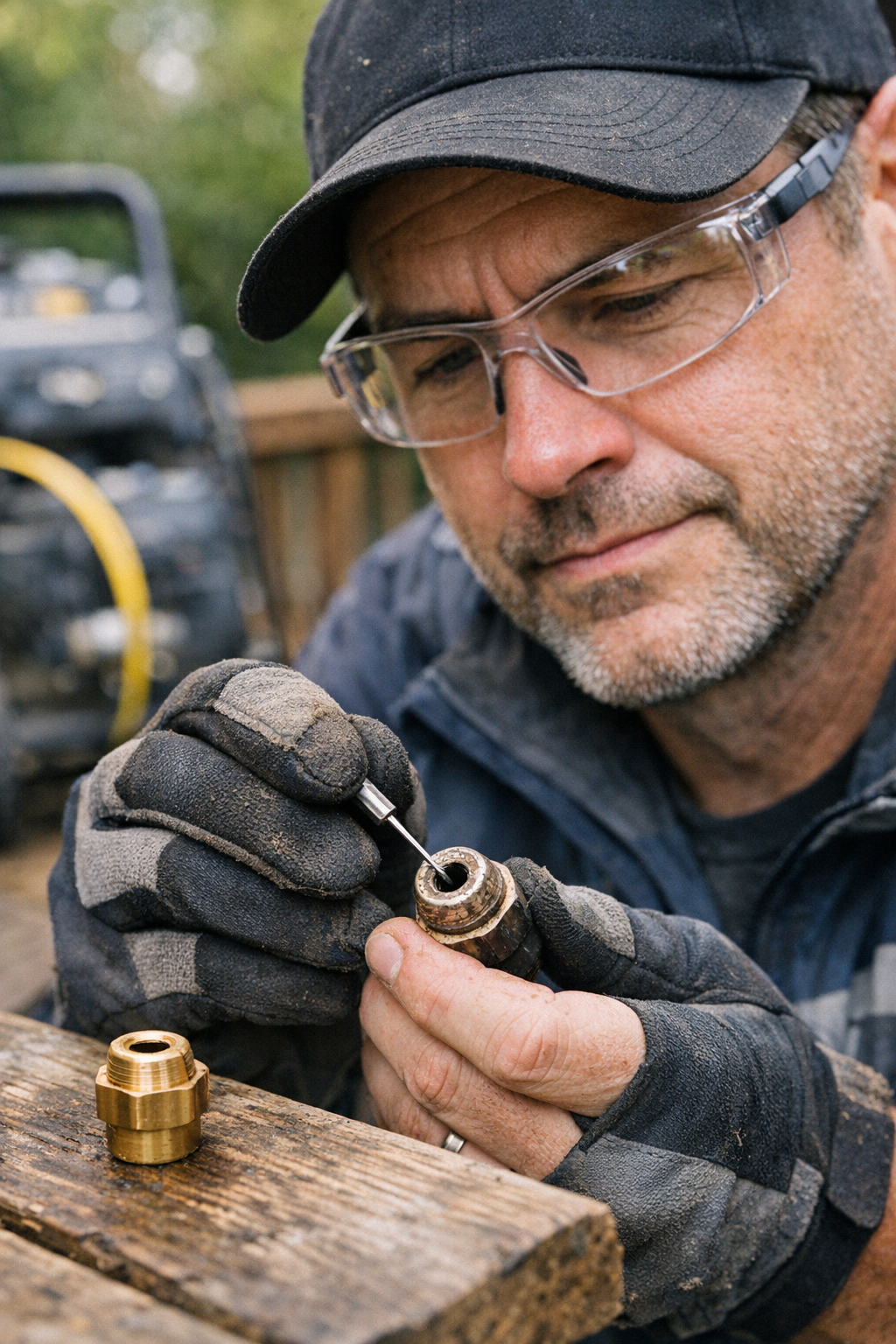
Don’t guess—check. If the spray starts fanning out, if vibration feels different, or if seams roughen mid-job, it’s time to inspect. Shop lights help, but the foolproof test is simple: grab an inspection pin or a go/no-go gauge and check the nozzle opening. More than a hair (.2 mm) over spec? Retire it. Don’t go by how it looks; go by how it performs under real shop conditions.
Small Tolerance, Big Trouble
That sliver of wear—barely perceptible—translates into ragged patterns and hand-numbing reruns. Swapping early pays off: with a fresh nozzle, I knock out batch cuts and fasten without the drag of debris or the need for extra sanding. The difference is minutes per job, and real fatigue avoided. On deadline days, that margin matters.
Watching for Wear as You Work
Nozzle life doesn’t come with a warning buzzer. But you’ll feel the difference: spray shapes that scatter, new rattles or sudden fatigue through the handle, and passes that force you to recut panels you thought you’d finished. Ignore these cues, and you end up reliving the same avoidable mistakes—overheated tools, extra sanding sessions, fittings that almost align but never sit tight.
Here’s the real loss: by the time you can see pitting or deformation, your workflow has been slipping for ages. Tool wear is stealthy; by the time it’s visible, your results are out the window.
Turn Inspections Into a Habit
This fix isn’t glamorous or time-consuming—a quick glance under the lights and one pin check before you move from stack to stack, especially after hard sessions on abrasive stock. It’s an easy habit to build: measure, replace, move on. That’s real control over your workflow—less fuss, less patching, less fatigue over the long haul.
Whenever a nozzle seems even a shade oversized or off-round, don’t gamble on a “bonus” pass. Swap it out. The reward is immediate: nozzles shoot straight, passes stay sharp, and you trade patches and recuts for actual progress on the work that matters.
Don’t Let Wear Sneak Past Your Radar
In real shop life, nozzle wear rarely arrives with drama. It creeps in: patterns drift, edges fuzz, tool fatigue piles up, and each panel asks for more babysitting. Ignore the small slip-ups, and suddenly cleanup eats your afternoon. Skip an inspection, and the hidden friction grinds you down over hours and weeks.
Build nozzle checks into your setup, and you’ll catch the drop in performance before it runs off with your time. You keep the work steady, your tools reliable, and your schedule on your terms. That’s the difference between just getting through the day—and actually owning it.