
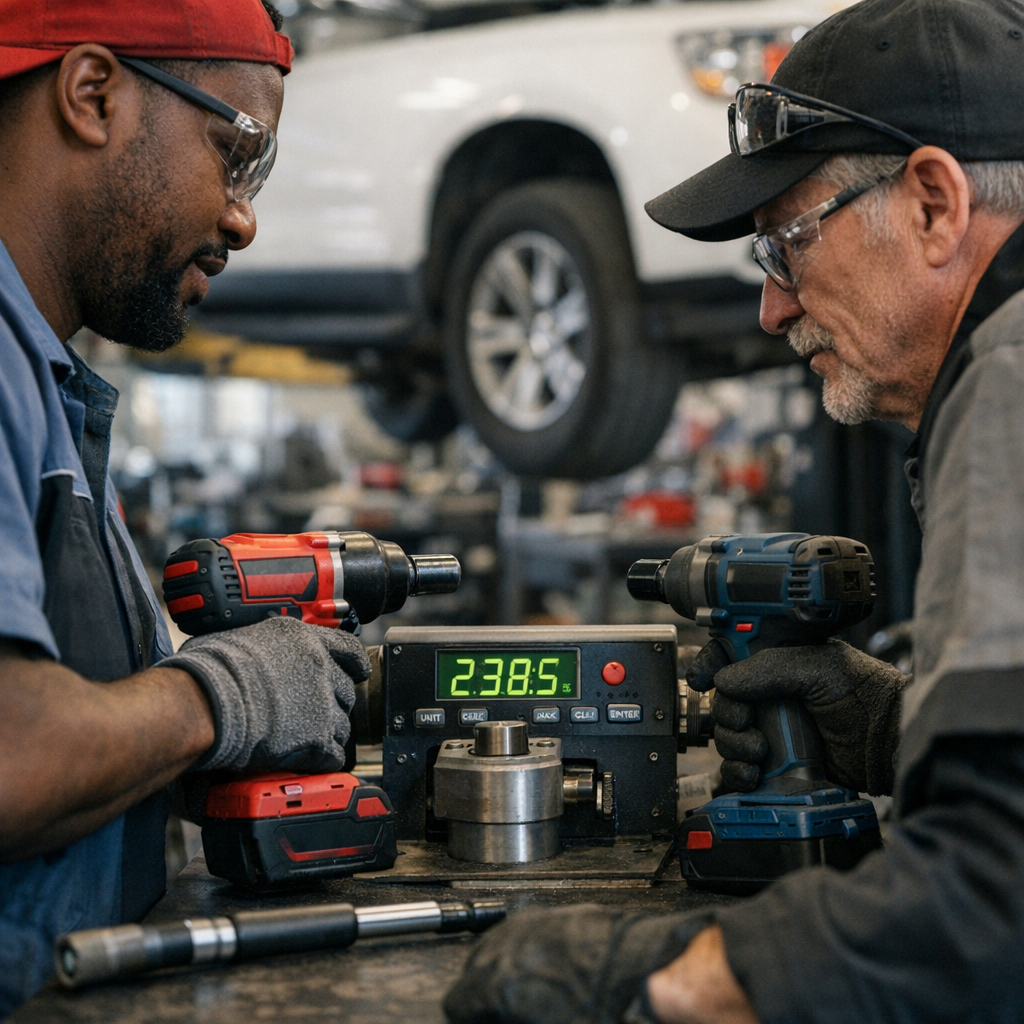
There’s a unique kind of aggravation in finishing an assembly—only to watch bolts edge loose, seams gap, or complaints return within days. If you’ve ever had to drop tools to re-torque a stubborn seam or track down an annoying rattle, you know those invisible problems that start with your most relied-on wrenches. Tool spec sheets might look almost identical, but day after day—through cut, drill, and fastening runs—the gap between a truly dialed tool and a drifter only grows. You can’t spot calibration drift with bare eyes, but you’ll feel it when your “finished” job circles back with trouble.
Where The Slippage Starts: Calibration Drift on Real Jobs
First days with a freshly tuned wrench usually go smooth—aluminum brackets cinch tight, new steel plates align without fuss, and fasteners come up to torque predictably. But real shop time creeps in: painted frame steel fights back, threads hit with corrosion, assemblies happen in cramped, uneven corners. Suddenly, the wrench feels a tad softer, or that final turn of the bolt starts to lack the stop you expect. On a quiet line you might shrug and keep moving—until, days later, the seam reveals a telltale gap or bolts demand a full force retighten.
This is where the cost gets real. Missing spec by a few ft-lbs might seem minor, but that slip spreads: vibration control gets weaker, fit goes off, and the domino effect rolls on. Instead of pushing your project forward, you’re backtracking—cutting in new edges, sanding down bad joins, and cleaning up the avoidable mess one loose bolt started.
Where Tool Weakness Hides—And When It Finally Shows
Run through a rack of plastic anchors or softer alloys and the wrench might seem flawless; you won’t notice calibration fade through routine repetition. But shift to tougher scenes—fastening into painted flanges, overhead bracing, or popping decades-old rusted bolts—and that missing edge becomes obvious. The little things start dragging: bits that don’t bite, screws that spin just shy of flush, or blades that veer off true, forcing correction passes or “just good enough” fixes nobody likes to admit.
Drift Doesn’t Announce Itself: Recognize the Tells
An out-of-calibration wrench doesn’t scream for help. It’ll sound nearly the same, vibrate just a touch off rhythm—you might only catch it in the fatigue of late shifts or when the consistency in your work drops. Real warning signs show up after the job: seams that don’t sit right, bolts that back off after a first shake, or recurring calls for rework. If you hear your crew mutter “didn’t hold like last time,” invisible drift is already hurting your workflow.
Scenes from the Floor: How Drift Eats Into Your Day
Imagine pushing through a series of wheel swaps. By lug number twenty, a sliver of looseness sneaks in—not enough to halt you, but enough to question. A torque stick reveals you’re almost a dozen ft-lbs under. That slip is all it takes for bolts to walk out and for callbacks to pile up over the week. It’s not just the fix; it’s shuffling schedules, doubling back on jobs you already crossed off, and the fatigue that stacks when you’re chasing mistake after mistake down dusty shop aisles.
The Fatigue Factor: How Calibration Drift Wears You Down
No one uses tools in showroom conditions. Grease gums up trigger pulls, old paint chips work into moving parts, vibration bleeds output, and awkward jobs—up ladders, in cramped bays, across battered benches—take a toll. Over time, performance slips quietly; a drill grinds a little slower, a sander leaves uneven scratch patterns, a once-precise cut now frays at the edge. Each small miss compounds, swapping control and efficiency for extra labor and mounting mistakes.
Make Calibration Routine, Not a Panic Response
If you’ve been burned by mysterious loose bolts or shifty joints, calibration isn’t a formal box to check—it’s survival. Setting a calibration schedule—every six to eight weeks for tools in constant rotation—re-centers your workflow. Tightness in assembly, dust reduction from fewer sanding fixes, and smooth, predictable blade and bit performance show up fast when wrenches hit true spec every time.
- Bolts hold tension even after machines run hot and vibrate for hours.
- Seams stay true, saving re-torque headaches and last-minute sanding fixes.
- Torque readings hover where they should, not scattered across a dozen ft-lbs—making every follow-up check a formality, not a scramble.
Whether it’s an assembly line or a scattered home garage, keeping calibration routine translates into fewer surprise callbacks, smoother builds, and less time choking out fires set by fading precision.
Don’t Wait for Warning Lights—When to Calibrate in Real Work
Lock in calibration checks every six to eight weeks whenever a tool is in daily grind. Don’t let a stubborn job or tool “just feeling off” slide—run a check immediately if anything seems wrong. Pay attention to not just loose bolts and gapped seams, but also the subtler hits: fasteners that don’t bite first time, cuts that wander, or a wrench that needs more squeeze for every output. If a tool drops more than 10 ft-lbs from baseline, recalibration jumps to the top of the action list. Otherwise, those lost hours and do-overs keep stacking—stealing progress from even the best crew.
Real Payoff: Consistency That Saves Your Energy
Routine calibration isn’t a box-tick—it’s the backbone of reliable work. Sharper torque, surer control, and fewer repeat jobs mean faster builds and fewer afternoons lost to avoidable fixes. From fast repairs to weeklong builds in noisy, debris-choked garages, it’s that small, consistent advantage that prevents the spiral of touch-ups and fatigue. Make calibration a habit: keep your tools trustworthy, your output tight, and your projects finished—once, not twice.