
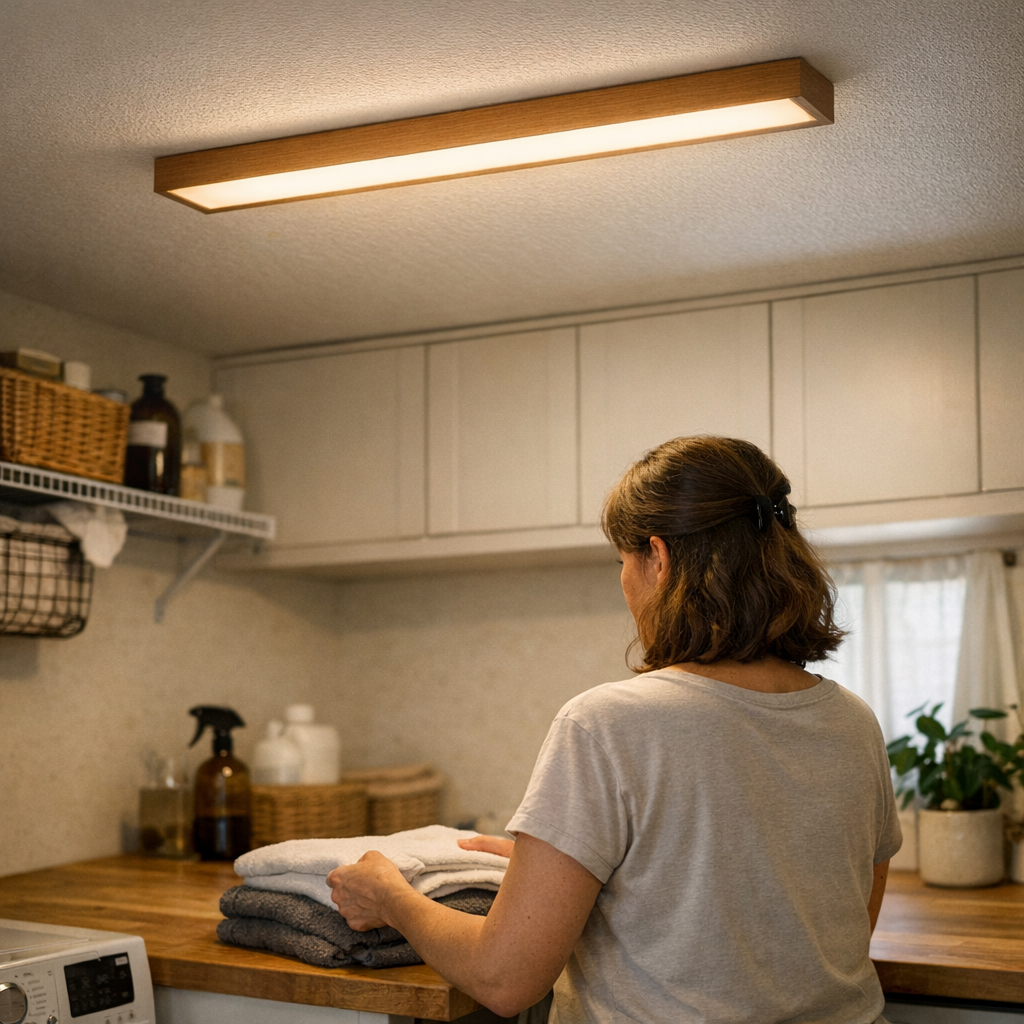
The true disruption in indoor lighting isn’t in how stylish a fixture looks—it’s in what happens after it’s pressed too tightly against your ceiling or wall on day one. When you over-tighten a flush mount in a hallway or a damp-rated fixture above a bathroom sink, the wrong fit rarely reveals itself while you’re still on the ladder. The real signs appear weeks later: that streak of dimness stretching across your stair landing, a bathroom light that flickers softly every time steam lingers, or a shadow line that makes you shift left just to see the edge of your mirror. These aren’t casual quirks or design moodiness. They’re daily irritations—a sagging seam, an edge collecting dust, a work surface refusing to stay evenly lit—all triggered by a fixture tightened harder than the room was built to handle.
Why Snug Really Matters: The Everyday Difference
Daily routines expose weak lighting faster than any product sheet. In a narrow corridor, you find yourself slowing at the same patch where light doesn’t reach the floor. In the bathroom, you lean in to the mirror and your face splits between bright glare and persistent shadow. Grab a bottle in the laundry room and you have to hold it under the fixture just to read the label—the rest is lost to dim, mismatched spread. Each time, the space looks “well-lit” at a glance, but the experience is off: movement gets interrupted, task edges go undefined, and fixture seams catch dust you never remember noticing before.
The cause is almost always the same: a ceiling or wall light clamped down too hard, bending its frame, distorting gaskets, or straining its contacts. The change goes unnoticed right after installation, but within a month, shadow arcs grow more obvious, small flickers invade your routine, and what was once clear and efficient becomes a source of hesitation or annoyance. Style doesn’t save a bad fit—if daily use makes you pause, squint, or sweep the same shadowed stretch yet again, overtightening may be quietly at work.
Recognizing Subtle Signs Before Lighting Becomes a Problem
In the world of indoor lighting, the damage rarely starts loud. Look for these recurring, easy-to-ignore signals:
- Hallway flush mounts that leave a “dead zone” on one side at dusk, making half the path fade out as you cross
- Mirror or wall lights that flicker after every hot shower, hinting at hidden moisture creeping in or a seal compressed too tightly
- Stairway lighting that starts to rattle with each step, injecting hesitation right at every turn
- Condensation tracks building above a utility sink, or fixture rims where dust returns in patterns no cleaning seems to resolve
Both a perfectly snug and an overtightened fixture can look identical on install day. But as weeks pass, real differences emerge: paths you adjust for, awkward glare you learn to avoid, or bathroom routines stretched by uneven mirror light. If you catch yourself recalculating movement, dabbing at stubborn dust streaks, or tracing down the reason for new flickers after a seasonal change, the issue is no longer hidden.
Room by Room: How Overtightening Quietly Undermines Use
Narrow Hallways: When the Light Stops Following Your Path
With every door swing and footfall, a hallway’s flush mount faces small but constant movement. Overtighten that ceiling base, and the fixture’s housing bends slightly with building shifts and temperature. It only takes a few weeks before you notice a band of shadow collecting where you need clear footing—or a hot spot of glare reflecting off a painted wall. The so-called even brightness is deceptive: you unconsciously dodge the dim edge, your stride briefly slows, and safe movement gives way to low-level adjustment, every single day.
Laundry Rooms: The Cost of a Warped Edge
Laundry and utility rooms push fixtures harder—moisture, abrupt temperature swings, and constant motion quickly reveal poor choices. When a flush mount or semi-flush light is too tight, humidity from dryer cycles seeps into small gaps opened by a flexed rim. Suddenly, the light falls away from the countertop, throwing a dented shadow over the load you’re folding. Lift a detergent bottle and you step left just to find useable light. Condensation beads at the fixture’s edge, making the next cleanup cycle a certainty and leaving you second-guessing how long the fixture will last before replacement.
Utility and Bathroom Zones: Where Moisture Finds Its Way In
Bathrooms are unforgiving to weak seals. A vanity or wall fixture pinched tightly to the wall can push its gaskets off center, inviting steam behind the lens with every shower. Over time, those droplets turn into a permanent lens fog or—worse—persistent flicker that pulls your attention every morning as you shave or apply makeup. Glance in the mirror and you see half your face clearly, the other half blurred by shadow, forcing makeshift adjustments in your daily routine. Corrosion risk and unreliable contacts hide behind the glass—what was “sealed” on install now collects problems in silence.
From Friction to Fix: Returning to a Snug, Balanced Fit
The fix is not a teardown—it’s a reset and a softer hand. Remove the lighting base, realign it, and tighten gently, only until truly flush—and never by wrenching force. Ensure gasket pressure is even and that the lens sits flat, no bowing, no visible tension. Even a minor readjustment can reclaim the original quality: stray shadows disappear from your movement path, obscure glare fades, and repeated condensate streaks hang back instead of invading lens seams. The lit zone feels whole, routine friction recedes, and your everyday movement resumes without that faint, automatic workaround you barely realized you were making.
With a balanced install, you no longer find yourself glancing up in doubt, favoring one half of a mirror, or tracing dust lines that refuse to stay away. The space works, quietly, the way it should—movement and sightlines uninterrupted, brightness landing exactly where routines demand it.
Recognizing and Preventing Future Lighting Headaches
Pay attention during install and seasonal upkeep for the quiet warnings: a lifted rim, patchy seal pressure, odd creaks, or a persistent mini-flicker after cleaning. If the gasket’s not flat or the housing shows strain, reset before frustrating habits—and preventable problems—become permanent.
Trust the most basic principle: tighten only by hand, just flush—never forced. A fixture should be secure and aligned, but never visibly compressed or under tension. The difference will show up faster than you expect in every daily move you make.
Lighting That Works—Because It Disappears Into Your Routine
The best indoor lighting isn’t the design centerpiece—it’s the solution you never notice once in place. If you’re not pausing at stair turns, shifting closer to the mirror, or working around a dim edge on your countertop, it means the fixture is doing its job: lighting the space, not interfering with it. In every real-use test, the quality of fit beats wattage or trend. Start with a snug, balanced install—and no overlooked hallway, stair, utility patch, or sink routine needs to suffer dullness, disturbance, or extra work to stay safely and clearly lit.
Find dependable flush-mount, semi-flush, wall, and utility lighting built for real rooms and actual routines at LightHelper.