
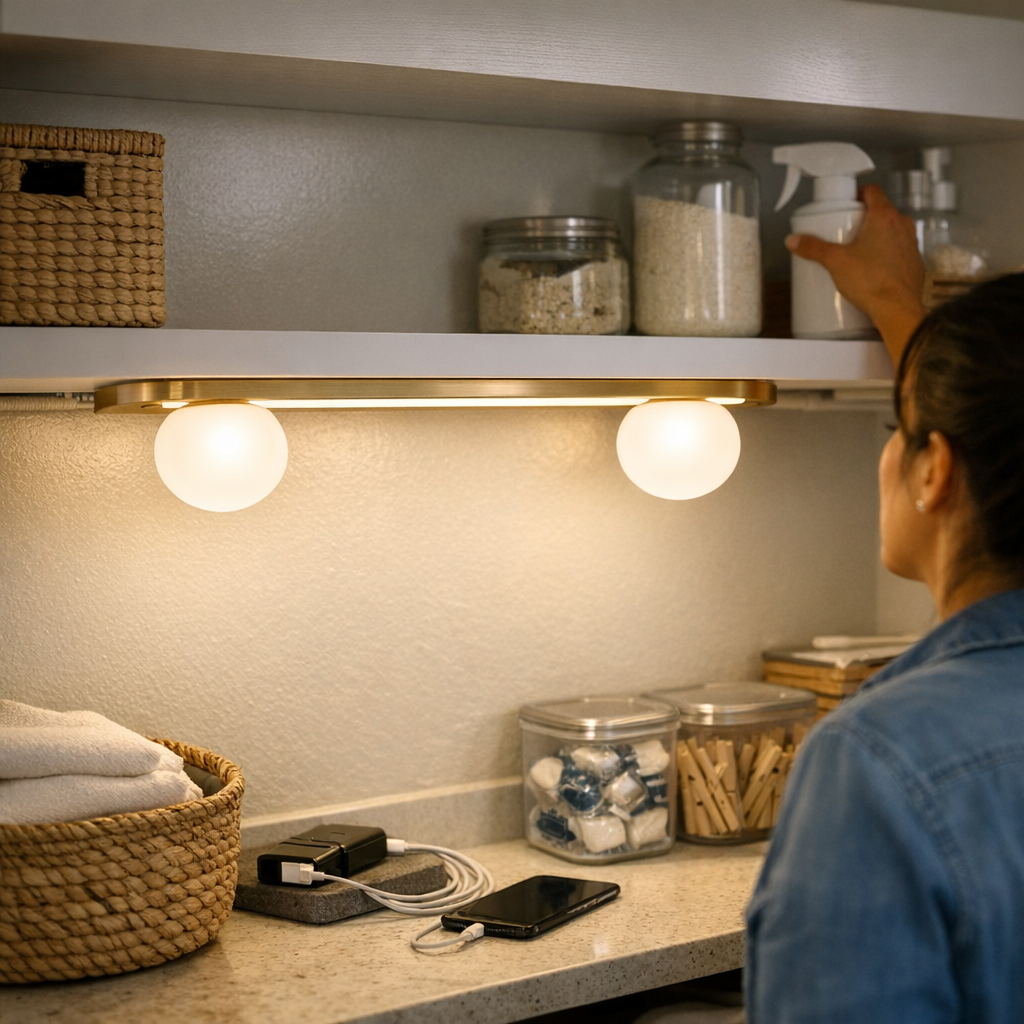
The moment you actually use a so-called “tidy” shelf, the illusion cracks. That under-cabinet or shelf light everyone admires? It hides cables, uses low-profile fixtures, and the whole setup looks settled—right until morning when you’re squinting to read labels, chargers and paper piles migrate into shadow, and the most reachable edge stays oddly dim. After a week, the organized look barely matters. Frustration builds as everyday routines stall: things blend into shadow, containers pile up in the brightest spots, and what seemed calm now slows you down. Setup that photographs well keeps showing up as a practical pain point: the real work surface never feels right.
Lighting Setup: Where Clean Looks Hide Everyday Friction
Mounting lighting flush against the back of a shelf scores points for appearance. Slim LED strips, tidy bracket attachments, and cables almost invisible—a near-perfect product photo. But let the front edge go dim, and the surface becomes a guessing game. Your hands land there first: plugging in phones, sorting mail, flicking through notebooks, shifting kitchen tools. With the light source too far back, routine puts essentials in shadow every single day. That dim strip at the edge ends up the weak link: missing items, dust gathering in the gloom, daily reaches that feel like searching in a drawer rather than using a shelf. What felt visually strong up close actually encourages missed spots, harder wipe-downs, and a little more squinting or shuffling every time you use the space.
Lighting isn’t the only culprit. Supports, brackets, and cable runs often look “fixed” right after install, until a misplaced bracket juts into arm’s reach, a cable line loosens and droops, or you catch yourself moving objects out of the line of sight. “Finished” is only as good as the setup’s behavior over time—hidden support points that interrupt actual use show up faster than you expect.
The Real Cost of Weak Edge Lighting
Most setups don’t collapse on day one. They slowly become aggravating. By the end of a busy week, bins migrate toward the front, mail piles up where light finally lands, and you start hesitating before grabbing anything: is it even visible? Is it clean? Is there a cable waiting to snag your sleeve?
- Desk scene: That rear-mounted light bar spotlights the monitor and keyboard but leaves chargers, pens, and mail in the shadows. You end up sliding things forward or even lifting them into better light just to read a note or see what’s charging.
- Kitchen corner: The under-cabinet strip fades halfway across the counter, so the cutting board is half-lit while recipes hunch closer to the splashback. You find yourself adjusting everything to chase the beam—not the routine anyone aims for.
- Shared laundry zone: A bracket positioned for “no visible wires” leaves a rogue cable drooping into the basket path. Doing a load means dragging baskets around a nuisance you can’t unsee, while stray socks find new places to hide behind the support.
The friction isn’t theoretical. It becomes habit-breaking, making you pause, repeat, and workaround a surface meant to be simple. The difference is small but stacks up every day.
Balancing “Clean” Appearance With Real-World Use
Tucking every fixture out of sight is tempting. Slide one LED strip to the rear; snap photos—mission accomplished. Except, if the working area stays half-lit, you’re sacrificing function for the idea of “clean.” The best setups risk a little more visibility—a bracket that actually supports the fixture closer to the edge, a cable run in plain sight but managed—to claim the territory that matters.
Bring a wider light bar or panel forward, right to the edge. Maybe the mounting is now visible, maybe a cable trace can’t hide—but suddenly, labels are readable, bins stay sorted in any light, and no reach for the charger comes up empty. The “imperfection” in appearance is the very thing that unlocks a space you can actually use—mess, paperwork, dinner prep, or quick chores. The front-lit surface means the area doesn’t just look finished, it starts feeling easier to live with. Fewer items slide unseen into shadow. Less time is wasted repeating the same move. The trade-off isn’t more mess, but less hidden clutter and missed detail in the first place.
What a Real Change Looks Like After a Week of Use
Switching to a front-mounted light bar—bracket visible, cable run plotted along the underside—changes everything next week. You stop shuffling containers in and out just to find that one backup charger. You actually notice spilled coffee and clean it before it becomes a stain. Instead of dodging stray wires or repositioning the light, the space works at the pace you do. Even with multiple people or mixed uses, improvement is bluntly obvious: items get used and cleared away without extra steps, and you’re not stuck fighting the setup with every new routine.
Staying Ahead of Clutter: Practical Adjustments and Small Fixes
- Move fixtures toward the working edge. Mount a light bar or panel along the front—angled if needed—to cover where hands and objects actually land. Accept a little visible hardware: the payoff is instant edge clarity, no more accidental dark corners, and fewer fumbled reaches.
- Handle cables before they distract. Every visible cable is either managed or in the way. Secure lines along brackets or the underside of shelves with slim adhesive clips; if one cable is loose for a day, it’s a snag point for weeks. Visual calm comes from cables you never think about after day one.
- Test after several days, not just post-install. If you keep moving objects, wiping one shadowy area twice, or shifting gear to catch more light, the setup is still off. Useful is what works on the fifth use—not just what looks finished in the first hour.
Edge Lighting and Support: Not Just a Quick Fix, But a Routine Upgrade
Success is a shelf or counter you forget about—because it just works. Light that covers the full usable area, cables that never leave you dodging or detangling, a surface that looks ready but also stays available through real routines. Perfect in photos means nothing if you’re still reaching or reorganizing every day. Some visible hardware is better than hunting for what you need in gloom. Slightly exposed, stable support will always beat a “barely-there” option that keeps shifting out of place—or forces workarounds that become new clutter.
Spotting the Tipping Point: From Appearance to Ease
If the same section of shelf or counter keeps becoming a frustration zone—lost chargers, stacking bins just to see what’s behind, rearranging clutter that creeps back—don’t just reorganize and hope. The problem repeats because setup structure, not just neatness, is what needs attention.
- Corners where cables and pocket clutter keep returning, no matter how many times you reset
- Dim shelf edges that stay murky, even with ceiling lighting on full
- Brackets sliding, cable guides loosening, or support lines drifting into view—visual “fixes” that quickly unravel
- Surfaces that check every “done” box by looks, but still interrupt the routine or leave you annoyed after each use
These are the sites where a blunt lighting or support upgrade stops the daily friction—not just for the sake of appearance but to make the area work without thinking about it.
Explore lighting, mounting, and support options designed for real indoor setups and repeat use at LightSupport.