
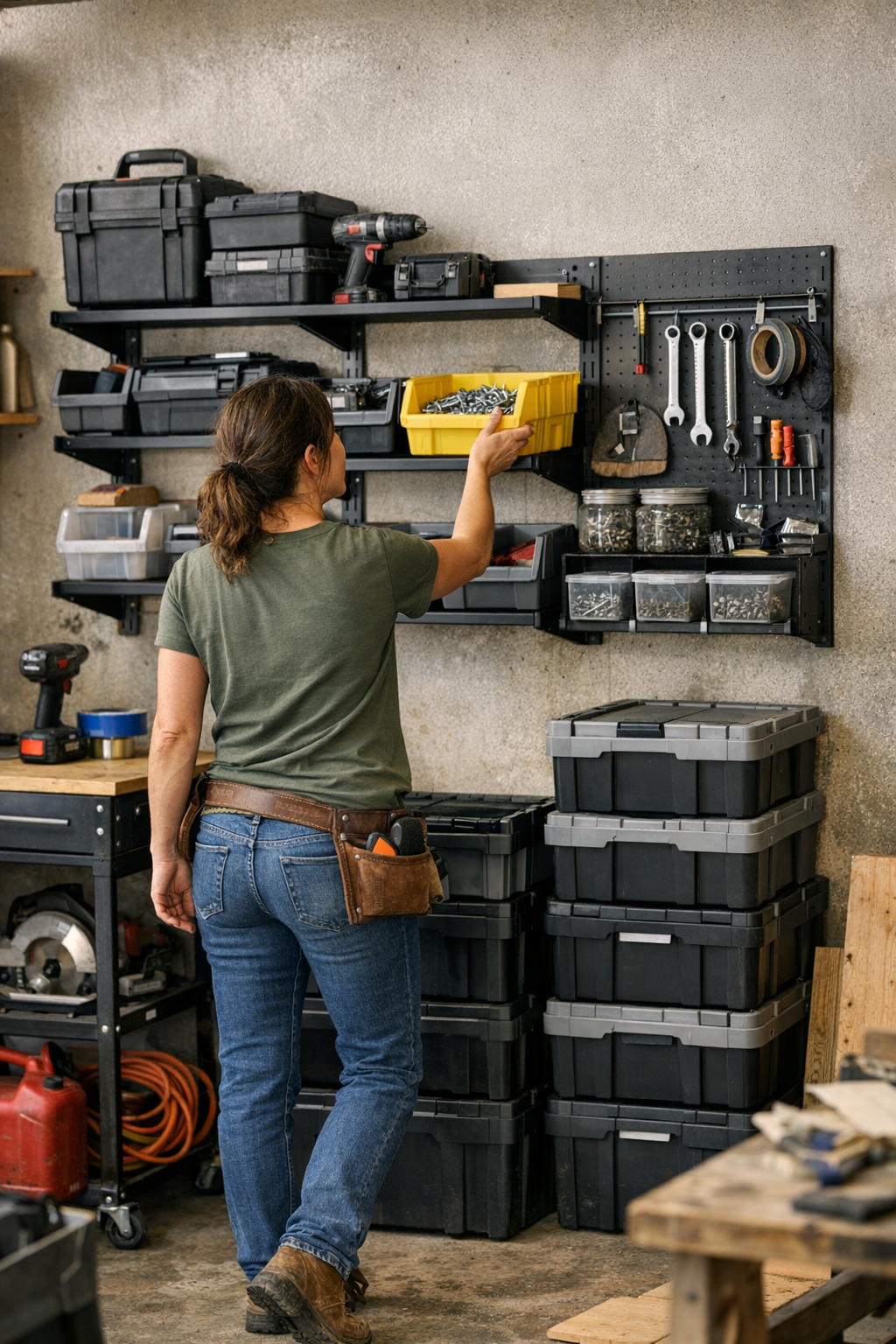
The garage was perfect—at least for a day. Shelves set by the level, bins snapped into their assigned places. Everything snapped into its new home, neat as a product photo. But within a week, that hard-won order starts undermining itself. Familiar tools pile up on the bench, a set of screws gets dumped on the cart, and you’re ducking, twisting, or reaching just to grab what you use daily. Suddenly, the setup that felt finished now won’t keep pace with your routine.
When Looks Win—but Use Loses
The promise of a modular wall is seductive: crisp lines, nothing out of place, every stud supporting some storage miracle. In reality, though, a layout designed for the empty room almost never survives your first week of full use. Returning the drill case means an awkward crouch to a bin set too low. The shelf set “just so” for visual balance is half a foot out of easy reach, so screws and tape measures accumulate on whatever surface is closest mid-task. Your hands search out shortcuts, and makeshift clusters—cordless tools on stools, hardware on carts—start threatening the whole zone’s flow. That “organized” look becomes an obstacle course the minute you try to work at your pace.
The Trap of Perfect Grids
The tighter the grid, the easier it is to create friction that lingers. Lower shelves turn into catch-alls: half-used tubes of caulk, a cracked flashlight, backup fluids, and all the ragtag “later” items. Bins at mid-level—chosen for symmetry—demand constant bending or twisting for basics. Every round of work nudges these annoyances further: dead corners go untouched, a rolling cart keeps drifting just to clear wall access, and you invent more temporary homes for the things you use most. Overflow piles creep in: sandpaper mountains on the bench, random bits tossed on an open cart because putting them away isn’t quick or comfortable.
Even the act of moving slows. The modular cabinet near the door needs a cart scooted aside before you can reach inside. One awkward shelf cuts off part of your wall zone—a foot of wasted space you can see, but never quite use. These small, repeated inconveniences chip away at the satisfaction of having “everything in its place.”
Where Friction Builds, Order Breaks
The real breakdown isn’t overnight—it’s the tenth cycle where each step gets slower. A tool chest must be dragged out just to reach a side drawer. The cabinet that initially looked “flush” now traps your movement, forcing sidesteps or pauses between work areas. You catch yourself organizing the same five tools every evening, not because you’re messy, but because their supposed “home” isn’t where your hands naturally land.
Resetting takes too long. You hesitate, knowing each cleanup will mean more bending and shuffling. “Order” becomes something you do at the end of the day instead of something that helps you get through it.
One Real Adjustment Changes Everything
Try shifting a shelf just six inches higher—or reworking one row of bins so your must-haves sit right between hip and chest height. The shift is subtle, but the result lands hard: drills, bits, and hardware fall into your hand at full arm’s reach. You return tools as you move, instead of staging them for a bigger cleanup later. The system runs at your speed, not against it. Overflow disappears as clutter stays in motion, never lingering on the bench or the path in front of drawers.
The route between zones almost clears itself. No more rerouting the cart just to reach a bin. Resetting feels less like a ritual and more like a reflex—one less reason to procrastinate putting things back.
Finding Your True Reach Zone
Aesthetics fade during actual use—practical reach stands the test. In garages and workspaces, the “zone of least effort” usually sits from hip to chest height (about 34–48 inches up). Bins or shelves below that line gather things you don’t need now—or things you toss “for now.” Anything much higher is only worth using for gear you rarely grab or for lightweight items with no daily urgency.
Instead of chasing symmetry when laying out your wall, chase routine. Act out your five most common tool grabs. Where does your free hand go? Where does your body turn or pause mid-step? That spot you keep returning to is your true storage zone—everything else can settle in above, below, or out of the way.
Space That Works—Not Just Space That’s Filled
It’s tempting to “finish” a wall when it’s empty, spacing everything for the look, not for use. But the moment your setup faces daily tasks, every misplacement exposes itself: a blocked corner when you bring in a ladder, a step stool always within arm’s reach, but in the path. One cart gets too close to the door. Behind a floor bin, a foot-wide dead spot collects dust and forgotten odds and ends.
Active zones—whether a workbench or an entire garage—should clear as easily as they fill. If you find yourself hesitating to clean up because it means bending or moving things just to restore order, your system is already losing. The more a layout caters to your movement, the more likely it is to stay organized after the twentieth task—not just on setup day.
If the Reset Is Smooth, the System Lasts
The best setups feel almost magnetic—it’s easier to put something back than to drop it mid-stride. Tools settle into place as a part of your walk through the area. You roll a cart or twist a chest and everything is instantly accessible, no reshuffling required.
If the path from “used” to “put away” feels natural, your storage holds up. If not, the overflow builds—until surfaces vanish and the wall grid is just a showpiece above the clutter.
Spot-Test Your Setup’s Weak Spots
Think your system’s dialed in? Take ten of your most common items and run through the real routine—return them in sequence, with gloves on or pushing a cart. Where do you pause, reroute, or put something down for “later”? That’s exactly where your arrangement needs a tweak. Sometimes a single shelf move or a cart rolled back by a foot turns frustration into flow.
The setups that actually last don’t just look tidy—they feel easy, over and over. Build for reach, not appearance, and your space will work with you, not against you, no matter how many times you fill it.