
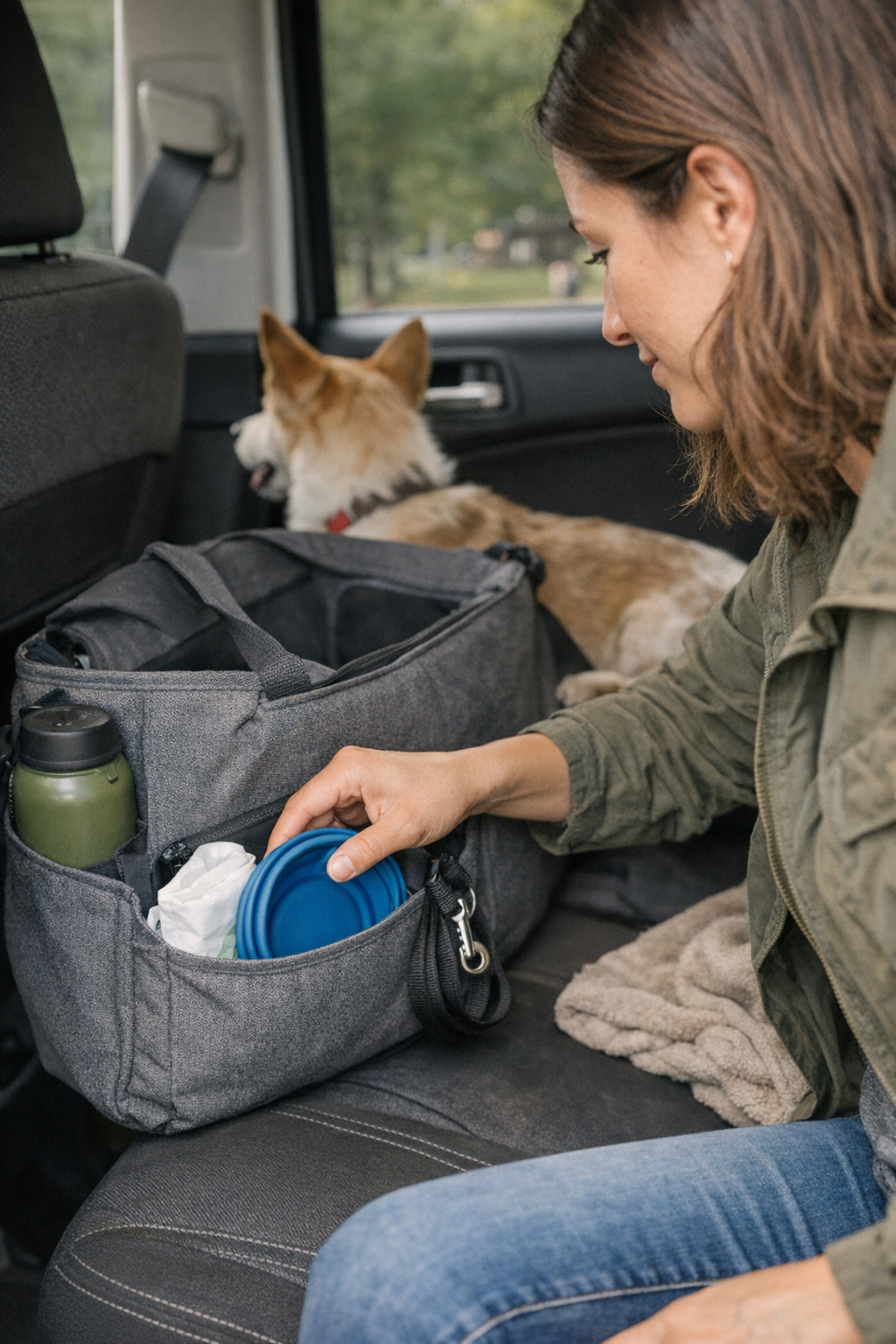
Your bag leaves the house looking calm and prepped—every zipper closed, every bowl and leash in its “perfect” slot. But by that second or third stop, the cracks show. You’re reaching past a tangle of straps, wipes buried at the bottom, the leash sliding under treats—each urgent grab turns into a fumble, and you’re forced to dig, reshuffle, or unzip with one hand while your impatient pet strains the lead. This isn’t bad packing. It’s friction built into the design: most pet travel bags hold a pose for photos, but lose their advantage the moment repeated use begins.
The Difference Between Looking Ready and Being Ready
Order collapses fast in practice. On a normal morning—errands, park, vet—you might feel set. But as soon as the route involves multiple stops, the “organized” vertical pockets and deep pouches turn into traps. Your hand closes around a wall of stacked toys before finding the wipes. A slightly off-placed leash clip blocks the only zipper you actually need. Even if you start early and zipped-up, the structure starts working against you once the day begins moving.
Looks deceive; depth hides the chaos. Bags built for that crisp, initial impression end up hiding the vital items under layers. It’s not setup style that matters, but seat-side, quick-hand access—especially when your dog or cat adds lively interruption. The split second it takes to reach a bowl shouldn’t depend on interrupting the whole system, but deep, vertical designs force you to disassemble just to grab what always goes first.
Real Pet-Travel Friction: Reaching, Waiting, and Resetting
The stress reveals itself fast. Use any traditional pet travel layout for four or five outings, and a pattern forms: wipes slide beneath pouches, water bowls jam in tight corners, leashes caught under chews. When you’re handling a wriggling animal and trying not to spill treats in the car, the “order” of your bag stops helping. Each small delay—feeling in the wrong pocket, pulling out half the kit for a single item—adds up to practical strain and stops your trip from getting back on track.
Scenes From a Typical Week
Watch any real series of pet stops: midweek, the supposed organization frays. Drive-through lunch after the park? The bowl that sat neatly this morning now tumbles out, wipes wedged out of reach. At the vet, instead of a quick check-in, you’re untangling the leash tip from a snug, narrow pocket while your pet squirms. No single event is catastrophic, but the flow of slowdowns, fumbles, and misplaced essentials repeats—especially wherever different items overlap or settle into awkward blind spots.
Item Overlap: The Silent Trip Wrecker
A bag may look split into neat compartments. But overlap sneaks in, and by the third or fourth movement, it’s your main obstacle—not “disorganization,” but design stacking basics sabotaging speed. No matter how carefully you reset every night, even a minor shuffle jostles essentials into new hiding spots. That perfect exterior means nothing the first time you need wipes now, but your hand sticks to a misplaced leash pouch, or a treat bag bulges in the way. Car seat grab-and-go turns into a clumsy two-handed search, and a single unexpected mess at a rest stop is suddenly much harder to contain.
The main offenders? Multipocket, zipped, and stacked designs, which sound logical but always seem to trap the most-used items behind unused weight. Their promise of “separation” and “organization” barely survives three real stops—after that, it’s all searching, reshuffling, and the sharp divide between how organized your bag looked and how unreliable it now feels.
The Setup Shift: Why Shallow, Seat-Side Pockets Work
What fixes the pattern isn’t a prettier layout, but a total shift to in-motion structure. Shallow, open, seat-facing pockets let you break the cycle:
- Every core item—leash, bowl, wipes—lands within a simple, four-inch hand reach right from the car seat. No unzipping, no stacking battles.
- One-hand access becomes automatic; your free hand stays with your pet, not buried in your bag.
- Cleanup for spills, drool, or muddy paws turns into a quick grab, so you’re back on the move without dumping your whole bag out every time.
- No deep overlap, no buried items—so repeated-use drag and reshuffling simply stop before they start.
A shallow pocket system won’t win a “tidiness” contest on looks—but after two or three days of real use, you’ll see the weight of handling vanish. No more sighing at stubborn gear, no more awkward wrestling for wipes while your dog gets restless. The system trades neatness for function, and the improvement kicks in faster than any initial reveal.
Testing for Real-World Flow—Not Just Appearance
Before trusting a new carrier or organizer, run a real test: while seated, try to extract bowls, wipes, and leash with one hand, in any order, without standing or stacking items outside the bag. If you find yourself shifting gear, catching a clip, or losing time to zipper maze, expect that friction on every outing. It multiplies, not fades, in day-to-day use.
End-of-Day Reset Habits That Actually Work
Full repacks waste time and re-create the same flaws. Instead, empty just the seat-facing, shallow pocket at the end of each day, reset the main-use items to face the seat, and tomorrow’s awkward buildup never even starts. This small reset tackles “item drift” directly, blocking the slow creep of mess and lost reach that most bags never solve.
How Genuine Calm Carries Over—Even After a Messy Day
The real comfort isn’t a photo-ready pack, but one that shrugs off the long day—through traffic, parks, waits, and sudden messes—by keeping every essential instantly at hand. Each stop can be reset with no drama. Interruptions stay contained, the trip doesn’t snowball into frustration, and you don’t face that slow dread before the next outing. True travel calm isn’t “being packed” but knowing you won’t face the same weak spot or tangled overlap tomorrow, no matter how many times the routine repeats.
Browse travel-tested pet carriers and essentials at PawGoTravel.