
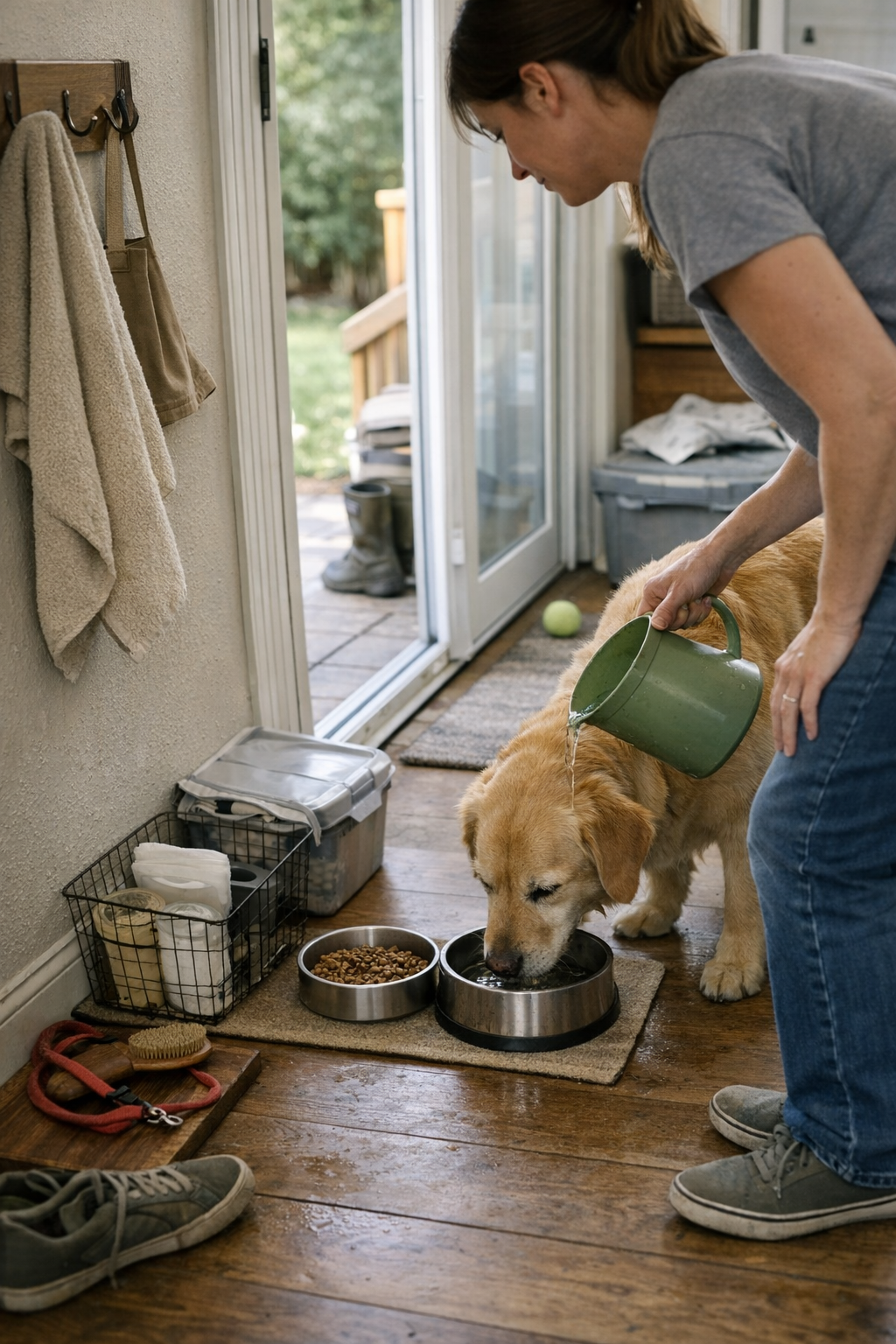
Why “Perfect” Pet-Care Stations Slow You Down
The everyday reality of feeding your pet isn’t as simple as it looks online. A row of matching bowls, wipes hidden, perfectly stacked bins—this kind of setup feels organized until you start using it every day. A care area designed to “look right” quickly reveals hidden friction: bowls you can’t grab without emptying a cabinet, scoops buried out of reach, towels never where you need them, and extra steps added to almost every routine. The more pristine the station, the more you chase order instead of ease—until pet care means hunting for basics instead of a quick, calm reset.
The Hidden Cost of Organized Appearances
Setting up with labeled bins, bowls in neat lines, and wipes stashed away seems straightforward. But real routines break this facade fast. Each morning, the “put away” scoop means digging through a drawer or fending off a stuck cabinet door while your hungry dog or cat waits impatiently. Sparkling bowls? Only until that dried food edge blindsides you and sends you back to the sink, just as your pet’s paws start shifting closer.
Hooks by the laundry room look tidy on day one, but the towel is rarely where muddy paws cross the threshold after a walk. You hang it up once, but end up grabbing paper towels—knowing you’ll wipe the floor again later. Storage bins stack high, but the favorite toy always seems buried, making you empty the entire container just as playtime’s supposed to start. “Neat” setups work against you when the items you most need are always a step, hook, or lid away from where routines actually happen.
When Everyday Routines Get Stuck
Take a breakfast rush. The counters look spotless, but getting food down means sliding bowls out from under the countertop clutter, locating a scoop behind pantry cans, and spot-cleaning a crusty bowl rim on the fly. Your dog returns wet from a morning walk—the towel’s on the other side of the house, so you trail water across clean floors, improvise with napkins, and add one more thing to reset before work. The routine looks controlled, but every day, something is misplaced, blocked, or slow, and you’re left reshuffling just to keep pace.
Hide pet mats to clear the living room, and they keep sliding back into high-traffic spaces—or the feeding area is missing its mat when spills hit. Bins meant to corral toys transform into obstacles, forcing the same evening cycle: dig out, scatter, re-stash, repeat. Every “orderly” move ends up adding steps nobody wants.
Real-World Friction: When Looks Outweigh Function
If you’re constantly doubling back for a scoop or skipping a cleanup because the wipes are never where messes happen, the setup is working against you. Rows of feeding bowls shine on the counter, but every refill stalls because the water pitcher is always somewhere else. Litter scoops tucked away mean frantic searching the one time you really need a quick clean. Neatness becomes a trap—prioritizing how things look over whether you can handle the next mess without losing momentum.
The slowdowns don’t shout—they creep in. Over a week, those extra trips and missed wipes steal minutes you can’t get back. Chores drag, parts of the routine get skipped, and you start hesitating before each simple task. The mess wasn’t the problem; the “perfection” was.
The Small Change That Transforms Routine
Fixing it isn’t about buying more storage—it’s about shifting what’s already there. Hang the towel not in the laundry room, but by the main hallway, right at the spot where muddy paws and messy mouths land. Suddenly, wiping down water or mud takes one reach instead of three rooms. One simple move—putting care tools near the actual action—cuts out detours and repeated resets. That rough-looking towel next to the bowls wins the day; hidden storage never did.
The takeaway: let the routine dictate where each tool belongs, not the appearance. Bowls stacked by the sink, a scoop left beside the kibble, wipes on the counter—none of it looks “finished,” but every piece is in play when you need it. Function beats photo-ready order every single feeding, clean up, and night check.
Spotting the Weak Points in Your Routine
Notice repeated stalls: are water bowls always empty later than you meant? Are wipes only handy after the mess dries? Does the scoop ever stay out, or do you dig for it every time? If one item always forces you to stop or retrace your steps, the setup is slowing you down, no matter how it looks. When “tidy” means constant resetting, you’re managing appearances, not routines.
Choosing Daily Ease Over Perfect Order
In pet care, saving steps is the difference between routine drag and actual calm. Move even one tool closer to where it’s needed, and feeding or cleanup speeds up with zero show. Trust a setup you can move through without thinking about what’s buried, what’s missing, or what gets in the way—from morning meals to late-night walk returns.
An area that looks organized isn’t always easier to run. Choose routines that work at real speed, with tools within reach and cleanup that doesn’t wait. Bowls placed for the quickest grab, towels ready for actual paws, and wipes visible when the mess is fresh—these are the changes that show up in every daily round, not just in a photo.
For more practical ways to support your daily pet-care flow, visit calmpetsupply.myshopify.com.