
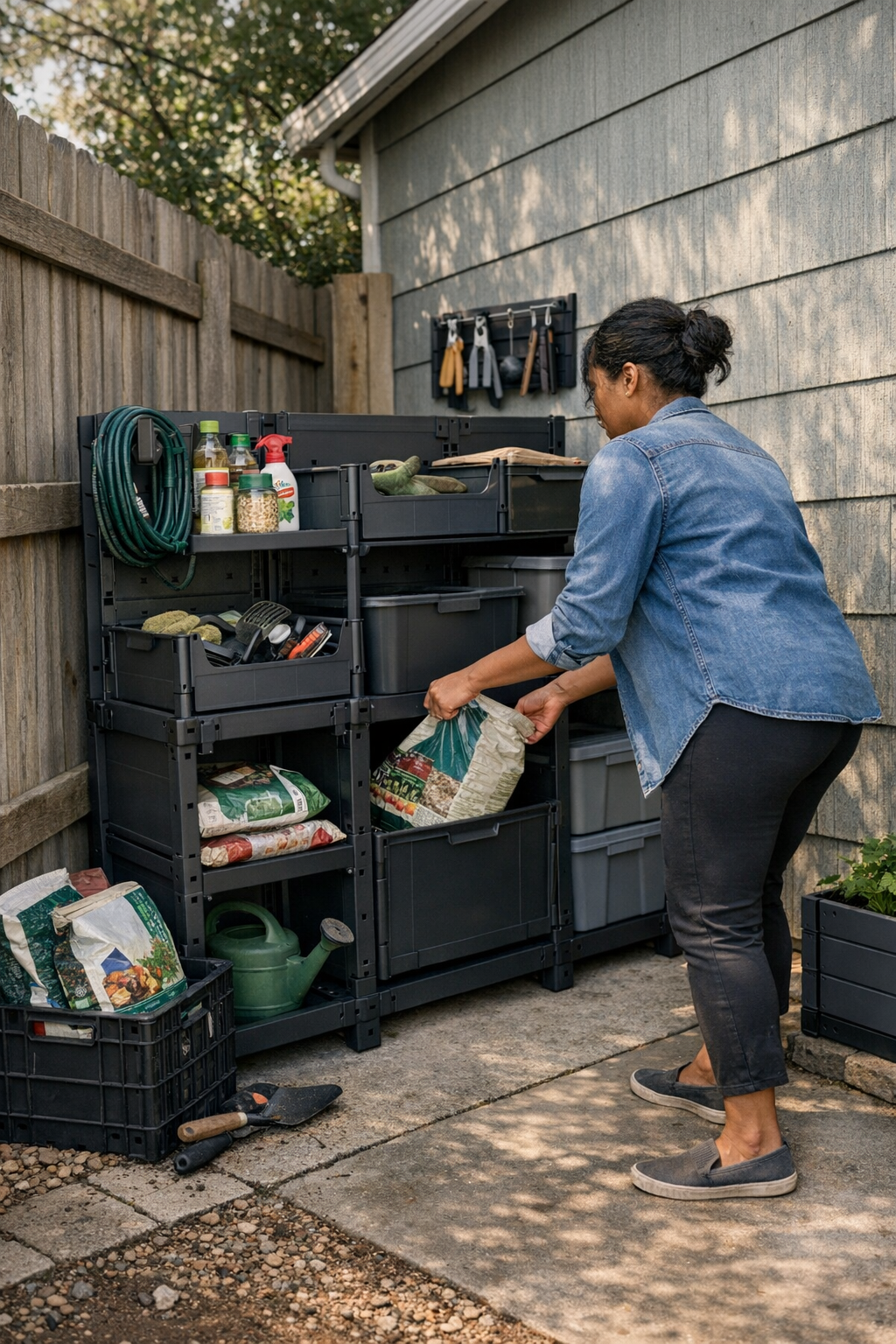
That first day, the pantry is lined up—labels showing, bins matching, the kind of surface order that feels finished. But as soon as regular life returns, the setup starts to crack. By midweek, anyone sharing shelves notices the shift: a snack restock shoves pasta behind baking jars; a grocery run means new boxes get squeezed wherever there’s a gap; one run for breakfast oats turns into two moves just to get to the right jar. A system that looked controlled for a photo becomes a maze within three busy routines. What actually matters is how a storage structure stands up to repeated grabs, rushed returns, and the churn of shared use—where the “perfect arrangement” becomes hidden friction and small stalls multiply.
Why Perfect Order Disintegrates in Real Routines
Sleek containers and identical bins sell the idea of control. But real-world friction starts instantly: making breakfast with a hungry kid at your elbow, loading groceries when the new bag just won’t fit the planned zone, or scrambling for a missing ingredient after work. Each cycle puts pushback on the layout, and signs of strain show fast.
Visible order gives way to behavior friction. An ingredient you used yesterday is now boxed in by a stack meant for something else. A quick snack is slowed by a parade of bins blocking the “easy” shelf. The shelf route you planned is crowding; you’re shuffling containers sideways just to get a routine task done. The cracks aren’t subtle—they’re the seconds lost and the clutter that piles up so quickly you barely notice.
The Hidden Costs of a Pretty Pantry
Category grids and tight labeling promise efficiency—until the first restock undoes it. What actually piles on in daily use:
- Access bottlenecks. That stack of labeled bins sits right where you need to reach for flour or cereal, forcing you to unstack before you can open, then remember to restack after (if you bother).
- Category drift. The “snacks” bin slides from Goldfish to a crammed mass of chips, bars, and loose packs. New items crowd out the original plan. Smaller packets disappear to the bottom, and nobody follows the original labels for long.
- Reset stalls. Restocking groceries means re-stacking or rearranging—often just to make one thing fit. The extra step turns a quick drop-off into a low-key puzzle, inviting temporary piles and counter overflow instead of clean returns.
The reality: rigid setups work against the actual rhythm of the room. They hold their shape only until real habits overwhelm them. Shelf lines become dead zones, bins interrupt movement, and the design you set up last Sunday becomes an obstacle course by Thursday.
Where Setup Breaks: Real Scenes from the Pantry Zone
Pasta Buried, Cereal Exiled, Reset Shrinking
Midweek, the planned order is flickering. Pasta gets wedged behind decorative jars as new bulk buys push other categories off-plan. Cereal, bought in a rush, lands wherever there’s room—sometimes in the wrong zone, always threatening to topple the neat look. You stop expecting to find things where they belong, and the top layer becomes a shifting array of what’s new, not what’s needed.
Overflow Piling—From Shelf to Countertop
Quick-access shelves stop being quick. Lunch snacks, loose apples, and bags start to collect low down, then clump near the front edge, creating a pile that dares you to grab from underneath. Once high-use items run out of zone, they migrate—first to a catch-all spot, then to the nearest open counter. Shelf order becomes shelf pressure: the edge is where the mess is most visible, but the spillover hides what’s really lost behind.
Blocked Movement, Fragmented Routine
A neat shelf footprint doesn’t mean a usable flow. Tall bins block reach. Deeper drawers require shifts and shuffles to access the back. One return means two or three moves, and every extra step invites off-path storage—leaving items out or half-rehung. In a shared kitchen, this spirals: one person’s workaround creates a fresh tangle for the next.
Modular, Open Storage: For Mess and Motion, Not Just Looks
After enough resets get undone, rigid bins lose their charm. What makes more sense: modular, open setups that flex with use instead of against it. Consider these practical shifts:
- Most-used items always in the front zone. The lead edge of each shelf is cleared for go-to staples—a “park and grab” area, no stacking or sorting needed.
- No lids, open bins for true one-step access. Grabbing or replacing an item is just a reach, not a lift-and-reshuffle. The time saved keeps return flow from stalling.
- Adjustable and movable zones. You can split or collapse categories as habits shift—a snack phase ends, a new bulk buy arrives—without needing to relabel or force-fit the old system.
The question is whether daily moves are helped or interrupted. Can you return an item as easily as you grabbed it? Or do you have to sidestep your own design? When structure adapts, even small messes get absorbed by a usable routine, instead of resulting in overflow.
Reset Speed: The Real Test
If it takes more than a couple seconds to return an item, the system is probably slowing you down—not keeping you organized. Open modular storage, well-placed bins, and frictionless access lanes make maintenance part of the everyday routine instead of a special Sunday chore. The pantry survives the third shop, the late-night snack, the lunch rush, and the surprise grocery drop—all by design, not by accident.
Concrete cues help: a shelf that stays half-open for overflow, a bin with wiggle room for last-minute extras, or a visible “use-soon” spot that clears itself without turning into tomorrow’s pile. These prevent silent backup at the edges and curb the formation of ‘temporary’ stashes—so the whole structure stays workable.
Spotting a Setup that Works (or Doesn’t)
Signs a storage setup is really holding up: the main grab zone stays open, categories expand or shrink without redoing the whole plan, and there’s almost never a moment when putting something away feels like a hassle. You can reach for breakfast without moving bins, overflow lands where it makes sense (not on the counter), and fixing drift is a quick adjustment, not a full reset.
- Retrieval and replacement each stay fast, even as shelves fill or empty out.
- Overflow doesn’t relocate to counters, sinks, or another room—what needs returning is returned.
- Reset is a background action, not a weekly event or source of dread.
Breakdown shows up just as simply: If you have to move storage blocks just to make breakfast, if “snack” or “baking” means opening three bins, or if every restock is a miniature reorg, something’s wrong. Surface order is masking daily slowdowns—real friction that piles up where you don’t see it but always feel it.
Structure That Helps You Move, Not Just Store
The best inside-storage shifts are visible in motion: easier routes, less re-sorting, and less mental overhead. Wall systems and adjustable shelves beat fixed bins because they let the layout flex instead of bottleneck. Floor units and well-placed hidden storage only help if they speed up retrieval and return, not just stack things deeper. The setups that last aren’t the prettiest—they’re the easiest to maintain when routines get busy and the original order slips.
A storage system that keeps pace frees up your headspace and floor space, absorbing the churn, not hiding it. When storage works, you stop fighting your own layout and reclaim time with every repeat use. If you’re ready for inside-storage that outlasts the reset cycle, visit Gridry.