
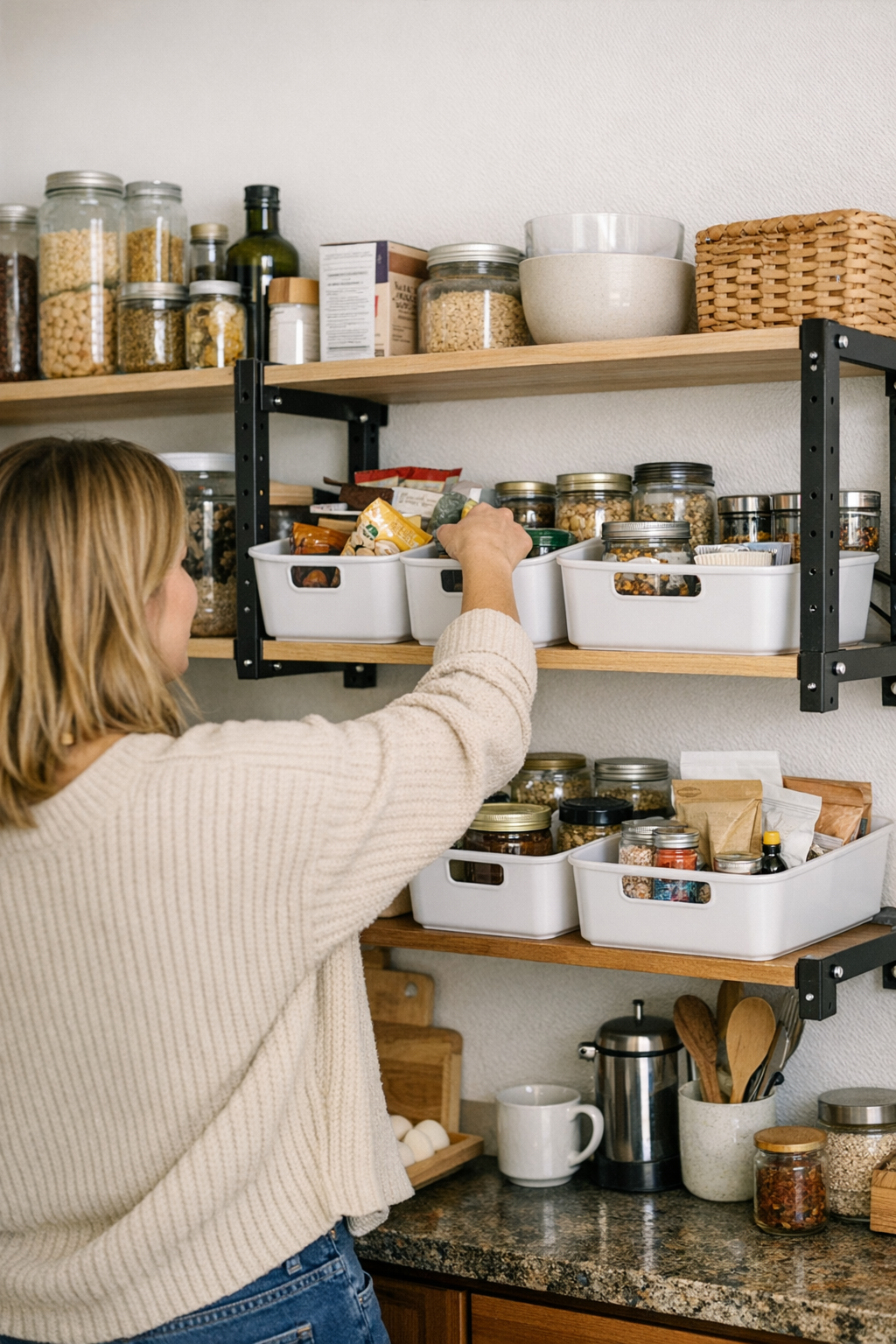
In theory, open shelving should make life easier. Everything visible, nothing buried, zero digging—just a quick glance and you’re set. But a few days into real-world routines, that same “everything in sight” setup turns out to be a different kind of trap. Suddenly, your quick-scan shelves aren’t just open—they’re exposed. The neat surface starts to blur with clutter, and you’re not just seeing what you want. You’re seeing everything out of place, all at once.
The Real Trade-Off: Easy Access, Loud Mess
Open shelves look immaculate right after you organize. Each item has its place. But daily living never stays still: breakfast rushes, late-night cleanups, coats dropped, groceries pushed aside to make space “just for today.” All that visibility quickly becomes a liability. Every half-empty pasta box, slouched stack of towels, or wandering phone charger pulls your shelf a little further from that streamlined start. There’s no hiding spot for the grit of everyday life.
Clutter: Slow Drip, Sudden Surge
At first, the system feels almost perfect. But skip a single nightly reset, or let one category drift, and the decay is instant. Cabinets and baskets can disguise their secrets. Open shelves announce every sideways snack bag, every towel that’s lost its folded edge, every bottle leaning out of line. You see it all—the fraying stacks, the items inching out of their lane—until you’re not reaching for what you need; you’re sorting through the aftermath.
Everyday Storage Friction You Actually Notice
The pain isn’t just visual—it interrupts the flow of your day. Grabbing cereal in the morning suddenly means moving two bags of chips and an open box of granola bars, each reshuffle threatening another slide. By midweek, categories bleed into each other: spices mixed in with soup cans, lids and stray packets scattered everywhere. Instead of “see it, grab it, go,” every task tacks on extra shuffling, restacking, or rerouting.
Bedrooms and closets aren’t immune. Shoes creep off their shelf, spilling into stacks of folded sweaters. Scarves and hats multiply in the entryway tray, becoming a mountain you must dig through for car keys or a single glove. One busy afternoon and the boundaries are gone—each section loses its purpose, and clutter quietly spreads from shelf to floor to everywhere else.
The Ruthless Feedback Loop of Open Shelves
Open shelving doesn’t forgive. You miss a reset day, and the shelf broadcasts it instantly: a closet shelf half-collapsed, a pantry with snack piles tumbling over, a garage shelf whose “miscellaneous” bin now means “look here only if you have time to untangle a jumbled mystery.” Every time you pause to hunt, rearrange, or restack, you feel the friction—an organized shelf that quickly becomes background stress instead of daily support.
Containment: The Small Shift That Actually Works
Containment isn’t about hiding—it’s about boundaries. Even on open shelves, adding low-profile bins or trays gives each group of items a place to belong, and a reason to stay put.
Try this in a kitchen: Swap a row of loose snack bags for a shallow bin. Now, refilling snacks means one slide in, one slide out—no more shifting four other items just to reach a granola bar. Bins corral awkward or rolling items, making resets far less tedious. The shelf still looks open and accessible—but the chaos is contained before it can spread.
Quicker Resets, Longer-Lasting Clarity
Containment changes the shelf math. Resetting stops being a full-on reorg and becomes a two-minute tidy. Instead of nudging ten boxes and hoping nothing falls, you just slide, lift, or swap out a grouped bin. Categories hold their shape. Even in an entryway, a single tray or basket can anchor hats, gloves, and keys—preventing that runaway sprawl that greets you every time you head out the door.
Physical boundaries reinforce routine habits. A simple divider keeps snacks from invading breakfast, cleaning products from wandering across laundry shelves, towels from slumping into shoe territory. When every group has both a visual and physical marker, resets feel faster and the system holds—even after a week of real use.
When Open Shelves Signal It’s Time for a Change
Does this sound familiar? You’re refolding the same shirt stack for the fifth time, untangling a pile of misfiled mail, or—again—moving three boxes just to find the soy sauce hiding behind random pasta. These are all signs your open shelves are missing containment. If keeping things orderly takes more work than actually using what you store, the system’s not serving you—it’s slowing you down.
Daily Fixes That Actually Last
Give every shelf a clear job. Use shallow bins or trays for loose, drifty items—snacks, cleaning supplies, all the one-offs that love to roam. Reserve wide, open shelf space only for what stacks solidly and stays put: books, baskets, or neatly folded linens. When (not if) things shift out of place, the fix should be a quick tap or toss, not a forty-minute reset.
And forget the showroom fantasy. Functional storage doesn’t penalize daily use. It bends for busy mornings, late nights, and every mess in between. Sometimes, it’s the smallest shift—a few bins, a label, a better section break—that keeps your system steady through real life, letting you get in, get out, and move on.
See all practical shelving and containment solutions at ClosetWorks.