
One storage bin for cat toys promises a tidy win—a neater room, a quiet surface, an escape from scattered clutter. But within a week, the friction returns in small, repeatable ways. Toys block your path to the food bowl, a crinkle ball grinds beneath the kitchen mat, and quick sweeps stall as you fish behind furniture. The bin that was meant to solve the problem becomes part of the cycle: it looks organized, but the work of retrieving, chasing, and re-resetting scattered toys never really leaves your routine. For anyone living with indoor-cat flow, the difference is clear: what calms the room at first rarely keeps it calm when routines repeat.
The One-Bin Illusion: Clean Surface, Hidden Friction
Stacking every toy in a single storage bin hides clutter, but it hides repeated inconvenience too. On day one, the reset feels complete—everything dumped away, nothing left to trip over. But a few play sessions in, the bin’s limits show. Toys reappear in kitchen thresholds, favorite mice wedge themselves under the couch, and the ‘clean’ storage sits distant and untouched. Instead of solving scatter, the bin acts as a visual band-aid. Every night, you hunt for lost pieces, bend to snag them from shadowy gaps, and spend more energy undoing toy drift than the bin saves. The home looks calmer; your routine does not.
The hidden cost is the cycle that the storage never breaks. Pickups get slower. You stop for the same banana by the door, the same jingle ball in the bathroom. Each clean surface costs steps and reach—reruns of yesterday’s hunt that creep into every reset.
How Toy Drift Actually Shows Up During the Week
The visible floor on day one quickly dissolves: plush toys creep behind chairs, plastic balls ring out from under mats, and each errand—refilling water, checking the food zone—brings a pause to step around some new surprise. Vacuuming turns from a single sweep into a series of mini-toy rescues. Navigating late at night means stepping carefully, bracing for the sound—or squish—of something soft underfoot. Toy drift never spreads evenly; it collects in threshold spaces, high-traffic corners, and right where your hand isn’t.
The friction stacks up exactly where you live it:
- Every day, the “pickup” point shifts farther from actual play—the reset isn’t where the mess happens.
- Toys leak into walkways, kitchen lines, and resting corners—especially in places you’d rather keep clear.
- Preparing meals or morning coffee? A rogue catnip mouse appears on the mat, breaking your flow.
- Vacuuming stalls every few steps to clear runaway toys from blocked zones instead of simply cleaning through.
- The setup you thought was settled keeps interrupting real routines—maintenance, but out of sync with daily use.
Instead of reducing your work, the single-bin approach creates a new routine: repeatedly fetching toys from out-of-reach spots, only for the cycle to start again the next day, especially with a high-energy cat always probing new gaps and corners.
Why “Tidy” Doesn’t Always Mean “Usable”
Indoor-cat life quietly shapes the day. It’s easy to trust that a lone storage bin—tucked out of sight, down by the wall—solves the clutter. But when the play ends, your cat abandons toys wherever the action stops: window ledges, sun patches, under the TV stand. The bin, neat and distant, anchors your own cleanup—not the cat’s—so resets mean crossing the room for every stray piece, not gathering where use actually happens. Organization that looks right from the door rarely matches real movement or what endures through a week.
Surface tidiness is only the first step. The real gain comes from setups that survive and shape repeated routines—spaces that reduce the need to think about maintenance at all. When toy return matches where toys are dropped, resets shrink and slow friction fades. That shift isn’t about hiding the problem; it’s about structuring the routine so cleanup becomes background, not another point of effort.
What Real-World Reset Looks Like: Daily Problem, Daily Return
The cleanup loop is always the same: a sweep at night uncovers toys in a crescent from the living room carpet to the window, plus a few outliers—one wedged behind an armchair, another just visible under the radiator. Gathering them means bending, weaving, and detouring around furniture, then heading for the distant bin. It isn’t a long job, but it slices up your end-of-day flow. And as you leave, there’s almost always one toy reappearing—right where you just cleared—daring you to start again.
The issue isn’t mess alone—it’s the cycle of interruption that a pretty bin can’t absorb. Each “solved” visual moment regenerates as soon as normal living resumes, and your effort never truly gets smaller. The system looks less messy but is no easier to sustain when routines pressure the same weak points.
How to Make Cat Toy Storage Actually Work in Real Homes
Real improvement came not from stricter tidying or more rules, but from observing what failed through side-by-side daily use. Repeated friction faded only when storage zones shifted closer to where toys actually landed—not where the room looked neatest. Instead of a single, deep bin parked by the wall, the fix was to give the toys places that matched lived-in movement:
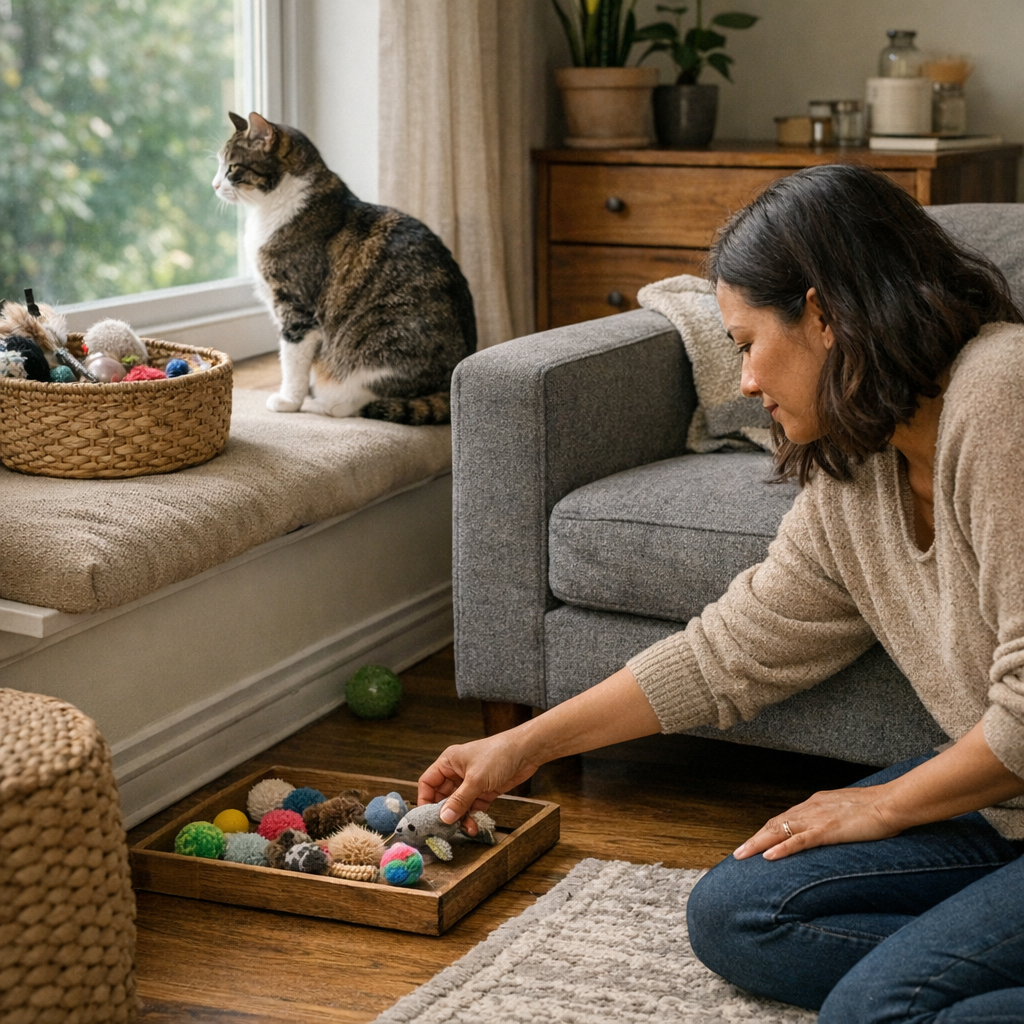
- Set a shallow tray beside a main napping spot. Toys batted aside during wind-down are within easy reach for end-of-day pickup—no hunt needed.
- Drop a small open basket near the favorite window or perch. Toys drift here by use, and the open design matches both your cat’s interest and your own pass-through paths.
- Block access under couches and dressers with towels or storage strips. One simple adjustment keeps most toys visible, stopping them from disappearing into black holes or derailing the next cleanup.
This shift is immediate: toys get deposited naturally, pickups shrink to seconds, and the “big bin” is rarely out of step with what happens on the ground. No elaborate containers—just structure that fits both human and cat rhythm, cutting the reset steps in half and lowering mental overhead for the next round.
The Role of Open Storage: Why Bins and Lids Rarely Win
Lidded bins feel final—closed, dust-free, visually satisfying. But in repeated use, they get bypassed by both cat and owner: their distance from the daily routine turns cleanup into a separate, avoidable chore. Each closed bin adds steps—walk, open, drop, close—and most days that friction means skipping a reset altogether. The result? Toys spread further, the bin gathers dust, and the original mess reclaims the space.
Open baskets, low trays, fabric bowls—anything shallow, light, and close to actual play zones—encourage quick returns. Cats sniff, re-use, and move toys in and out, while your own routines fold pickup into other home movements. Cleanup stops being a project; it becomes a background motion, blended with traffic through your own space.
The Shared-Home Challenge: When Cat Zones and Human Zones Collide
No layout holds up forever, especially in a home where cat activity lines cross human habits. Play drifts—starting by the sofa, ending at the bathroom door, with toys clustering inconveniently along every step. High-traffic areas pay the price, and both floor space and mood get tested by repeated stop-and-go. The right storage isn’t just about visibility—it’s about minimizing these daily collisions so routines run with less interruption, not more.
The best setups shift as patterns emerge: is there a recurring trail blocking the hallway? Move or double up containers within reach of those friction points. Losing toys under the same piece of furniture week after week? Block it off. Shared sun corner for both cat and human? Add a “quick drop” basket there—so one end-of-day pass gets it all, not half. The tweak is small, but the daily lift is real.
Reset, Don’t Rearrange: What Changes When Storage Follows Use
Once containers track actual use—not just design or symmetry—the endless cycle of “toy sweep” shrinks. Sudden detours fade, because pickups happen as you cross the space, not as a separate job. The floor may never be perfectly clear, but the repeat interruption no longer wears you down or drags out basic resets. Maintenance doesn’t vanish, but it stops eating into every evening’s comfort.
- Distributing a few small containers lets you gather up toys in-the-moment, rather than traveling the room to feed a single bin.
- Open storage keeps the reset process friction-light and visible, turning toy return into a shared habit for both you and your cat.
- Blocking lost zones means fewer missing toys, less bending, and less repeat frustration.