
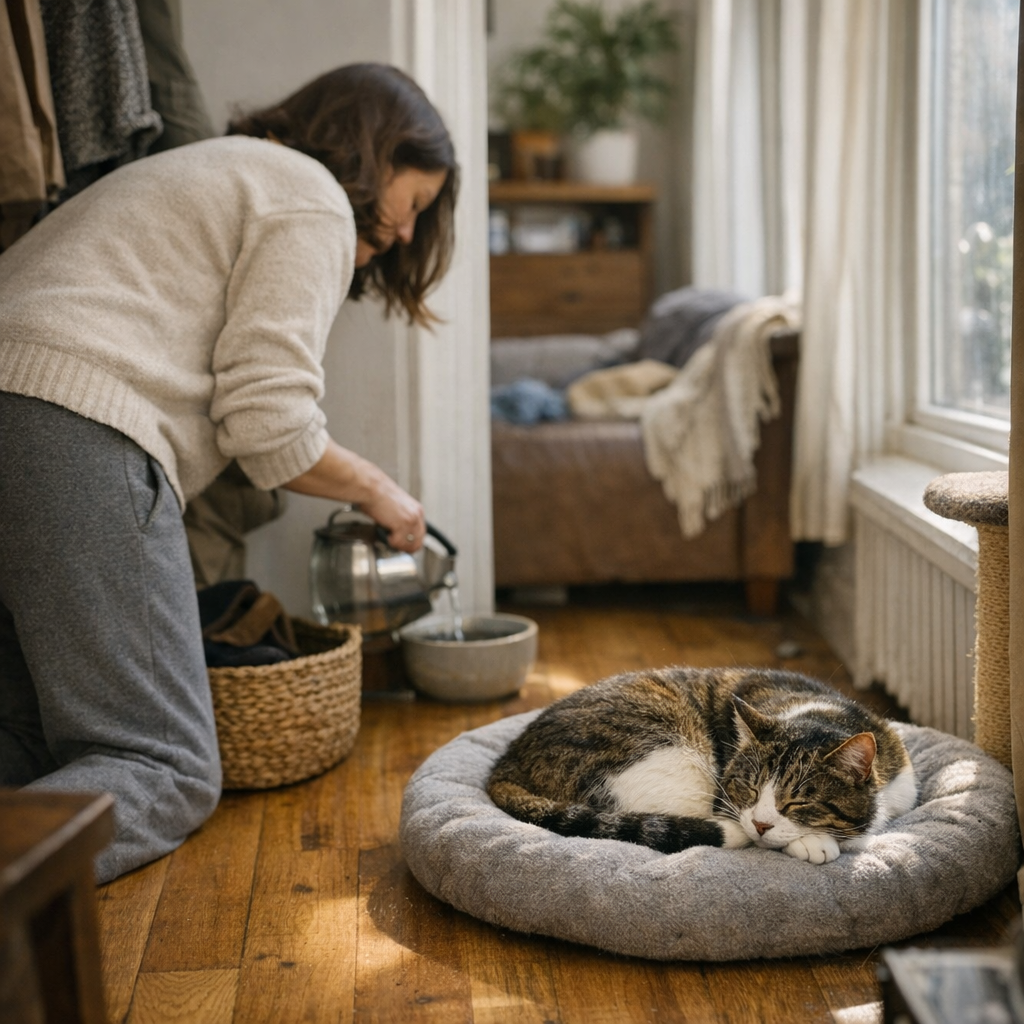
Setting up for an indoor cat usually starts with the idea of keeping things simple—one bed, one corner, neatly out of the way. But in real daily use, that “tidy solution” becomes the setup you step around every time you top off the water bowl or refill kibble, dodging a sleeping cat who’s always landed right where you need to reach. What looked organized quickly turns into a friction zone: fur concentrates, routine wipe-downs get skipped, and the “low-maintenance” spot becomes the place you resent having to handle again and again. This is where the quiet trade-off of indoor-cat comfort collides with actual home upkeep—the fault lines that StillWhisker aims to expose and solve.
When “Simple” Setups Start Feeling Complicated
A single cat bed seems like it should keep things streamlined. Fewer pet items, less clutter. But practical friction stacks up fast: try scooping litter and you’ll nudge a tail blocking the walkway, or step over that same patch of fur for the fourth refill in a week. The neat corner advertised as “easy” quietly steals more minutes than you notice:
- Bed edges trap stray litter dust with every box trip.
- Blanket corners rumple and fold, demanding smoothing well before the weekend.
- Hair builds back within hours of vacuuming—always in the zone you walk most.
None of these are disasters, but they add up, turning a “controlled” area into a silent repeat chore.
The Routine Resets That Stack Up
Minor inconveniences snowball: you put off wiping surfaces because you have to move your cat first, or let cleaning tools drift away from the spot they’re truly needed. Sunlight shifts and the “quiet” rest zone turns busy, pushing your cat—and your feet—into tighter overlap. Suddenly, your well-planned layout creates as many reroutes and resets as it solves.
Picture a weekday morning. The path to the kitchen winds around a thick patch of fur and a dozing cat, pausing your flow every time you refill food or water. On cleanup days, a catch of stuck blanket delays laundry. By Friday, it’s not just the cat’s comfort that’s on your mind—it’s how much time and energy that out-of-the-way zone demands just to stay functional for everyone in the house.
Why Fur and Foot Traffic Always Find Each Other
Cats follow warmth, sunlight, and shifting activity. That means today’s sleepy spot might be tomorrow’s walkway obstacle, especially if there’s only one place to settle. Fur, foot traffic, and daily chores collide in a single area. Each pass kicks up more hair. Shoes and slippers bump bed corners. The “cat zone” starts leaking into the family zone, and keeping both looking guest-ready and usable at once becomes a chore—no matter how tidy the bed was on day one.
This is the real tension: a setup that looks settled, but in practice interrupts human flow again and again. A calm-looking corner doesn’t erase the need to shake out dust, redirect your walk, or slow down for the same handful of cat hair every day.
The Impact of Adding a Second or Third Rest Zone
A new rest spot doesn’t need to be fancy—a simple washable mat by the window, or a small pad in a quiet nook, is enough to break up the pattern. Cats naturally rotate: morning stretches in the sun, afternoon naps farther from family bustle. This “rotation” means:
- Fur spreads thinner—no more single spot matted with hair.
- Each zone needs only light maintenance, not drastic cleanup.
- Bed resets get faster—one quick shake or vacuum rather than a full overhaul.
Instead of deep-cleaning the same problem area, you keep shifting tiny maintenance into your routine—it stops feeling like an extra job.
Example: Quiet Window Pad vs. Hallway Pinch Point
Take a layout where the primary bed sits right off the main entry. Every school run, grocery drop, or after-dinner clean funnels across that line. You’re dodging the cat and her fur daily. Now, add a lightweight pad beneath a sunny window. The cat divides her time: snoozing out of the way in the morning, returning to busier spots only when she wants company. Suddenly, fur no longer piles up at the pinch point. The “please move so I can work” routine is down to maybe once a week, not every morning. Even blanket resets shrink from multi-minute scrambles to a one-minute fix.
Placement Matters: Mind the Overlap
It’s not just about number, but where beds and mats sit. Avoid setups blocking human walkways, crowding entryways, or clustering beside feeding and litter spots. Beds jammed against food bowls or litter trays blend crumbs, fur, and dust—tripling cleanup without warning. Instead, position rest areas in sun patches, beside but not in front of windows, or tucked into quieter corners off routine traffic lines. Cats rotate naturally; your routine stops colliding with theirs.
Combining nap space with feeding or litter areas rarely works long term—maintenance explodes as fur, crumbs, and dust cross-contaminate. The bigger the overlap, the more the “one tidy zone” turns into three separate headaches.
The Real Routine: Minor Upkeep, Major Difference
Two or three zones, spaced where both you and the cat tend to go, mean maintenance shifts from crisis resets to quick tidying. Shake or vacuum as you walk by, reroute yourself less, and if one corner becomes a fur-magnet, it’s easy to rotate pads, not rearrange the whole house. Compare to a solo bed: every major cleaning cycle includes it, and it’s nearly always in the way of something you need to do next—fetch a toy, mop a spill, reload a feeder. The difference shows up not in how a setup looks, but where your actual labor goes once routines stack up.
Avoiding the “Looks Good, Works Bad” Trap
Owners assume one neat bed keeps things contained. What happens instead: unplanned reroutes, fur drifting into high-traffic paths, more time spent nudging a cat or cleaning up than simply living alongside. “Simplicity” becomes the source of silent irritation.
The goal isn’t piling on cat furniture—it’s creating enough variety that fur, comfort, and routine conflict all land in lighter cycles. A couple of light, low-profile rest bases in separated edges give your cat rotation, and your own upkeep stops feeling like a repeat obstacle course.
Practical Setup Tweaks for Smoother Days
Use repeat-use logic, not just décor:
- Opt for pads and beds that shake out or toss in the wash easily—avoid thick, immovable cushions.
- Place at least one rest area in a sunlit, away-from-foot-traffic spot, drawing your cat during your high-activity windows.
- Keep several feet of “buffer” between nap, feed, and litter spots to prevent cleanup overlap.
- If a spot becomes a fur-magnet or disrupts your routine, swap it—don’t wait for frustration to build before adjusting.
Treat every time you shuffle a cat, wipe up surprise fur, or hesitate to clean as a prompt to reevaluate—not an inevitable part of cat life. Small directional tweaks nearly always cut accumulated annoyance and upkeep.
The Practical Payoff: Less Cleanup, Fewer Interruptions
A single bed gives the illusion of control, but overlaps with human routines become clear within a few weeks: blocked reach, slow resets, and dual-use areas that add cleanup instead of reducing effort. Rotating between a couple of rest zones interrupts these pressure points, lightens routine resets, and shrinks the conflict between your cat’s comfort and your own daily flow.
The best indoor-cat setup isn’t the one that looks the calmest; it’s the one that keeps your cleanup fast, your access open, and your routine friction down, round after round.
Visit StillWhisker for practical indoor-cat setup solutions.