
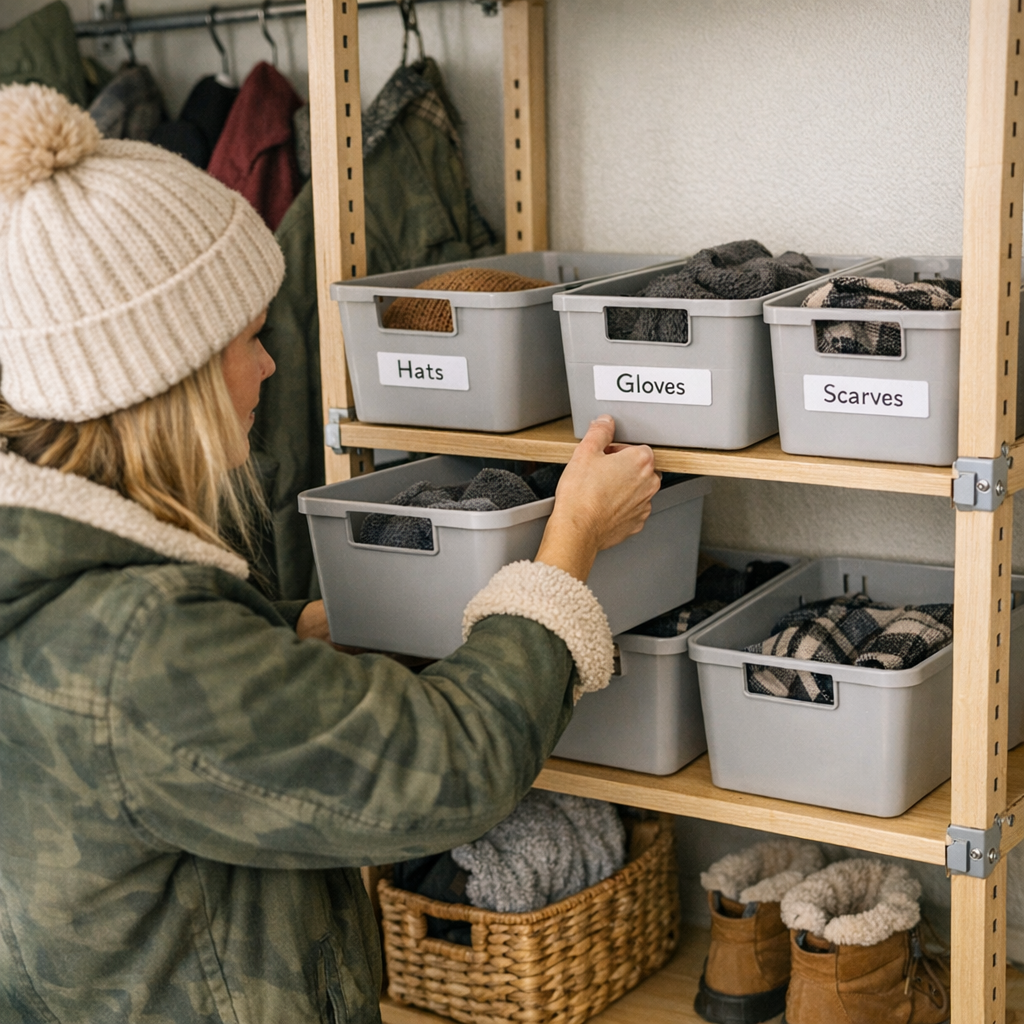
The first week after an organizing overhaul can feel deceptively satisfying. All those matching bins in your entry closet or laundry shelf, each with a crisp new label—everything finally in its place, every category spelled out. But as real life moves in, so does the slow unraveling: bins get bumped, labels start to peel, and the clarity that felt permanent starts fading fast. By week two, what looked organized is under steady attack from rush-hour mornings, bulky gear, and the chaos of daily traffic. Suddenly, a “finished” closet becomes a source of extra fixes and confusion—right where you wanted less hassle.
How Label Placement Becomes a Daily Friction
Picture a shelf lined with bins so tightly packed, there’s no room to breathe. Every attempt to pull out a bin in the middle requires nudging others aside, pushing labels with every move. At first, those labels on the shelf edge seem like a simple answer—you glance, you grab. But as bins grind past the edge, corners lift, labels shift or tear, and in the scramble to get one kid’s hat or one pair of gloves, you end up with labels stuck to the wrong containers or hanging by a thread.
It doesn’t implode all at once. Instead, the system wears down—bins moved out of order, categories drifting, labels signaling the wrong contents or missing altogether. What should feel automated starts demanding attention: correcting bins, smoothing stickers, hunting for what used to be easy to find. The original organization slowly morphs into a game of catch-up.
Where Crowded Closets Expose the Weakness
The problem hits hardest in the entry closet—a daily battleground. Picture parents grabbing boots from the lowest shelf, kids stuffing backpacks and sports gear wherever there’s space, someone shoving a bin aside to reach for an umbrella buried in back. Nobody stops to handle labels gently or keep categories strict. In the rush, bins swap places—the hat bin drops onto the “Gloves” label, the “Scarves” tag dangles over an empty slot, and by the end of the week, half the bins are misplaced and the shelf is a guessing game.
Bins tugged out for a single missing shoe often take neighboring labels with them. Adjust one overstuffed container, and the entire section slides into disorder. The result? Labels are never synced to what’s inside, and everyone is back to pulling out multiple bins just to check each one—multiplying mess rather than minimizing it.
What You Lose When Bins Can’t Move
Packing bins edge-to-edge seems smart—maximum space, minimum wasted shelf. But in practice, it creates its own bottleneck. With nowhere to shift, bins scrape past labels every time they move—tearing, folding, or simply losing their hold. Adhesive builds up, label corners curl, and sometimes half the category name vanishes. More crucially, as what you store shifts—winter hats today, rain gear next month, overflow toys after that—labels get out of sync, and resetting everything becomes a hassle you put off.
Soon, relabeling isn’t a once-in-a-while tune-up, but a regular chore. What looked neat on day one turns, within a few hurried mornings, into another source of friction—costing you time every reset as bins and labels fight each other for space.
The Shift: Bins and Labels Move as One
There’s a small but powerful upgrade: let bins breathe, and let labels move with the bins. Leave even half an inch between containers so each one slides freely. Labels stuck not to the shelf edge but directly to the bin—or attached with a hook, tag, or clip—stay with their contents no matter where you swap or slide. Now, when you need to shift for a season, re-sort after a school project, or clear out Saturday’s clutter, your system flexes instead of falling apart.
Choose labels built for this, too—removable, strong, and easy to reposition. Instead of scrubbing away adhesive trails or peeling off remnants, you just move the label with the new bin, skip the sticky cleanup, and keep categories visible in one step. Even as gear rotates—mittens in January, pool towels in June, homework supplies come autumn—everyone knows what’s what, and the shelf stays readable and reliable.
Spotting When Your Setup Isn’t Working
The signs aren’t subtle: you reach for one bin and two more tumble. You fish for a scarf, but labels come off in your hand. Containers never seem to be where their labels say, and no amount of resetting keeps things straight for long. Shelf edges start collecting dust, lint, and curled corners as labels detach with every grab. These moments aren’t minor—they’re proof the system isn’t matching up to daily needs, and the labels aren’t keeping up with real life.
Practical Tweaks That Keep Things Organized—For Real
Give bins room to move
Never press bins right to the edge or jam them in tight. Half an inch of space lets bins slide freely, protects labels, and stops the classic domino effect of toppling stacks when you reach for something in the middle.
Pick labels that flex with you
Go for strong but removable adhesive, magnetic tags, or hooked label holders. Place them where hands won’t constantly scuff them—on the bin handle, lid, or side. With this, updating or relabeling is a one-step fix, never a full weekend project.
Keep bins and labels in sync, always
As categories change, slide your bins, shift your labels, and keep order without fuss. From winter gloves to summer sandals, your shelf stays current—not just visually tidy, but actually functional.
Notice hiccups and adjust
If bins become a puzzle to access or labels fade out of use in just a few weeks, recognize it’s not you—it’s the setup. That moment of repeated reshuffling means it’s time to give the system more space and flexibility. The ease shows up in the morning—the right bin, the right label, no double-checking.
The Payoff: Organization That Stays Useful
When storage adapts, categories remain visible, resets stay quick, and the structure holds up on your busiest, sloppiest days—not just for tidy photos. Shelves become faster to use; you spend less time hunting and more time simply grabbing what’s needed. Family routines run smoother, entryway clutter gets contained, and every bin earns its keep long after “organizing day” is over. That’s the quiet but real payoff: a space that works as hard as you do, season after season.
Find more practical strategies and products to keep your storage working at ClosetWorks.