
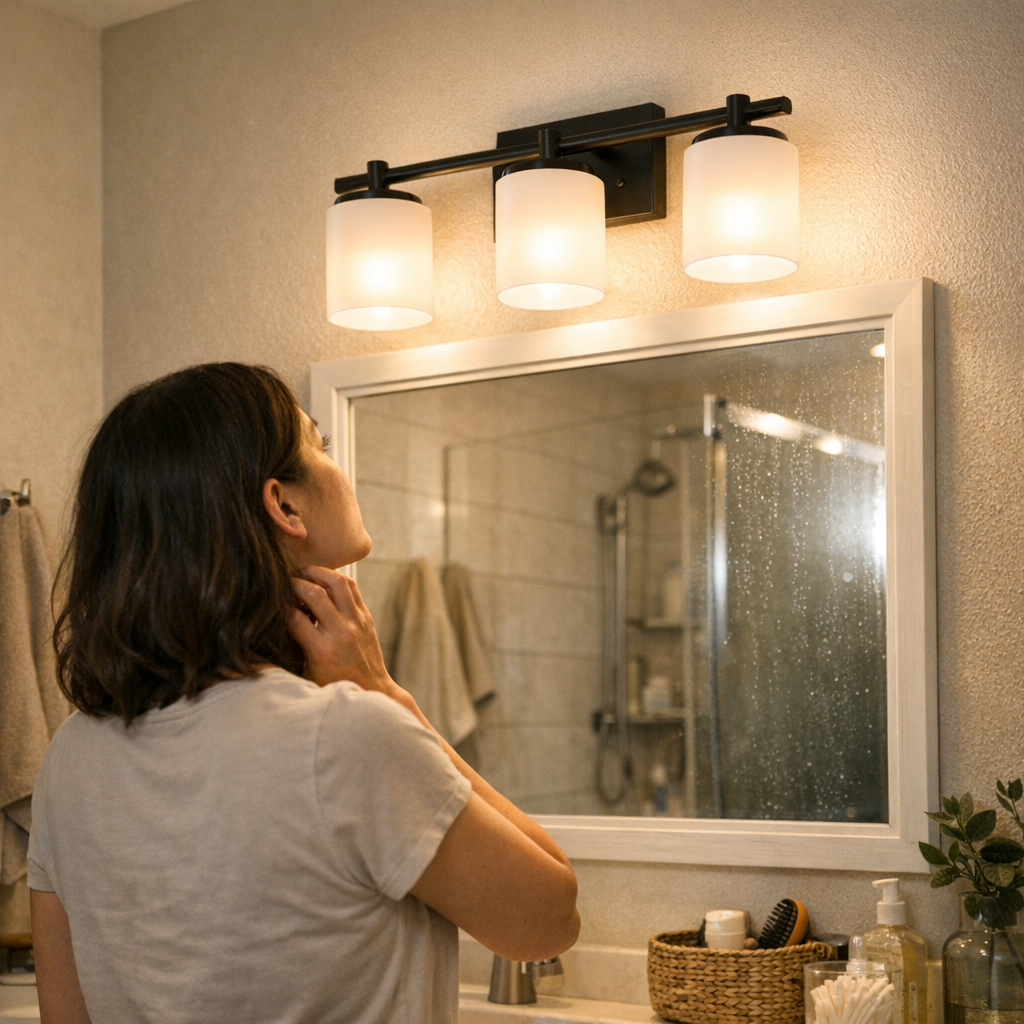
After a hot shower or a heavy laundry cycle, it’s not just fogged mirrors you’re fighting—it’s the subtle crackle or buzz from the ceiling light that’s easy to ignore on day one but becomes a steady nuisance in moisture-prone rooms. Every faint pop, slow flicker, or shadow creeping across the mirror is a sign: ordinary fixtures lose ground fast in bathrooms, laundry zones, or stair alcoves where steam settles daily. What looks bright and finished at a glance starts failing under real conditions—imperfect startup, dragging switches, glare patches—compromising both comfort and clarity, right when you need the space to work cleanly and quickly. If you’ve paused to squint in a dimmed hallway, lost the cabinet edge to a new shadow, or nudged a switch and heard it stick, you’ve already felt the problem building. In rooms where humidity lingers, annoyance turns into routine risk; every compromised light extends the life of inconvenience.
Recognizing Where Lighting Friction Really Builds Up
Rooms that trap damp air—bathroom ceilings, laundry nooks, stair turns near utility lines—look “fine” until routines hit them again and again. It’s rarely a dramatic blowout. Instead, it’s lingering evidence: the soft pop overhead after a steamy shower, a slight metallic ping every time you turn off the aging flush mount over a washer. These aren’t quirks to brush aside. They’re pressure points. Each odd sound or flicker maps exactly where unsealed, non-damp-rated fixtures lose the fight against routine moisture. The light might look even, but the shift is real—shadows grow under vanities and mirrors, hallway corners fall dim, and what passed for “good enough” lighting on install day is now the thing causing hesitation at every crossing or post-shower cleanup.
Repeated Use Exposes The Weak Points
A flush mount looks flawless when you put it in. Fast-forward to the real test: week after week of hot water, mixed airflow, and heavy use. Suddenly, patterns emerge—tick sounds, brief startup stalls, shadow lines that weren’t there last season. You notice yourself moving your head to dodge a glare or leaning in to check if there’s enough light at the countertop. The fixture isn’t broken, but it isn’t right. By the end of the day, or the tenth laundry run, it’s clear which upgrade was just for show and which one is wearing out under damp stress. That gap between “illuminated” and “actually usable” keeps growing until it interferes, not just with the mood, but with basic movement and tasks you can’t put off.
How Lighting Behaves After “Just a Bit” of Moisture
There’s nothing neutral about a fixture handling daily humidity. It might light up—sometimes. But moisture builds up where insulation and gaskets fall short, and soon you’re left with unreliable performance: bathroom mirrors turning harsh, edges flickering, stair corners fading, hallway spreads going uneven. The difference isn’t about the total brightness, but the consistency: one side bright, another side half-shadowed or washed in glare. In a damp stairway, that means hesitating on the next step. In front of a mirror, you squint to make out your reflection through both fog and patchy light. In the laundry, the “delay” becomes a silent reminder that the fixture isn’t keeping up with your routine—it’s stalling it.
Hidden Risks Behind Subtle Symptoms
Slight flickers, a new buzz, more shadow than last month—none of these feel urgent until the problem spreads. Moisture doesn’t just slip past seals; it begins to warp covers, stick switches, and even erode the bare safety edge if the fixture isn’t built for the space. Maybe it isn’t immediate risk, but it’s a steady slip: navigation in these rooms loses margin, and small breakdowns add up—harder to trust the light, harder to stop worrying about the next failure, harder to ignore the signals that function is sliding even if the light looks fine from the hall.
Case Study: Swapping Fixtures in the Real World
Picture a laundry corner: each cycle saturates the air, steam plants into the ceiling plate, and the standard flush mount answers with a click or stutter—especially on humid nights after back-to-back loads. Shadows cluster on counter edges. Startup falters most at the end of a routine. This isn’t catastrophic; it’s just tedious and persistent—each weak light cycle training you to work around the failings.
Replacing with a damp-rated fixture flips the experience in ways that are quietly dramatic. Post-cycle, the light starts instantly; the background tick becomes a non-issue. The counter finds its edge again, no more slow hunt for the last sock or missed spot. Mirrors clear up, streak-free and shadowless. The hallway feels navigable, not just illuminated. What sticks is the new habit of not having to check, not having to wait, not even having to think—the light just works, and the old friction drops away, unnoticed until you realize you aren’t compensating for the room anymore.
Why These Annoyances Don’t Fix Themselves
Ignoring early signals—persistent noise, delayed startup, growing shadows—just means letting small failures reinforce themselves. As humidity cycles, insulation gives out, and the next shower or laundry session nudges the fixture closer to its limit: not an outage, but a creeping downgrade. Suddenly, small frustrations become daily barriers—each movement just a bit less certain, each task requiring a second try, every use chipping away at trust. That’s not just aging; it’s the wrong setup losing its battle again and again.
Getting ahead of the warning signs is the only way to actually block the cycle. Reliable lighting in moisture-regular rooms means damp-rated fixtures and better placement—not just to look fresh out of the box, but to stay steady, keep shadows managed, and ensure that clarity and movement hold up when rooms are at their steamiest and most used.
Simple Fixes That Pay Off with Real-World Use
Solving these headaches rarely means a full redo. A single targeted swap—a damp-rated flush or semi-flush mount for the bathroom ceiling, a sealed vanity light, or hallway sconce built for steam—shifts an entire routine. The surprise isn’t in the installation, but in what disappears: the hum, the slow flicker, the need to pause before entering the room. Even the detail of extra space beneath a ceiling fixture, giving steam somewhere to dissipate, can break the cycle of sound and hesitation.
Vanity and wall lights over moisture-prone surfaces need the same discipline. Choose fixtures marked for damp areas and mount them with the routine and the real obstacles in mind: will this eliminate the shadow line? Does this angle keep the mirror clear, the corridor safe, the startup immediate? Getting it right shows up not as a new visual highlight, but as a total absence of complaint—movement is smoother, checking a reflection or working at a counter is faster, and lights no longer pull your attention at the worst moment.
The Daily Difference—Not Just Brighter, but Better
When a fixture truly matches the damp zone, it’s not about looks. The evidence is in the routine—the seamless transitions, the predictable light spread, the fact that the day’s tasks no longer slow down or circle waiting for light to behave. The most convincing proof is in what you stop noticing: no delays, no compensating for bad angles, no workaround steps. Shadows stop interfering. Stairs are always fully visible. The cabinet and mirror just work, every single time.
In these rooms, the right fixture is more than an upgrade; it’s the clear divider between “dealing with” and “moving through.” That’s the difference daily use demands—and what too many indoor setups keep getting wrong.