
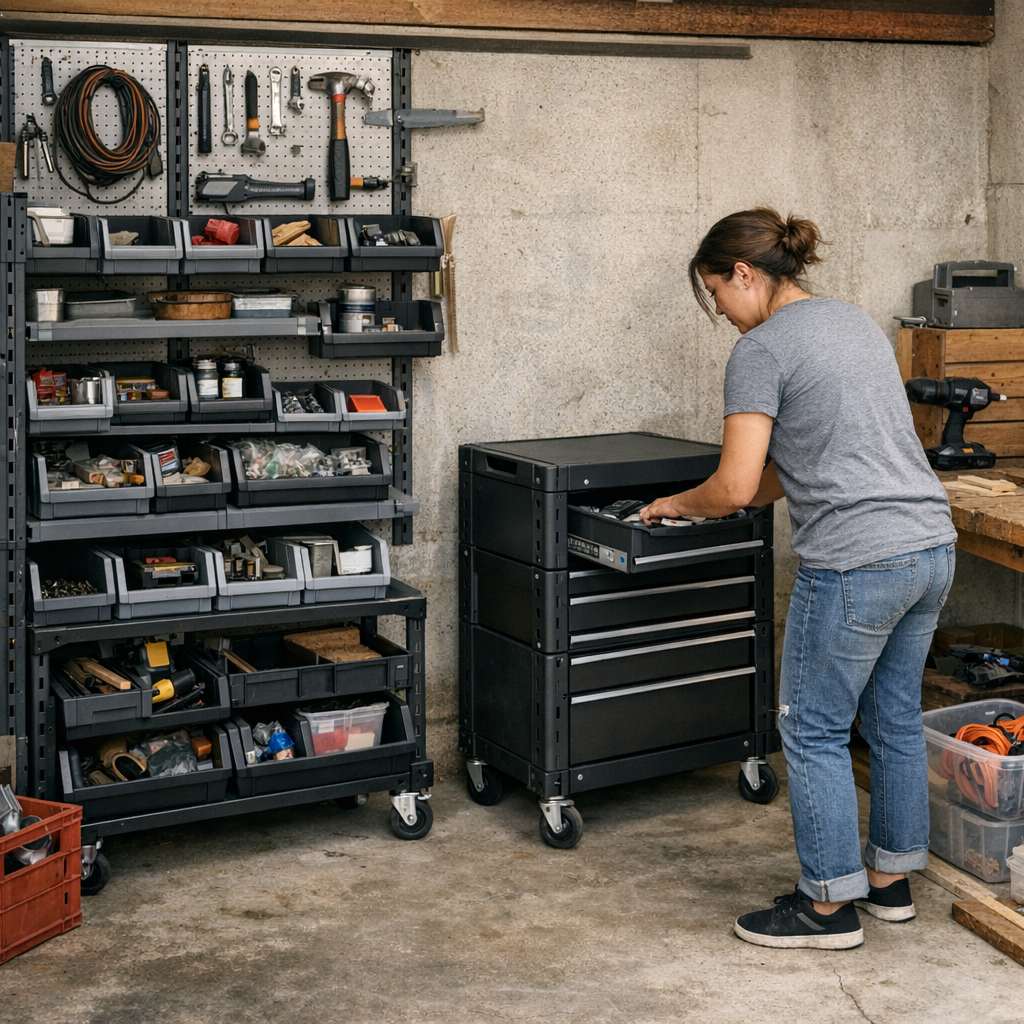
The truth about “organized” spaces shows itself fast—usually the first time you try to get actual work done after installing a modular setup. Maybe you just hung a grid of wall panels, rolled in new bins, or filled up sleek shelving. For an afternoon, everything looks lined up and full of potential. But step into most workshops or garages a week later, and the honeymoon phase is over. Now you’re wheeling carts into tight corners, sidestepping an out-of-place bin, and reaching—again—for the same tool wedged awkwardly behind something else. The setup that seemed perfect on day one quietly reveals its limits as daily habits start to wear grooves right through the plan.
The Mirage of Day-One Order
Anyone can arrange bins in tidy rows and park carts flush up against each other to maximize open floor. When everything’s static, the layout holds. But routines pull the seams apart. The third day you roll your toolbox in, the cart snags because the “plenty of room” you measured is already down to an inch. The cabinet door only swings partway before bumping a shelf. A single corner becomes a go-to dumping spot because it’s the closest flat surface. Small misalignments feel minor—until they’ve turned every trip across the space into a contorted path between obstacles.
It’s always something: a drawer that won’t close unless you shuffle what’s in front of it, a tool chest that creeps out of alignment every time you move it, or a rolling bin that’s technically mobile but has no easy way through the maze. Suddenly, what looked like maximum storage on install day becomes minimum maneuverability.
When Every Inch Is Spoken For—But You Still Can’t Move
The urge to fill every available space is powerful. A row of storage running from wall to door, bins pressed edge to edge, wall racks slotted into every stud—they all signal efficiency. But in use, those “gained” inches often cost you flexibility where it counts. A cart that fits only in one spot feels less like a solution and more like a barricade. If you have to juggle three things just to put one away, you’re not saving time—or your sanity.
This problem isn’t just underfoot. On the walls, bins inch out of place with every grab, shelves flex under lopsided loads, and that one awkward tool winds up sandwiched at the wrong angle, hard to see and harder to retrieve. Wall space can be “used,” but if it’s not actually accessible, it becomes visual clutter—a background mural of things you keep meaning to reorganize. This kind of invisible drift is the enemy of easy returns and smooth routines.
Overflow’s Favorite Hiding Places
Most setups fail in the same quiet ways: a shelf end that turns into a magnet for misfit odds and ends, an underused tray that turns “temporary” into permanent, a mobile drawer that never quite returns to its slot and just keeps creeping out. The same corners collect wayward screws, forgotten gloves, and the things you “just set down for now.” Over time, these blind spots demand your attention but only reward you with the need for more reshuffling.
Movement Obstructed—One Shuffle at a Time
Start tracking how often you find yourself nudging, twisting, or sidestepping just to get where you’re going. Every time you have to slide a cart out of the way, reach awkwardly around a cabinet, or backtrack because a bin blocked a walkway, the setup is dictating your routine—not the other way around. These interruptions multiply: what starts as a minor delay becomes a constant slow-down, with frustration growing every time you ask yourself, “Didn’t I just fix this?”
Micro-Shifts Add Up—And Reveal the Real Weakness
No modular solution stays frozen as installed. Rails can loosen, bins drift from their spots, shelves sag, anchor brackets flex under real loads. The question isn’t if things will move—it’s whether your setup allows for it, or falls apart under the pressure. Sometimes the most productive gap is the one everyone else would tell you to close.
One real-world proof: In a packed garage, leaving a six-inch space beside a main walkway looked inefficient—until the rolling cart zipped through cleanly every day, without scraping bins or catching wheels. The gain wasn’t storage; it was flow. There were fewer lost parts, fewer “just set this here for now” pileups, and less time spent yanking things back into place.
If You’re Always Tinkering, It’s Not Working
When you have to reset things after every project, or constantly scoot bins around just to move, the setup has failed the real test—not enough give for the way you actually use your space. Fixed units force consistency but can block new needs. Modular units promise flexibility, but if the pieces drift, tilt, or jam the minute you start moving, they become maintenance projects themselves.
A shelf with no side support slowly skews. A rolling bin without real lanes gets wedged in wherever it fits. And an “overflow” zone that wasn’t given a real return function will keep overflowing—every week.
Design for Routine, Not Just for Show
The setups that last aren’t the ones with the most bins per square foot, but the ones with lanes left open for carts, real breathing room for quick returns, and landing zones for the things you’re always grabbing. Don’t trick yourself into cramming in “just one more” shelf or bin unless you’ve seen how the flow actually works.
Pay attention to where clutter repeatedly accumulates. If one tray or corner always needs a reset, rework its purpose, not just the placement. Simulate a real workday: wheel out carts, recoil hoses, re-shelve tools at their actual pace. Fix anchors, brace shelves, and most importantly—leave functional gaps, even if they look like “empty” space.
Small Tweaks, Outsized Results
The relief often comes from fixing one snag: shifting a cart’s location so it never blocks a walkway; giving everyday tools their own return bin instead of squeezing them onto the nearest shelf; bracing a cabinet so the drawers always track straight. These behind-the-scenes adjustments carve out time and make routines less frantic, even if nobody else notices the difference.
Bottom Line: Lasting Setups Make Room for Movement
The best-organized spaces aren’t the ones that never look messy, but the ones that keep working when things are going full tilt—tools out, bins refilled, carts rolling, and new projects happening alongside old ones. If you’re constantly resetting, you’re just maintaining an image—not a routine. Build in lanes for return trips, anchor where drift keeps happening, and allow yourself some margin for mess in exchange for freedom to move.
Leave space for your real habits, and your setup will earn its keep long after the “after” photo fades. Setup that tolerates real movement is the only kind worth building—and the only kind that actually lasts.