
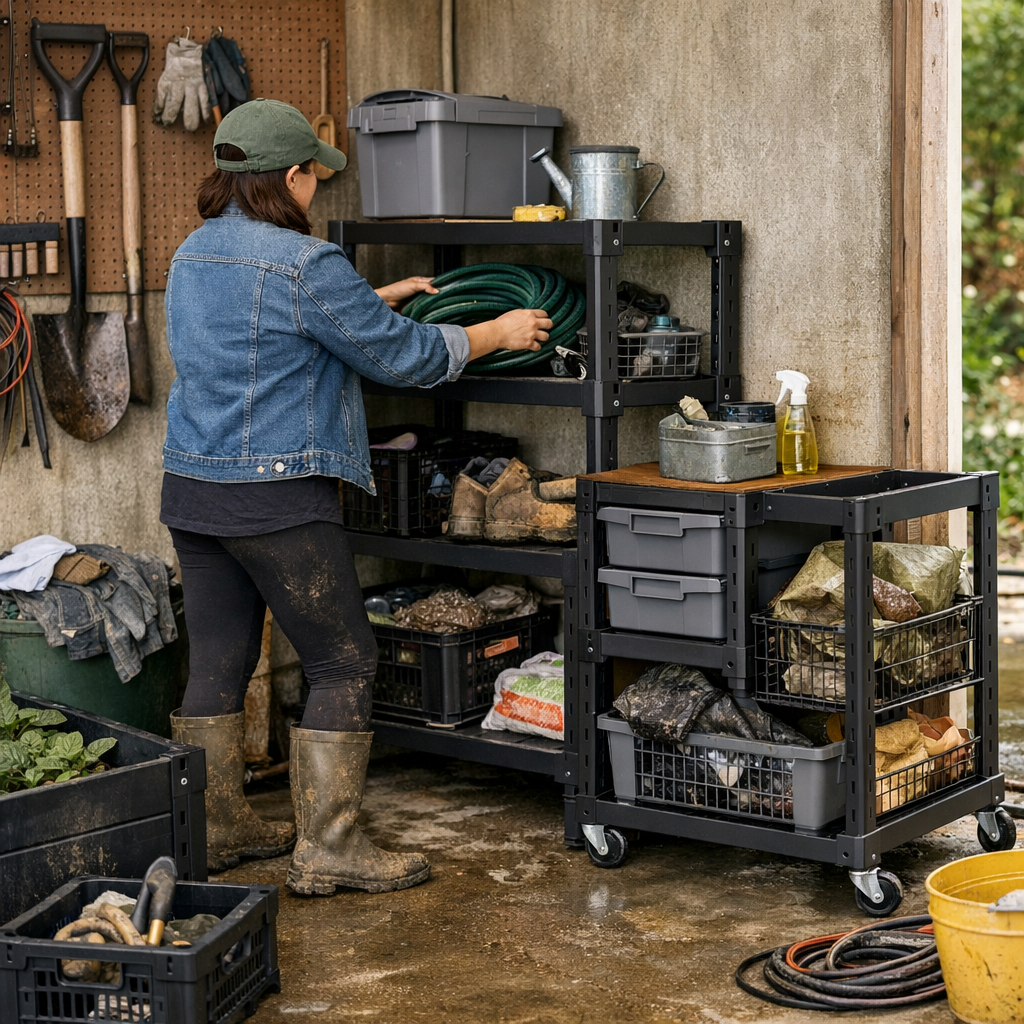
The first day you finish an outdoor storage zone, it looks like you finally solved the chaos. The bins line up in crisp rows, the chest is wedged tightly to the wall, and every tool stands at attention on a shelf. You step back and feel ready for anything—until reality takes over. The next rain rolls through. You slog in, boots dripping and arms loaded, only to trip over the chest blocking your path. The “waterproof” lid jams on the wall, impossible to open without shifting the whole box. Gloves and towels pile up at awkward angles. The walkway that looked so clear yesterday now feels like a crowded alley, and each return becomes a clumsy detour through muddy bottles, tight corners, and bins too packed to budge.
Why Order Doesn’t Survive the Elements (or Real Life)
It’s not the setup—it’s what happens after. Outdoor storage always looks finished on day one, but repeated weather and daily use expose every shortcut. Lid clearance you never considered is suddenly tight. That chest whose footprint once felt smart now traps your movement, forcing you to sidestep and nudge it for every pass. Tools creep into unused corners, creating new overflow spots you never meant to have.
This isn’t a flaw in your plan—it’s what happens when real routines crash into static arrangements. You bend around bins to grab one rake, only to notice you’re always moving something out of the way. The clever wall rack now breaks up the space so much you flow from task to task slower than before. “Organized” melts into aggravation as dead corners swallow gear and tight gaps choke the route you walk every day.
“Organized” At a Glance, Friction Every Time You Return
The visual calm of opening day has a hidden cost: movement stalls, access tightens, and you spend more time fixing the setup than using it. The difference between “it fits” and “it works” gets obvious fast. The matching bins that lined up so satisfyingly now block you when a single awkward rake or lopper won’t slide in. The neat shelf you planned for gloves crowds the entry the moment a basket overflows. Every trip out means stepping over one thing, shifting two others, and telling yourself—again—you’ll reorganize later.
The symptoms build up in daily returns: the rush to get gear inside before the next downpour, the tangle of basket handles against the door, and the frustration of pulling out boxes just to stow a hose. Each cycle adds a new layer of friction. It’s not storage—it’s a daily shuffle, and by midseason the tidy layout is already unraveling, one soggy pile at a time.
Scenes From an Outdoor Setup That Doesn’t Flow
Picture a real return: The rain’s just stopped; you’re juggling potting soil, muddy gloves, and the shovel you used yesterday. As you squeeze past the chest wedged by the walkway, your elbow grazes a shelf that seemed perfectly placed—until now. The “sealed” bin that dominated your setup becomes a recurring obstacle for your boots and buckets. Overflow baskets by the door fill up, so you stop to untangle gloves from a garden fork—is anything actually easier?
Here’s what keeps breaking down, no matter how organized things look at first:
- Shoving the heavy chest aside just to access what’s behind it.
- Boxed-in corners that turn into dumping grounds for stray hoses and tools.
- Wall racks that slice up the space, making every movement a zigzag.
- Bins crammed tight, so getting anything out means a game of reverse Jenga—every time.
With each use, your carefully planned order becomes a shuffled-in shortcut. The more the weather shifts, the more often you’re forced to reshuffle just to keep the space usable.
From Cluttered Reset to Real Flow: Modular Storage in Action
The big shift came after one too many muddy struggles. Swapping the chest for a modular rack seemed minor—until it wasn’t. Open shelves, lifted just enough to let runoff escape, and no tight corners to crowd your movement. The game-changer? What the setup didn’t do: no blocked path, no lids jamming against the siding, no dead zones attracting the overflow.
Returning with soaking-wet gear, you could drop items straight onto an open shelf, let the airflow dry them down, and be done—no twisting, dragging, or stacking on top of old bins. The path stayed clear, every return felt less like a shuffle, and resetting the area was almost automatic. Real flow meant not thinking about your storage during the messiest days, because nothing forced you to work around it.
When a Chest or Bin Still Makes Sense
Some storage zones don’t demand daily access. Sealed chests are fine for gear that stays put—winter covers, pool floats, or spare hose. But if your setup has tools, boots, or supplies that rotate seasonally or get wet and muddy, closed bins quickly become an anchor. The difference stacks up: open racks adapt, while closed containers keep asking for workarounds, stacking, or extra trips to unbury a single thing. Overflow is rare, resetting is faster, and the gear you use most lands exactly where it needs to, every time you come back.
Practical Moves: Small Changes, Smoother Routines
- Go for open racks with raised feet: This lets water drain and air move, speeding up drying and making it easy to clean up after storms.
- Don’t stack bins just to save space: Stacked bins always look neater in a catalog than in real life. Every extra layer means triple the work later.
- Test door and lid clearance now, not later: Even a couple inches add up with muddy boots and wet arms. If the lid or door blocks your movement, your routine pays the price.
- Find and fix “overflow magnets”: The same corners and shelf edges collect the cast-offs every week. Small tweaks here—like shifting a rack or adding a landing space—save hours across a season, and keep clutter from making a comeback.
The Lasting Difference: Function Over First Impressions
Most outdoor storage setups crack after a few weeks of real, dirty use—not because they weren’t neat enough, but because they weren’t built for movement. You don’t feel great storage when you’re looking at it; you feel it when nothing blocks your path or slows your return. The proof is in the afternoon when you toss a muddy shovel onto a clear shelf and step away, ready for next time.
If the setup looks organized but blocks your route, those lost minutes pile up—reshuffling, unstacking, sloshing past half-closed lids. That’s where modular storage shines: built for seeing, grabbing, and returning gear without thinking. It’s not about “perfect” order. It’s about less friction, more flow, and a space that keeps working no matter how rough the season gets.
Explore modular storage that actually works with you at StackNest.