
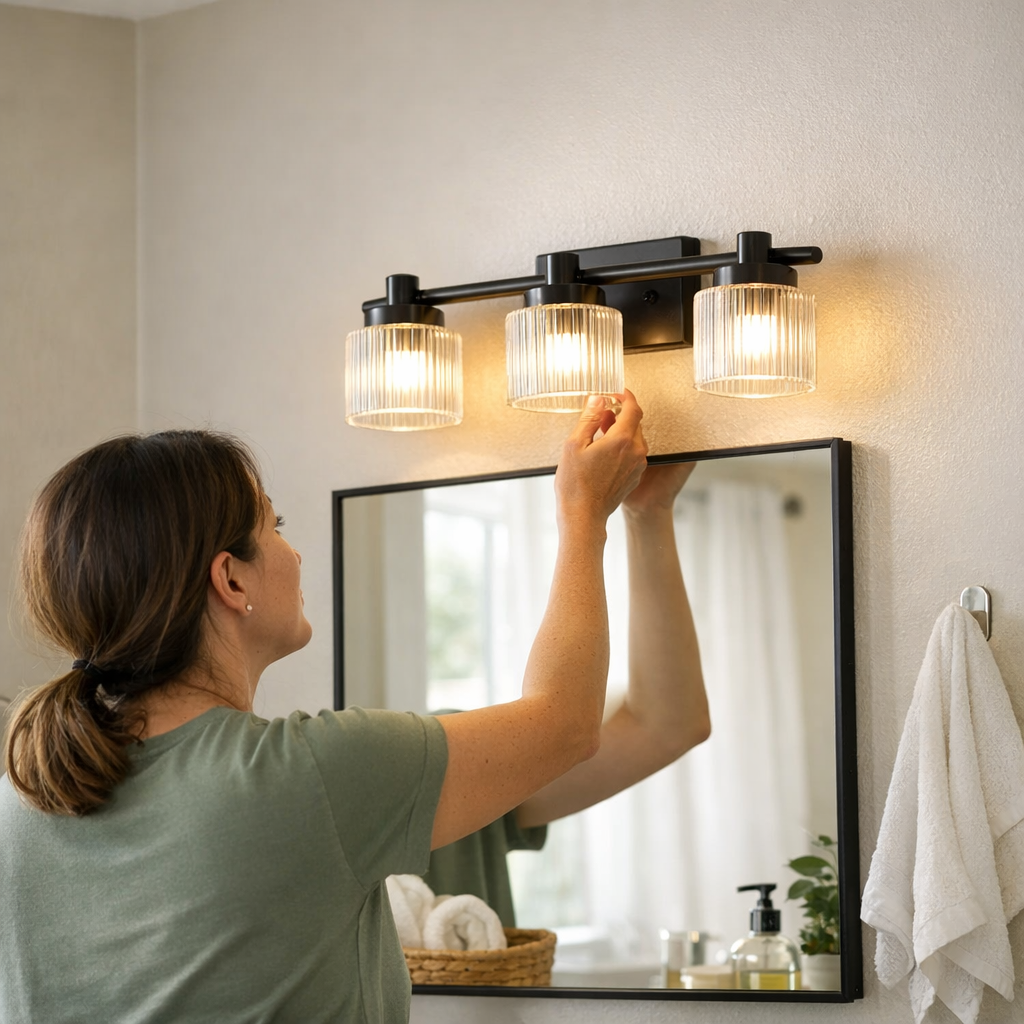
When your hallway throws shadows across the floor, your bathroom mirror edge blurs with steam, or your kitchen counter loses definition after dusk, it’s rarely just the bulb or the fixture style at fault. It’s often the connector size—the part that marries fixture to wall or ceiling, holding light exactly where your routine needs it. A mismatch here, and you’re guaranteed a slow creep of problems: loose fits, gathering dust lines, flickers on every pass, a once-unnoticed gap that nags every time you wipe the counter or hear a door slam.
Why the Right Connector Size Shapes Real-World Lighting
Connectors are the hidden backbone of flush mount and semi-flush ceiling lights, hardwired wall sconces, and any task fixture meant to hold up under real life. When the size is right, the fixture sits crisp against the surface—no daylight peeking through, no spongy give when you swap a bulb, no edge for steam or dust to claim. The moment the connector is even slightly wrong, routine use exposes it: a hallway fixture shifts whenever the door closes; a bathroom right above the mirror fades from clean line to blurred edge after just a week of showers; dust collects where the gap grows wider every time you clean.
In spaces where lighting isn’t just décor but navigation—stair turns, tight hallways, laundry corners—the smallest connector misfit becomes a daily interruption. Maybe your fixture looked perfectly flush at the start. After a week of footsteps or a month of cleaning, you start seeing tattle-tale shadows where the ceiling and fixture no longer quite meet. Flickers creep in—not total failure, but enough to hesitate at the top step or glance back at the switch, wondering if the light’s about to fail for good.
Everyday Friction: Where Issues Sneak In
Hallways That Gradually Lose Their Clarity
Cross the hallway after dark expecting one clean, shadow-free surface—and suddenly, one side falls away, the line where ceiling meets wall blurred. A slightly undersized or sloppy connector lets the fixture sag just enough that the wash of light is lopsided. With each slammed door or vacuumed floor, it drifts further: thin shadows along the baseboard, flicker from a loosened wire, and a subtle, nagging confusion when your feet don’t land where you expect. Light designed to reveal now hides hazards and adds uncertainty where clarity is needed most, especially at stair turns or corridor bends.
Bathrooms and Laundry Rooms Pay the Toll Fastest
Moisture never misses an opportunity. In a bathroom, a flush mount with the wrong connector lets steam sneak into the seam after every shower. Dampness warps paint, dust cements into stubborn borders, and the ceiling edge never quite looks clean again. You flip the switch and get a jitter of hesitation—not enough for a call to maintenance, but enough to notice every morning. In laundry rooms, connectors that can’t handle vibration will wobble the fixture loose; lids banging, baskets brushing by, and machines rumbling amplify tiny gaps into clear tilts or outright droops. The more you use these spaces, the more the flaw asserts itself: fixtures angled off, covers loose to the touch, cleaning always a battle with unreachable grime.
The Subtle Ways Connector Mismatch Interrupts Your Routine
Bad connectors become a built-in chore. If you’ve reseated a loose fixture, wiped at a dust line that clings no matter what, or paused at a hesitant flicker after closing a door, you’ve felt the impact. A small misfit ripples: a fixture that pulls away under each minor touch, extra seconds lost to cleaning stubborn corners, a quiet worry about exposed wires behind a tilted cover. In rooms meant to support daily movement—kitchens, bathrooms, busy hallways—these aren’t minor annoyances, but friction that slows your routine.
Repeated use compounds the damage. Every bulb change, every cleaning, every time the fixture is jostled, the imprecise fit deepens. Instead of fading into the background, the light calls for constant correction—tightening, straightening, second-guessing if you’re about to see it flicker or slip out of place. With time, the risk spreads from cosmetic to function: exposed wiring, poorer resistance to dampness, a fixture that surrenders to gravity and routine alike.
Two Fixtures, Two Outcomes: What Lasting Fit Actually Looks Like
Put two flush-mount fixtures side by side on the same landing. The one anchored with the right connector stays sharp, flush, and bright—every bulb change is simple, every pass on the stairs is clear and free of distraction. Its spread is even, its shadow lines are where they should be, and it stands up to slamming doors and running feet without give.
The other, installed with a mismatched connector, ages fast. At first, nothing is obvious—by week two, a tilt begins. By week four, dust lines betray the gap, and every passing footstep rattles a loose cover. It sneaks up: the stairway still looks bright, but movement feels less sure, and comments about the “dimmer” feeling begin even while the bulb is fine. This isn’t just visual—it’s a subtle erosion of routine comfort.
How the Right Connector Fixes the Cycle
Once frustration reaches a point you can’t ignore, swapping in the proper connector resets the experience. Suddenly the fixture is part of the ceiling again, zero sway as baskets pass or shoes bang stairs. There’s no more hunting for new dust lines, no pulse of worry over exposed wiring, no flicker after a steamy shower. Cleaning is faster, the room stops demanding your attention, and light finally acts like background support rather than a tiny, daily hassle.
The change isn’t dramatic—it’s decisive. What stands out is the absence of “checking if the light is still tight,” the return of steady mirror clarity, and the end of shadow-tracing at corridor edges. The right connector doesn’t just finish the job; it takes the frustration out of repeated use.
One Real-World Tip That Pays Off
If you’re not sure whether your connector is right, don’t judge on day one. Check after a few days’ routine—watch for a wiggle, check for dust lines, or pause if you see that first hairline shadow after cleaning. These are your warning signs: address a small gap now, and you’ll skip months of daily annoyance before it cascades into a real problem.
For flush mount, semi-flush mount, wall, and practical task lighting solutions built for everyday spaces that stay reliable with daily use, visit LightHelper.